Category Archives: Organic Pest Management

Taking Summer Stock – What Worked? What Didn’t?

I love and hate the end of the summer.

I hate that it has ended.  I love that I can spend quiet hours cleaning up, organizing and getting ready for the next garden.

And I love some of my online gardening friends for their insights, their humor and their ideas.

Check out this post from Chrystal.  Gardener extraordinaire, keeper of bee hives

Bees making honey in Chrystal's garden.

Bee hives enjoying Kale Grower’s garden

and sharer of good advice, good recipes and good humor, she gardens a bit north of me (British Columbia) and catalogs the good and the bad from her 2015 garden!

And shares some wonderful pictures in the process.

Read up and learn how Chrystal copes aphids (suggested she get some lacewings which devour lots of irritating bugs).

Find out how her tomatoes grew (like mine, they didn’t) and check out what she made with her lovely red raspberries.

Reading about her adventures helped me with my end of gardening season blues.  Isn’t it nice to know we have company in our back yards?

Happy planning for 2016!

European Hornets Persist in My Garden

European hornet in garden.

European hornets are big, bold but willing to share space.

In the interest of knowing my enemy…better….I wanted to find out where European hornets nest.

Penn State’s extension office gave me the full boat on these very big  hornets who, when challenged, can be pretty darned aggressive.

Apparently, they create nests above ground, often in abandoned trees.  I first saw these hornets in my garden 3 years ago when my figs outdid themselves and the hornets have since moved in but I don’t know where.

I do know that they love my blueberry patch – hence the Tyvex suits on my sister and I as we go blueberry picking.  The colanders are just for show!

Blueberry picking around hornets

Meg and I do battle with hornets for blueberries.

Apparently, our choice of attire was a fortunate one. These hornets don’t like black or dark clothing and will warn you off by butting you.  If you don’t get the message, they will bite to defend their nest but, for all their size, European hornets are considered “docile.”

That said, I still wear Tyvex — now when I try to pick blackberries because that’s where the hornets are in August.  Unfortunately, the hornets are still sharing space with the Japanese beetles that are still hanging on, chewing through my plants and eating only the ripe berries, of course!

Anyway, if you see any of these big boys in your garden, back away slowly. Don’t arm wave or bat at them.  They just want you to go away but if you don’t, if you appear to be a threat, remember that European hornets are big; they will bite with malice aforethought and they can sting 8 or 9 times.

Who says gardening is a quiet past time?  It’s always an adventure in my backyard and I’ll bet it is in yours, too.


Japanese Beetles Decimating My Plants

It must be July.

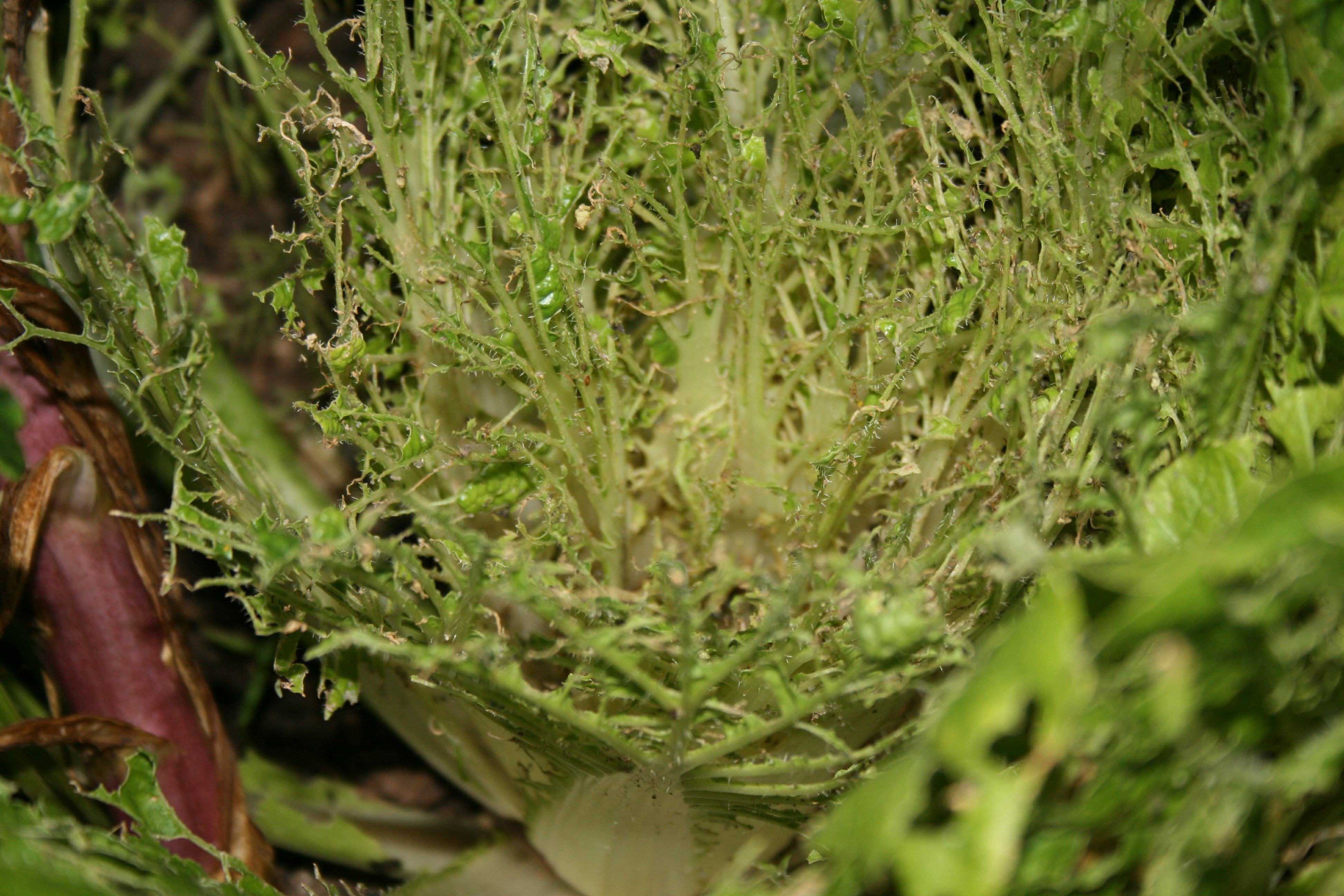
This is the month when the Japanese Beetles swarm in, over and under all of my plants and make veritable skeletons where once there was beautiful green.
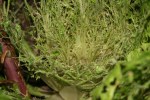
Japanese Beetles destroy Chinese Cabbage

Japanese beetles make lace with Chinese Cabbage.

My Chinese cabbage fell to the Japanese beetles but I am determined NOT to lose the battle over my green beans and my blackberry bushes.

Unfortunately, because the beetles are so bad this year, I have resorted to using my apple tree as a distraction.

Japanese Beetles eat my apple tree.

Every leaf on this apple tree is eaten.


And the Japanese beetles are attacking with a vengeance.  The leaves are being eaten on every branch.  I hate using the tree to attract the beetles but, as an organic gardener, I have to or I wouldn’t have a prayer of holding the line in my garden.

So, how do I kill the ones that make it into the garden and chew through leaves of just about any plant?  Well, it isn’t pretty but my method works and it is organic.

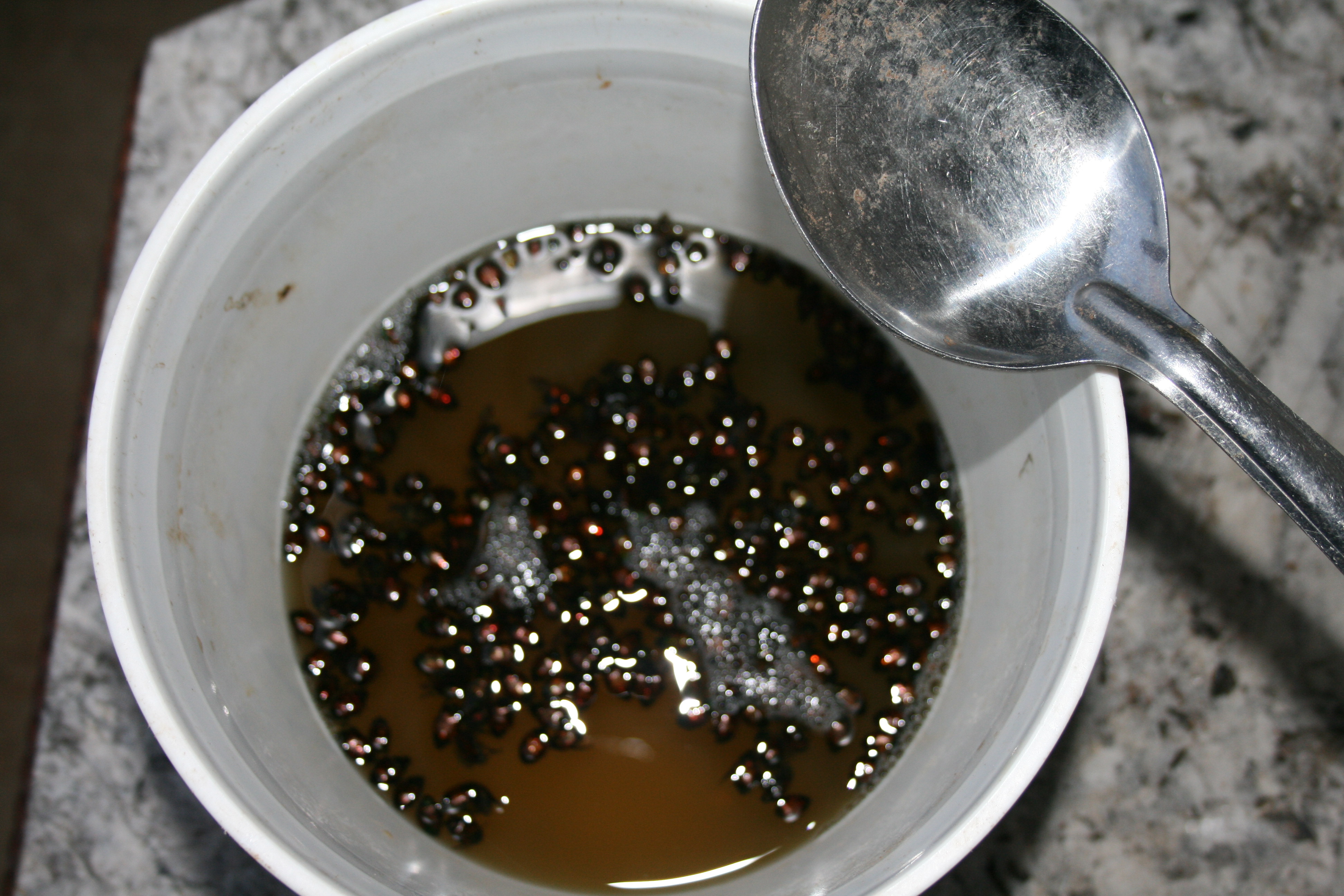
Every morning and every evening, I fill a small container with dishwater, grab my big spoon and head out to the garden.  I spend about 25 minutes smacking beetles into the bucket.
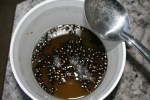
Drowning Japanese Beetles

Japanese Beetles to drown in dishwater.

When I’m done, I usually have between 100 and 150 beetles floating in the water.

Okay is sounds gross and the resulting “bucket of beetles” looks gross but it works.  And there is a perverse satisfaction in slapping them into the water, knowing their destructive activities are over.

So, the battle continues and I have good and bad days relative to control but I don’t spray; I don’t give up and I do, eventually beat them back.

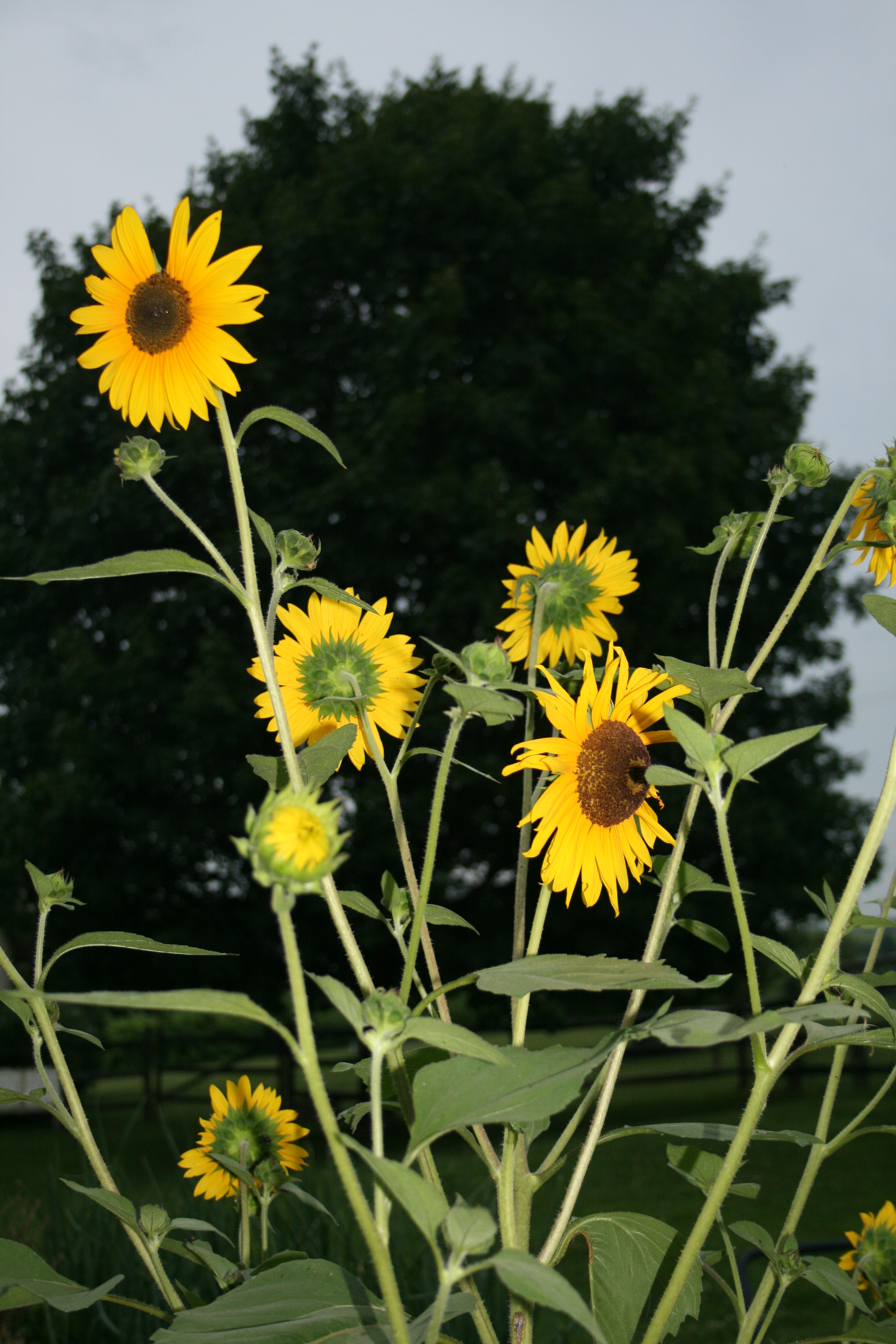
Volunteer sunflowers

Sunflowers make me smile.

And when I am feeling outnumbered or a bit down, I just look out my office door at  one of the hundred or more volunteer sunflowers that are in my garden and yard and smile.

And to make you smile, I am sharing a picture of my sister Meg, now known as Commander Colander Head, and I heading out to the blueberry patch to do battle with the vicious and varied invaders we call hornets.

This year I’ve got Bald-faced and European hornets and even hornets that look like bumblebees. And of course, there are honey bees, yellow jackets and genuine bumblebees.

So, when we go out to pick, we “suit up” – Tyvex suits are tucked into socks.  Muck shoes are worn and, if it’s really warm, nitrile gloves.

Blueberry picking around hornets

Meg and I do battle with hornets for blueberries.

The protective gear really does make it safer to pick.  And starting just as the sun cracks over the horizon also helps.

I’ve gotten about 85 quarts of blueberries this year and not one bite or one “fatality”, either human or bee!
Taking Care of Peaches from Tasty Landscape

Snow Peach ready for picking.

Dr. Osborne is an expert on growing trees, especially, fruit trees.

Wish I had known Dr. Osborne (no, not Dr. Oz but Dr. Thomas Osborne) back when I tried raising peach trees! I might actually still have them.

Dr. Osborne, MD, whose medical specialty is Radiology, loves plants, loves gardening and loves sharing what he knows about growing, caring for and harvesting food.

He is especially knowledgeable when it comes to trees and fruit trees in particular. (Check out his article on pruning – well-written and easy to follow!)

If you’ve tried to grow fruit, you know it is fraught with problems from pests to fungus to bacteria.  So, cruise over to his blog, settle in with a good cup of coffee or tea and read all about growing and caring for peach trees.

Tropic Snow Peach Tree Care – TastyLandscapeTastyLandscape.

2015 -Year for Garden Bugs & Pests

The annual invasion of all the bugs you wish you never saw is starting early this year.  Looks like 2015 may be a hard year on the garden, the veggies and…me!

I started coming to this conclusion when the ticks started walking through the door, well, being carried through the door. We have 4 dogs – never meant to have 4 but rescued 2 so now we have 2 Westies, a Jack Russell terrier and a

Dogs enjoying a break

Rescued Jack Russell and Mini Schnauzer sharing a chair.

Westie pups in the back yard.

Our Westies doing the stick dance when they were puppies.

Mini Schnauzer.  About 3 weeks ago, they all turned in to “tick magnets.”

Between them, they have brought in a total of 13 ticks, so far!

Hubby and I don’t have flea collars on so we are the preferred hosts!  How do we handle them?

  1. We check ourselves frequently – hairline, back of neck, back of knees.
  2. We pluck them off before they bite & burrow and toss them in hot, soapy water or, oddly enough, soy sauce.
  3. We also “burn” them literally but be careful if you do.

We don’t flush them down the toilet – they sometimes come back up.  And we don’t smash them or cut them in half; they carry bacteria and you could spread them if you are not careful.

Keeping your tick population down isn’t easy but Mike McGrath has some tips.

Ticks were my first sign that this would be a year of bugs.  Then, yesterday morning, I found a wire worm — actually what’s known as a “bug-eyed” click beetle – on my back patio.

Bug-Eyed Click Beetle

This beetle is not dangerous to people or pets but it likes plants and plant nectar.

I literally haven’t seen one of these little dudes in 22 years.  They like to snack on plant juice….and what better place to find it than in my backyard in my organic garden!

This afternoon, I had my first “close encounter” of 2015 with a Bald-faced Hornet.

Now, I don’t mind these hornets hanging about because they do pollinate but I need a bit of time to get used to the idea that they are back in the neighborhood.

Bald-faced hornet

Bald-faced hornets are not the easiest of neighbors.

Although they’re not really hornets (from the yellow jacket family), they sure bite like hornets and they are as aggressive.  And they are usually not in my backyard quite this early .

The hornets and I have an agreement, though.  I go out early to pick blackberries and blueberries and they don’t bite me!

So why are these bugs showing up here, now?

I’m not sure but these harbingers appear to be telling me that despite the desperately cold winter, the bugs are “incoming,”  now!

I’m girding up my loins…right now and dusting off the rocks and other totally organic weapons of mass destruction in preparation for doing organic battle with bugs!