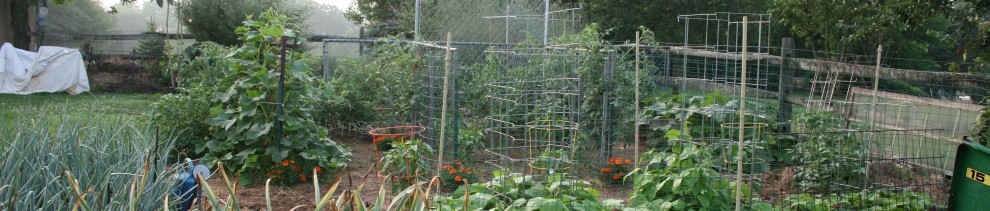
Category Archives: Recipes From The Garden

Grow So Easy Organic: Protect Cucumbers from Diseases & Bugs

Cucumbers are a favorite in my home garden and I’m sure they are a favorite in other gardens, too.  They produce a lot of tasty product for a very small investment in seed.

But cucumbers are also one of the fastest plants to succumb to infestations from one particular bug and the diseases that bug carries.

So, let’s talk a bit about armed warfare on Cucumber Beetles…another of my top 10 most hated insects.

Bugs That Bug Cucumbers
Diseases that affect cucumbers are transmitted by bugs.  So instead of listing the diseases, I’m going to share the disease name(s) and the critters that carry them throughout your garden.  I’ll also share my unorthodox methods for controlling them.

Bacterial Wilt – Plants infected with bacterial wilt are victims of a cucumber beetle attack. Cuke beetles carry the disease organism in their bodies.  It overwinters with them as the beetles take up residence and hibernate in any vegetation, including weeds that are left in the garden.  Cucumber beetles emerge just in time to feed on tender cucumber seedlings.

Spotted cucumber beetle (Diabrotica undecimpun...

Spotted cucumber beetle (they come with stripes, too). (Photo credit: Wikipedia)

Even if you can’t see them, plants are frequently infected with the disease-causing bacteria from beetles long before the symptoms show. When the vines wilt and collapse (usually about the same time that the first cucumbers are half-grown), it is too late to prevent the disease.

It’s easy to see why cucumber beetles are on my Top 10 Most Hated list and they deserve to be.  Small — 1/4 inch long, black and yellow spotted or striped beetles, cucumber beetles are voracious and can kill cucumber plants whether they’re young or established.  They even attack seedlings!

They feed on foliage, flowers, and fruit and bore into stems. And they fly from one plant to another and can easily carry bacterial wilt with them.  So, cucumber beetles should be controlled from the time that the young seedlings emerge from the soil.

Your best defenses for these beetles and the bacterial wilt they bring with them are:

  1. Clean up the garden in the fall.
  2. In planting season, cover your baby cucumber plants with a light, spun row cover until just before pollination is required.

If you do these two things, you might just cut down on the number of cucumber beetles and be able to raise a nice crop of these wonderful, crunchy, green delicacies!

Use row covers early in the game but remember, cukes need to be pollinated so you can’t keep them covered forever.  You can also make up a mix of insecticidal soap and spray frequently.

And squash these beetles relentlessly.  I shake the vines and when they fly out, use my thumb and forefinger to crush them.  You can put a dent in the population if you take 15 minutes every evening to find and kill them.  These really are the only organic methods I know of to kill cucumber beetles.

Keep in mind that cucumber beetles are equal opportunity pests so make sure you check any squash or melon that you are trying to grow for these bugs.

Aphids — Watch for buildup of colonies of aphids on the undersides of the leaves.  These tiny bugs come in a whole lot of colors – green, black, brown, red, pink – but if they’re pear-shaped, slow-moving and small — 1/16 to 1/8 inch long – you are looking at an aphid colony.

Colonies are found along stems and on the underside of a leaf. These little munchers like succulent new growth. They suck sap from the plants causing leaves and stems to become distorted and damaging the plant.  Aphids can also transmit other plant diseases so they are not welcome guests in any gardener’s patch.

And aphids reproduce quickly so if you don’t control them, you will have several generations of aphids living in your garden.  The University of Illinois  has  good information on cucumber beetles and a great data bank on a lot of bugs – what they are, what they do and how to handle them.

Recipes

I’m only including one actual recipe for cukes because I love them fresh.  So here are a couple of my favorite “fresh” serving suggestions for cukes:

  1. Sliced with mayo on homemade bread is my favorite.
  2. Sliced, mixed with sliced onions and covered with a dressing made of half mayo and half plain yogurt with a dab of sugar and a bit of cider vinegar comes in a close second.
  3. Cukes as a principal ingredient in my favorite cold soup – gazpacho – well it’s a close second, too.

Refrigerator Dill Pickles

INGREDIENTS:
¾ C kosher salt
1 Qt Cider Vinegar
2 Qts Water
Fresh Garlic cloves
Fresh Dill seed heads
Peppercorns
Onion slices optional

DIRECTIONS:

  1. Thoroughly dissolve the salt in the water.
  2. Add the Vinegar
  3. Put layer of dill seed heads and garlic clovers in the bottom of a gallon glass jar.
  4. Place freshly picked cukes on top of dill.
  5. Add another layer of dill seed heads, garlic and more cukes until the jar is ¾ full.
  6. Fill the jar to the top with the vinegar mixture.
  7. Add peppercorns.
  8. Add onions.
  9. Close the jar and refrigerate for 5 to 7 days.

These will stay crunchy and keep in the fridge for up to 4 weeks!  And they are one of my very favorite ways to enjoy my cucumber harvest.

Next week, beans…green and otherwise!

Grow So Easy Organic: How To Grow Great Green Cucumbers

One of my favorite, childhood memories is eating cool crisp cucumber slices on homemade bread slathered with mayonnaise.  My mom could raise just about anything but she really got a ton of cucumbers out of the dozen or so plants she put in the ground every spring.

Cucumber Flowers

Cucumber plants early in the growing season

When Mom was gardening (way back in the 50’s and 60’s), there wasn’t a slew of choices when it came to what you put in the ground.  Cucumbers were cucumbers.  Today, there are a whole lot of varieties that you might want to try.

Like tomatoes, cucumbers come in two varieties – hybrid and heirloom.  There are three general categories or types of cucumbers, too, slicing, pickling and  burpless.

I’m an equal opportunity cucumber person.  I grow and eat them all.  But if you’ve got a yen for a certain type of cuke or a bit less space than you’d like, it helps to know just how big the plants will get and what type of cucumber you will harvesting.

Let’s start with the ones that most people buy in the grocery store, the long green slicing cukes.  There are a couple of varieties that have gained popularity in the last few years.

Slicing Cucumbers
Burpless Cucumbers – burpless cukes are, according to researchers in the Department of Horticultural Research at North Carolina State University, actually Oriental Trellis cucumbers.  And they are a little less bitter and a little less prone to cause burping.  Whatever you call them, these sweeter, long hybrids grow well on trellises and are a nice addition to any garden.  But remember, this is a hybrid so seed-saving may not work.

Marketmore 76 & Marketmore 80 – this cuke likes to have a trellis to climb, too.  I use an old box spring for my cukes.  Like the burpless cucumber, Marketmore cukes are dark green and straight (unless they grow through a bit of the bedspring) and quite tasty.  And, they’re disease resistant, too.

Straight 8 –  another dark green, cuke that grows long and straight (hence its name) is a wonderful slicing cucumber.  It’s crisp flesh and mild flavor make it a favorite for cucumber salads and sandwiches.  Straight 8 is an heirloom so you can save its seeds.  Once most of your harvest is in, leave a cucumber on the vine and let it turn yellow.  Pick it, scoop out the seeds, clean them off then dry them, thoroughly.  Refrigerate and use next year.

Cukes for Limited Spaces
If you don’t have a lot of space to garden in or you’re working with container gardening, you can try a couple of the bush cucumbers.  They’ll still give you long, green slicing cukes but they’ll take up much less real estate doing it.

Bush Crop – these plants are ideal for small gardens or containers.  The Bush cucumber produces the same size cukes as it’s bigger brothers – 8 to 12 inch long – but it does it on a dwarf, mound-shaped plant.  There are no runners, either.

Fanfare is a hybrid but oh what a cucumber it is.  It’s got it all, great taste; high yield, extended harvest and disease resistant, the Fanfare produces fruit on compact vines.  It’s a great choice for someone with small gardening space or the container gardener.  The cuke is slim, dark green and grows to 8 to 9 inches long.  And it has a wonderful, sweet cucumber taste.

Salad Bush is another hybrid but it matures in just 57 days.  This tomato plant only grows that are 18 inches long but it still produces beautiful straight, 6 –plus inch long, dark green cukes. The seed is a bit expensive but if you’re garden space is small or your raising cukes in pots, this may be the one you want to try.  Direct seed the Salad Bus and sit back and wait for your beautiful, compact bush to produce beautiful, flavorful cucumbers for your table.

Pickling Cukes
Pickling cucumbers are smaller, have more spines and hold up to brining better than slicing pickles.  But I think of the pickling cuke as a “two fer.”  You can pickle them; you can also slice them and eat them right off the vine!  Here are a couple that you might want to consider but don’t limit yourself to just these varieties.

The Bush Pickle is fast to harvest – producing fruit in just 48 days.  It’s another compact plant so it’s good for container growing – no need for trellises or stakes! The Bush Pickle may be small but it produces a good-sized crop while taking up just 3 to 4 feet of space. The fruit is about 4 inches long, light to mid-green, with a crisp, tender flavor – perfect for pickles!

Carolina (Hybrid  matures just one day after the Bush Pickle, taking 49 days to produce its straight, blocky fruit.  The Carolina has medium-sized vines so you may want to trellis the plants.  Vigorous, with great yields, the Carolina produces medium green fruit that are generally about 3 inches long and a bit blocky.  The Carolina comes with spines, too and makes a great dill pickle.

Tips on Planting
Cucumbers are usually started from seed.  Like their relatives, squash and melons, cucumbers like warm soil so only plant them after all danger of frost is past.  In fact, I don’t plant my cukes until almost the end of May.  They have to have warm soil and planting them early just means the seed may not germinate.  Or if they do, growth will be slow and the plants will be small.

So, wait for the warm soil and warm air before putting cuke seeds in the ground.  The same is true for transplants.  But transplanting cucumbers is a bit tricky.

“Cucumbers resent transplanting.”  I laughed out loud when I read that sentence in Moosewood Restaurant Kitchen Garden: Creative Gardening for the Adventurous Cook.

Then I transplanted some by pulling them out of their little plastic pots and shoving them in the ground.  Needless to say the seeds I planted in the ground on the same day grew a whole lot faster than the transplants.

Apparently, cukes have lots of little tendrils  – small branches off the central root that uptake water and nutrients and feed the plants.  Harsh transplanting damages the branches and the plant may not recover, at all.

Mine didn’t.

But since I like to have a jump on the growing season, I have worked out a way to do the least damage to the baby cuke plants while giving them about a 6 week jump on being put out in the ground.

I start seeds indoors in mid-March (Zone 5 ½) and once they get their true second set of leaves I simply place the 2 inch peat pot into a 4 inch peat pot and cover with soil.  No transplant blues, no disruption and by mid-May, when these babies hit the dirt, they are tall, healthy and frequently covered with blooms

NOTE:  when transplanting into the garden, do NOT remove from the peat pot.  Just dig a hole deep enough to accommodate the 4 inch peat pot, place the whole pot in the ground and cover with soil.

Make sure you cover the top of the peat pot with soil or, just tear the first inch or so of the top of the pot.  If you don’t, the wind will blow on the top of the peat pot and wick moisture right off the plant.

If you’re using seeds, you can put a single seed in the soil about every 12 inches and cover them with ½” to 1” of soil.  Or you can create a small “hill” of soil and put 3 or 4 seeds in each hill and cover with 1/2 to 1 inch of soil and water them, gently.  NOTE:  you MUST water these seeds daily.  If they dry out in the act of sprouting, they die.

If using the hill method. Leave 24” to 30” between each hill to give the plants a chance to grow without being crowded.  If you’re using transplants, plant them in warm soil about 12 inches apart.

I usually put transplants on one side of the trellis I use for cukes (actually an antique bed spring I found by the side of the road) and put seeds in on the other side.  This ensures that I have a longer picking season and, if I lose a plant or two to cucumber beetles, I have others to replace it.

By the way, unless you live in Maine or Canada, you can do a second planting for fall harvest by planting seeds in mid- to late summer.

Make sure you water cucumbers frequently.  They have shallow roots and have to have moisture, especially when they are setting and maturing fruit.  Try to use soaker hoses for cukes, too.

Cucumbers also like mulch – something that keeps the soil warm in early spring. And floating row covers can help keep your baby cucumbers warm, too.    Once the cucumber transplants have settled into their new home, you can side-dress with nitrogen fertilizer when the plants begin to vine.

Be careful not to handle cucumber plants when they are wet as you can transmit diseases from plant to plant that way.  I only harvest in the afternoon, after the sun has dried off the leaves, top and bottom.

Next week, how to find and destroy the bugs that bug cukes and my favorite refrigerator pickle recipe

Grow So Easy Organic: How To Protect Tomatoes from Disease & Bugs

Close up of Blossom end rot tomato dissection

Close up of Blossom end rot tomato dissection (Photo credit: Wikipedia)

Tomatoes, like every other living thing, can come down with some maladies that are easily recognized.  The bad new  is that once you know what the disease is,  there is often little that you can do about it.  The good news is that most of the fruit can still be eaten if affected portions are removed.

Here are the most common diseases that can afflict tomatoes.

Blossom end rot
This one is very common problem on organic tomatoes. If a brown, spot about the size of dime appears on the blossom end of the fruit, your tomatoes have it.  Blossom end rot is caused by a calcium deficiency coupled with fluctuations in moisture. Remove the affected fruit so other fruits on the plant will develop normally.  And if you’re going through a dry spell, start watering the plants to ensure they get 1 to 2 inches a week.

Cracking
Cracking is another problem that occurs when soil moisture fluctuates. Select varieties that are crack-resistant, and keep them adequately watered at all times. Keep in mind that soil drying followed by watering encourages cracking.

Cloudy spots
If you find irregular, grey or white spots just under the skin, you’re tomatoes have been attacked by stink bugs.  The damage can be done at any stage of the fruit’s development so keep a weather eye out for these bugs and crush them with wild abandon when you find them.

Flower drop
Flower drop is a problem directly related to air temperature.  It usually happens when temperatures fall lower than 55 degrees at night but higher than 95 degrees during the day.  It can also happen when night temperatures remain above 75 degrees. The problem usually disappears and fruits set normally after the weather improves.

Sunscald, poor color
Remember I said not to prune leaves too vigorously?   If you remove too many leaves you risk exposing the fruit to too much sun, raising the temperature of the tomato and causing scald and uneven color. Good foliage cover helps prevent sunscald.

Catfacing
I’ve never had catfacing but I’ve heard of it.  Symptoms are badly formed tomatoes on the blossom end that usually have a rough spot that looks like scar tissue. Cold weather at time of blossom set intensifies the deformities. Catfacing is most common in the large-fruited, beefsteak-type tomatoes.

Bugs That Bug Tomatoes
Here is a list of common insects that can cause damage to tomatoes.  I have only had a few problems with insects.  If your plants are healthy and you are vigilant, you probably won’t have many of these problem bugs chowing down on your tomatoes, either.

  1. Aphids – Small, pear-shaped insects that like the top growth and undersides of leaves. Spray insecticidal soap and remove any weeds in the area which may serve as hosts for aphids.
  2. Cutworms – fat gray, black or brown worms up to 1-1/4 inches long, cutworms chew through stems of plants close to the soil surface.  Use a toilet paper roll to make a collar that you place around transplants or around the base of young plants as you set them in the ground.
  3. Flea beetles – Tiny black beatles about 1/16 inch long that attack young transplants and leave them looking as if they have been shot full of small holes.  Crush them with your fingers but move quickly, these babies are Olympic jumpers!
  4. Hornworms – Large green worms up to 4 inches long that eat foliage and fruit. Handpick the worms if only a few – remember the pliers.  Or buy parasitic wasps and let them lay their eggs on the hornworm.
  5. Spider mites – Tiny tan or red mites that are almost invisible to the naked eye, mites cause small yellow specks and fine webs. Forceful water sprays and insecticidal soaps may be used for control.
  6. Stalk borers – Creamy-white to light purple larvae that eat tunnels in the stem, causing the plant to wither and die. Remove and destroy weeds where the insect may breed. Locate the hole in stem where the borer entered, split stem lengthwise above the hole, and kill the borer. Bind the split stem, and keep the plant well watered. Spray to prevent further infestations.
  7. Stink bugs –On my top ten most hated bugs, these babies can be brown, tan, green or black shield-shaped bugs that give off a foul odor when startled or crushed. They suck juices from the plant and cause hard whitish spots just under the skin of the fruit. They fly, multiply fast and eat anything, so find them and their eggs and crush them.
  8. Tomato fruitworm – this is one I’ve never seen but my Rodale book says it’s green, brown or pink  and it eats holes in fruit and buds. If you look at the base of the fruit stem and find a darkened hole, remove the fruit and cut it open.  You should find tunneling caused by the caterpillar and sometimes caterpillar itself.  Kill the fruitworms before they become moths.  Parasitic wasps like the Trichogramma are natural enemies and will use these worms to host their eggs, too.

Recipes
Got a lot of tomatoes and don’t know what to do with them?  Here are two of my favorites for ripe tomatoes and one for all those green tomatoes you will have at the end of the growing season.  Mangia!

Mucci’s Spicy Barbecue Sauce

INGREDIENTS:
24 large peeled, cored, chopped tomatoes
2 c chopped onion (red)
2 c chopped sweet red peppers
2 chopped hot peppers
2 cloves chopped garlic
1 c cider vinegar
2 tsp fresh ground pepper
1 T dry mustard
1 T smoked paprika
1 tsp salt (or to taste)

DIRECTIONS:

Put all ingredients in a non-reactive pot and stir to mix together.  NOTE:  For milder bbq sauce, hold off on adding the dry mustard, pepper and paprika until 1 hour before jarring the sauce.

Bring to a boil then cook for 12 to 15 hours at a slow simmer, stirring occasionally to prevent burning.

Sauce should reduce by half during this time and should have the consistency of thick ketchup when it is ready for jarring or use.  If the sauce is still too thin, just keep cooking it but stir it more often as it will burn as it gets thicker.

JARRING:
Pour hot sauce into hot, sterilized jars, leaving ½ inch head space.
Cap and tighten by hand.
Process pints and half pints for 20 minutes in a boiling water bath.
Remove from water bath and set on cooling rack.  Do NOT move until jars are completely cool.
Once cooled down, check tops to make sure they sealed.  Remove rings and wipe off the outside of each jar.
Label and store.

Best Ever Homemade Salsa

INGREDIENTS:
30 tomatoes peeled/chopped
8-10 Italian peppers – chopped
10 c chopped onions
6 large cloves garlic – chopped
3 to 5 banana peppers
¾ c brown sugar
2 c cider vinegar
1 T pickling or sea salt
2 tsp black pepper
2 T cumin
2 to 3 T chili powder
2 – 6 oz cans tomato paste – optional – will help make salsa a little thicker

NOTES:
I do NOT add salt – don’t’ think it needs it – but you can taste and add as needed.  You can spice this up using more hot peppers, hot pepper flakes or a prepared spice mix like Ball’s or Mrs Wages.  I would NOT add the entire bag but taste as you go along.

DIRECTIONS:
Put all the ingredients in a non-reactive (not aluminum) pot.
Bring to a boil then cut the heat down and simmer for 2 hours until the liquid in it is reduced a whole lot.
Jar while very hot and process in water bath for 35 minutes for pints and 45 minutes for quarts.
Makes up to 17 pints.
Remove from water bath and set on cooling rack.  Do NOT move until jars are completely cool.
Once cooled down, check tops to make sure they sealed.  Remove rings and wipe off the outside of each jar.
Label and store.

Green Tomato Relish

INGREDIENTS:
2 lb green tomatoes (2 c chopped)
1 lb chopped red onions
1 lb chopped Italian peppers
½ lb chopped tart apples
6 cloves garlic – chopped
1 c organic cider vinegar
1 tsp sea salt (add to taste)
1 tsp ground cumin
3 to 4 hot peppers – chopped – optional
2 T chopped cilantro – optional

NOTE:  if veggies and apple are chopped into ¼ inch bits, you should NOT have to process in a blender or food processor before jarring.

DIRECTIONS:

Put all ingredients BUT the cumin, hot peppers and cilantro in a non-reactive pot.
Bring ingredients to a boil then reduce heat and simmer, stirring occasionally, until mixture thickens – 90 minutes.
Add cumin, jalapenos, and cilantro and cook for 5 to 10 more minutes.
Ladle into hot jars leaving ½” headroom.
Process in water bath for 15 minutes for pints and 25 minutes for quarts.
Remove from water bath and set on cooling rack.  Do NOT move until jars are completely cool.
Once cooled down, check tops to make sure they sealed.  Remove rings and wipe off the outside of each jar.
Label and store.

This recipe makes about 3 pints.  You can double or triple if you want.

Next week, we move to another garden favorite, cucumbers!  Another “easy-to-raise” vegetable that has its own challenges!

Grow So Easy – Gardening without Weeds! Really!!

Weeding is one thing that any gardener swiftly grows to hate.  And the older you get, the less fun it is to land on your knees, bend over and dig the little blighters out.  But not weeding can lead to a whole lot more pain than a sore back or a knee with twinges.

Weeds grow fast and set seeds even faster.  If you see one weed, you can bet that it’s invited about 500 of its closest relatives to join it in the ultimate comfort of your garden.

Deadly Rain
I want to kill weeds too.  And I want to do it quickly and painlessly.  But I won’t do what a lot of other backyard gardeners do.  I won’t reach for the handy spray bottle of herbicide conveniently sold at my local, big box, home improvement store.

Herbicides are fast and deadly.  But they don’t just kill weeds.

Research is beginning to unravel the reasons behind the death of millions of honey bees, worldwide and it looks like the root of the problem are products containing neo-nicotinoids – weed-killing products readily available in this country and in Europe.

The debate over cause and effect is in full swing right now but I’m old enough to remember a similar debate about two weed-killing agents – 2-4-D and 2-4-5T.  Supposedly so safe that as little children, we were given the job of filling weed wands with this chemical, adding water and running through our very big yard, barefoot, killing weeds.

So far, both my brothers have succumbed to brain tumors and my older sister survived ovarian cancer and is now battling kidney cancer.  So that’s one reason why I don’t recommend using any herbicides in any form.

I also live in the country.  Everyone has wells.  Do you really want to poison your neighbors, downstream?  There are days when I consider it (joking) but polluting the water supply just doesn’t seem like a nice thing to do.

The Queen of No Weed Gardening
What do I do to get rid of weeds?

I confess that in the early days of my organic gardening life, when I was still gainfully employed, I bought a flame thrower.  No, really, I bought a flame thrower and used it to burn weeds out. That’s how desperate I was.

But it was expensive, the propane tank was heavy, bulky and an added cost.  And frankly, I never really killed the weeds, just singed them enough to make them angry and hardy!  And I lit my house on fire…but that’s a story for another day.

When I found the method developed by Ruth Stout, a pioneer in organic gardening and, even more importantly, a pioneer in making it so easy, I jumped on board with both feet.  Here’s how she described her system in an interview done by Mother Earth News.

“My no-work gardening method is simply to keep a thick mulch of any vegetable matter that rots on both my vegetable and flower garden all year round. As it decays and enriches the soil, I add more. The labor-saving part of my system is that I never plow, spade, sow a cover crop, harrow, hoe, cultivate, weed, water or spray.  I use just one fertilizer (cottonseed or soybean meal), and I don’t go through that tortuous business of building a compost pile.” 

You can read the full article on Mother Earth News.  Or you can read her book aptly titled Gardening Without Work: For the Aging, the Busy & the Indolent

She has been my gardening guru for years and this book tells you how to suppress weeds but it also contains other organic gardening tips and lots of practical information and ideas that still work in the 21st century.

The Oxymoron of No Kill Weed Killing
Stout’s method may sound ridiculously simple but it works. I spend 4 hours in the fall mulching and about 10 hours in the spring and summer weeding. And my patch is pretty big – 20 feet wide and about 75 feet long.

It can’t get much easier than this.  Every fall I cover my entire garden with wet newspaper and straw – about 8 inches of it piled up on top of the paper.  Weeds (and all their seeds) are buried alive and prepping the garden for the next spring and summer is done.

And guess what?  While you are killing weeds and saving your back and knees, you are also feeding your soil.  All that mulch breaks down and enriches the dirt beneath it.

Sure, some weeds might poke their beady little heads up from time to time but they are few and far between.  All I have to do is just put more mulch on top of them and…they die.  But sometimes, I actually welcome the chance to break out my other secret weapon.

It’s the Fiskar’s Big Grip Garden Knife – the single, best tool I have ever bought and used in my garden.  No weed gets away and because of its design, it’s easy on my hands.  Made of aluminium, this knife comes with a lifetime guarantee and does the job efficiently and effectively.

What an amazing system – very few weeds and enriched soil served with a side order of revenge…and a back that doesn’t ache!

Next week I want to start talking about mid-season and fall planting and all the ways you can extend your garden crop!

Grow So Easy – The Secrets of Composting

Most people think of composting then go back to the couch and sit down.

Who really wants to spend all that time gathering grass and hauling leaves and turning the compost pile?

Not me.   That’s why I compost the easy way…just like nature.

Compost By God
There is no pile turning nor measuring of straw or grass or dirt or water.  There is no formula other than this one:   Pile of waste  + time = compost.

I’m a Master Composter – having completed the course our county offers.  And I’m glad I went to class.  I learned that yes, you can go to a lot of work, a lot of trouble and some expense (if you add compost accelerators) but you don’t have to.

Composting is not a mystical process that requires an advanced degree.  It is the most natural thing in the world.  Everything becomes compost over time.  Think about that for a minute.

Where do all the leaves and twigs, pine needles and grass that fall to the forest floor go?  Does someone rush out, rake them up in a pile and watch the pile start to smolder?  Not in my neighborhood (yet).

How to Compost
Want to compost?  Here are the steps:

  1. Collect garbage (veggie and fruit scraps, coffee grounds, tea leaves, egg shells but no dairy or meat of any kind) in a bucket.
  2. Troll your neighborhood in the fall and take some of the leaves your neighbors nicely bagged up for you.
  3. Rake up grass clippings (if you feel like it) and weeds you’ve pulled up (knock the dirt off the roots or they may keep growing in the pile).
  4. Dump all of them in a pile.
  5. Wait…about a year.

That’s all you need to know to make compost – black gold – as most organic gardener’s (and marketing mavens) call it.  Here are a few other gems I took home from this class:

  1. There is no rigid method that will open up the pearly gates to composting heaven.  You can try to balance brown stuff with green stuff but even if you don’t, you will still get composted soil.
  2.  Composting is free!  You do not have to race out and buy accelerators, fancy, rotating tubs, or a compost thermometer.   You don’t even need a bin!
  3.  Magic tools and additives are not required to make compost.  You only need them if you are in a real hurry and can’t wait for nature to take its course.
  4.  Depending on how fast or slow you want to turn out compost, you don’t even have to rotate your compost – flip it over and bring the oldest stuff to the top, unless you want to speed up the process.

I’m a practical organic gardener.   I like to let God do all the work.  I have three bins made out of old dog kennel fencing.  I just toss all the brown, green and household garbage in one of them and leave it alone for a year or two.

When I need some composted soil to beef up my garden or feed my new transplants, I just lift the stuff that didn’t break down over the wall into the next bin.

At the bottom of the pile, I always find 6 to 8 inches of beautiful dark brown, loamy soil.  I dig it out, use what I need and plant something in the bin that I just emptied.

Like everything else in the organic gardening world, composting is always treated as a mystical process; it isn’t.  It’s really just the natural process of decay.  And you can just let it sit and do its thing while you work around the yard.  When you need it, the compost will be there, waiting for you.

Any composting tips?  Please share!  And next week,  tips on how NOT to weed!

I know this isn’t Friday but…I will be on the road in Virginia and thought I would post early.  (Oh, and apologies for the false start on this post!  I hit a couple of magic keystrokes and off it sailed into the ethernet.)

Organic Gardening Made Easy – How To Control Bugs Without Pesticides – Part II WMD

If you’re a gardener, killing is in the cards.

If you’re an organic gardener, you will kill, too. But you won’t kill indiscriminately.  Your Weapons Of Mass Destruction (WMD) will be kind to you and your family and kind to the environment.  WARNING: THIS IS A LONG POST…but worth the read.  Oh and some of the ideas are gruesome…but they work.

Insecticidal Soap
Let’s start with an easy weapon you’ve heard about before – insecticidal soap.

Insecticidal soap is a good way to try to control pests before they get a foothold.  You can use dishwashing liquid for your base because it is mild and, used in small quantities, won’t damage the plants.

The soap enhances the ability of the other additives to stick to the leaves of the plant for a bit longer. Soap also dehydrates the bug’s cell membranes and speeds their trip to bug heaven. One word of caution, don’t use too much soap.  If you do, you could kill your plants right along with the bugs.

RECIPE:  Home Brewed Insecticidal Soap
Here’s a base recipe for making insecticidal soap that may discourage your pests including the cucumber beetle.

INGREDIENTS
6 cloves of garlic
1 large onion
1 to 2 tablespoons of red pepper flakes or 1 to 2 tablespoons of powdered cayenne pepper
1 tablespoon dishwashing soap
1 gallon water

DIRECTIONS
Put the garlic, onion and pepper in a blender or food processor and liquefy.
Steep these ingredients for an hour.
Strain through cheesecloth.
Stir the blended mixture into a gallon of hot water.
Stir in the dishwashing liquid.
Cover and let it stand for two days so the bits of garlic, onion or pepper flakes settle to the bottom.

Strain again, stopping about an inch from the bottom to keep the bits of garlic or pepper flakes on the bottom of the jar from flowing into the newly strained liquid.

Pour the liquid into a spray bottle and spray affected plants thoroughly to discourage bad bugs!

WMD In The War on Bugs
Like any good general who goes to war, you can’t just rely on one weapon.  There are a few more that really took me a couple of years to come to grips with.

Before gardening, I was a wimp.  If a bug of any variety crossed my path, I drew myself up to my full 64 inch height, screamed and ran.  Oh, yes I did.

Then I became an organic gardener.  Bugs moved from the nuisance category to sworn  enemy.  And my arsenal expanded to include some pretty weird (and previously unthinkable) weapons.

Rocks
Rocks are a favorite.  They’re cheap and readily available.  And they’re effective.  Just hold a rock on either side of a squash leaf that’s harboring stink bugs and bring them down quickly, bashing the brains out of the vine borer before it lays eggs or pokes holes in your squash, cuke or pumpkin stems.

Oh, and make sure you check the bottoms of the leaves of your zucchini, summer squash, cucumbers and pumpkins for eggs.  Once you see a stinkbug you can be sure you have a little batch of bright orange eggs stashed somewhere on the plant.  Find them, crush them and move on.

Hands
Hands do the job with a bit more finesse than rocks.  Okay, it’s a bit gross to grab a bug and squash it with your bare hands.  But smaller beetles like cucumber, asparagus and Mexican bean beetles are much more agile than stink bugs so rocks rarely work.

NOTE:  be prepared to spend a bit of time every afternoon or evening catching and crushing these beetles.    I used to come home from the office, change and go out and vent all the pent up hostility of handling my staff, my peers and my bosses by crushing as many bugs as I could find.

Finding these winged pests and their crawling, larval offspring means taking the time to shake each plant.  When they fly up and land again, squash them between thumb and forefinger while perhaps reciting the litany of crimes your co-workers have committed and the punishment you are meting out.

Be methodical.  Flip the leaves of every plant over to look for larva and eggs.  This is especially important for Mexican bean beetles.  “Where there’s one,” my Mom used to say, “There are a million.”  So be ruthless.  Think sheer volume and crush away.

Slotted Spoon & A Pot of Water
There are some bugs I just will not tackle, bare-handed.  When the Japanese beetles and their cousins, the Asian beetle and the Green Fruit beetle (looks like a Japanese beetle on steroids) come calling, I break out my slotted spoon and a pot of cold water.  Weird weapons of choice for dealing with flying beetles that can hook to your clothes and get caught in your hair but, believe me, they work.

There’s just one trick.  You have to go out to the infested plants early in the morning, as dawn breaks and before the sun begins to warm the air.  These beetles are heavy sleepers and don’t start stirring until the sun is up.  So it’s really easy to whack them into the pot of water with the spoon and wait for them to drown.  Or if you’ve got chickens, set the pot in the coop and stand back.  It will look like a Japanese horror movie as the chickens move in to eat their fill.

Sifter and flour
This is a trick my Mom taught me.  She raised a lot of cole crops – cabbage, broccoli, brussel sprouts.  And these plants were really plagued by things like the codling moth.  Well, Mom showed me how to use morning dew, white flour and a sifter to turn the moths and their larvae into – well, how can I say this – papier mache bugs.

The flour and water mixed together to create a paste that baked in the sun and froze this insect enemy into tiny sculptures that could no longer chew their way through my plants.  By the way, this also works for flea beetles.

Chili Powder
Here’s another ingredient from the kitchen that works, all on its own, to help control roly-polies, earwigs, and some of our other not-so-welcome bugs.  And it’s simple and cheap (my favorite combination).  Sprinkle chili powder under targeted plants. It doesn’t hurt the plants but it sure does make the creepy crawlies take off and never come back.

Diatomaceous Earth
Diatomaceous earth is a blessing for any gardener plagued by slugs.  And if you plant tender lettuce and young pepper plants, you will probably have slugs coming over for dinner every night.  Like the trick for killing codling moths, I tend to put the diatomaceous earth in the flour sifter and sift it gently over the affected plants but don’t inhale it. It can hurt you, too.

I also use a spoon to lay down little circles of diatomaceous earth around the stems of my plants and around the outside of the lettuce plants.  Diatomaceous earth is made of the sharp, jagged skeletal remains of microscopic creatures. It acts like finely ground glass and lacerates soft-bodied slugs causing them to dehydrate. 

Grandsons
I don’t want to be sexist here and I was going to write grandchildren but I just could not get my granddaughter engaged in this particular game.  I paid my grandsons cash on the barrel head for Japanese beetle bodies.  And they earned a considerable amount of money some years by just banging the beetles into a pot or crushing them with rocks.

Some of the tactics seem downright cruel but, remember, this is war!

Closing Thoughts on Controlling Bugs
There will be days when you are on the battlefield, armed with your weapon of choice and you’ll still feel a bit like David to the insect kingdom’s Goliath.

Take heart and smash, bash, drown and pick until you’ve cut into the insect front line troops.  And remember that resisting a quick squirt of pesticide means knowing that your food will not kill you, your family or your friends.

Got any weird or wonderful ways to control bugs, organically?  Please share them!  Next week, composting successfully.  Composting always sounded like it required a lot of work and a pretty good dose of luck. I’ll show you just how easy it can be.

Organic Gardening Made Easy – How To Control Bugs Without Pesticides – Part I

It’s so very easy to reach for the spray or the powder and just pour it on your plants.  It’s so easy until you start reading labels and headlines about just what these various products do to you, to your family, your soil, your water and your neighbors.

Why not use chemicals?  Everybody else is.

Here’s the bottom line.  Before you unleash the myriad of products that will kill these pests, consider this.  While you are killing the bugs, you are also feeding your crops poison.  And it’s poison that can’t be washed off.

Root crops like potatoes, carrots, beets, radishes and fruit like apples, strawberries and peaches absorb and retain pesticides.  Even spinach isn’t safe in this chemical world.  Why?

When you eat these supposedly healthy foods, you are eating all the pesticides that come along for the ride and there are literally dozens of them as well as  growth retardants and fungus inhibitors.

How To Stop Using Pesticides
It’s really very simple.  Just say, “NO.” to using any herbicide or pesticide at all in your organic garden.

Yep, that’s it.  The answer is not to fall under the spell of easy and fast because these products are also deadly.   But the question still remains:  how do you control bugs without pesticides?

You may not like the answer because this bit of organic gardening will add time and tasks to your life. And you’ll also have to get a bit ruthless.  But don’t be seduced by products like Sevin, another “fast, easy” that some gardeners will tell you is okay to use.  It kills without discretion.

Sevin works but it also kills beneficials at the same time it kills pests.  And it is considered toxic to humans.  It is part of the Carbaryl family – N-methyl carbamate – and it can cause headaches, nausea, vomiting, diarrhea, dizziness, sweating and, in serious cases, pulmonary edema.  In other words, it just isn’t good for us or for our plants.

So, how does an organic gardener manage the pesky pests that will be in the garden and will do damage?  Here’s a hint; the title of this chapter should read how to get up your courage and get revenge.

How To Handle Being Bugged
First of all, know your enemy.  This means the good, the bad and the ugly.  I learned this after having killed a number of caterpillars eating my dill only to find out they were Monarch butterflies in larval stage.

You really will need a resource to help you figure out just what’s chowing down in your garden and whether or not to crush it, drown it, or boil it.  Remember the bug book I said I invested in?  It has saved the lives of countless thousands of good bugs and helped me identify and kill the bad ones.

Knowing what could be doing damage to your produce gives you a leg up on handling it.  Here’s my list of least favorite and most hated insect enemies.  They will probably end up on the top 10 list of anyone who grows anything, anywhere.

Ten Most Wanted Bugs
By the way, my top 10, most wanted (dirty, rotten, chewing, egg laying) bugs, are in order of how much I hate them:

  1. Colorado potato beetles
  2. Japanese beetles
  3. Asian beetles
  4. Cucumber beetles
  5. Mexican bean beetles
  6. Asparagus beetles
  7. Tomato horn worms (finally something not ending with beetle)
  8. Stink bugs
  9. Slugs
  10. Bag worms

Non-toxic Weapons of Mass Destruction
Handling each of these pests begins with putting healthy plants in the ground.  Healthy plants are more able to withstand an attack and less likely to keel over and die.

You can also put in some “sacrificial” plants, ones that will lure the marching army of pests to a spot that is not part of your garden.

Second on the list of non-toxic tactics is learn to use floating row covers to keep insects out but let light and moisture still get to your plants.  Most of the row covers on the market today are spun polyester. They are so light that you don’t need to buy hoops to hold them up.

You can get them in different weights but most backyard gardeners don’t need to use heavier stock.  And floating row covers can be used over and over again so you only have to invest in them once (or twice if you’re a lifelong gardener).

Next week:  A list of weapons (including my kluged recipe for handmade insecticidal soap with a kick) that will help you win the war on bugs without the  broad-based killing of the good bugs and without poisoning yourself or your loved ones.

Grow So Easy Organic – Nice-to-Have Gardening Tools

The first set of tools I suggested are all useful for any gardener.  But I’m a practical organic gardener so I love the fact that most of them are found, free or inexpensive.

This set of tools are nice to have and will make your life a bit easier but you don’t need them to be an organic gardener.  If you’re new to the hobby, you might not want to invest in anything but the necessities until you know if you like gardening.

If you try gardening and like it, you can start looking over this list and pick out the tools you think you would like to add to your collection.

Tools That Are Nice To Have
Here’s my list of “nice to haves” for organic gardeners:

  1. A kneeling pad – you can make one of these or buy one.  I’ve had my small green one for more than 15 years and it really, really saves your knees!
  2. Gloves – I consider these nice to have because you really can dig in the dirt, bare-handed, and suffer no ill effects.  In fact, I don’t use gloves because I love the feel of soil in my hands.
  3. Two hand tools – both of mine are Fiskars because of the grip, the design and the lifetime guarantee. The first tool is the “Fiskars 7079 Big Grip Garden Knife. The second tool is the Fiskars 7073 Big Grip Trowel.
  4. A pitch fork – used to move the straw back from the fence sections a couple of weeks before planting so the soil can warm a bit. Also handy when digging up potatoes or garlic or spreading mulch.
  5. A watering can – very nice to have if you want to hand-water fresh transplants or apply liquid fertilizer.
  6. Peat pots – I use 2” and 4” peat pots and hate paying the price for them.  But they make transplanting easier for me and less stressful for the baby plants so I pay.  Tip:  I try to get them online rather than in a big box store where the price is always higher.
  7. A sharp knife or pair of scissors nicked from the kitchen – nice to have on hand to cut baling twine and great for cutting off produce rather than trying to pull it off.  Having lost several battles with eggplant and peppers, I tend to keep a sharp knife in my garden basket and use it with malice aforethought.

Bonus Tools You Can Use
Here’s are a few more items I’ve learned to keep on hand or invest in.  They all help to make my gardening go a little easier:

  1. A good bug book – this could be one of your larger expenses but, believe me, you will be grateful for putting out the cash.  Why?  There are a whole lot of good bugs in the garden that will do battle with the bad ones without you lifting a finger.  But, if you don’t know the good from the bad, you could be killing your soldiers and giving the enemy a chance to overrun the battlefield, i.e. your garden.  I bought Garden Insects of North America by Whitney Crenshaw and the up close images of bugs help me identify what I’m battling.
  2. Soaker hoses – using soaker hoses saves water but they can also slow down or stop soil-born diseases that are spread by spraying and bouncing water on plants.  And I found and use what I think are the best soaker hoses in the world just last year – the Gilmour Flat Soaker hose.
  3. A small propane torch – the handheld kind – I use this to burn tent caterpillars off my fruit trees.  It’s a bit brutal but it burns the nest and the caterpillars before they can strip my trees.  Oh, and you can use it to burn out poison ivy, too.
  4. Raised beds – I make mine with 2 x 12’s (NOT pressure treated) and plastic anchor joints from Home Depot.
  5. A good pair of secateurs like Felco F-2 Classic Manual Hand Pruner. These hand held clippers can cut through a 1” branch like it was butter.  They let you trim inside the plant, bush or tree instead of hacking off the outer foliage or branches.

These lists contain all tools I consider nice to have if you want to move beyond dabbling in organic and decide to grow most of your produce every spring, summer and fall.

Bit of advice?  Before you buy any of these items, look on http://freecycle.org  or http://craigslist.org  to see if you can get them for free or cheap!

Tell me about your favorite gardening tools and why you like them!

Next week, how to handle being bugged without using pesticides.

Organic Gardening Made Easy – Practical (Free) Tools You Will Use

I call this section in my book, “Practical Organic.”  Why do I think organic gardening is practical?  Just this.

Unlike traditional gardening, if you go organic, there are a lot of things you will NEVER have to buy.

You do not have to buy any chemicals or herbicides.  You don’t have to have fancy sprayers or a rototiller – not even one of those small ones named after the bug that prays.

The short list of what you need is dirt, water, seeds and sun.  If you try organic gardening and don’t like it, you’ve probably only invested a few dollars and some time.

But if you do try it and you do like it, you probably already own just about everything you might need to get started.  What you don’t own, you can usually get, for free.

So, here’s my list of what you need to be an organic gardener:

  1. Dirt – free.
  2. Seeds – cheap to buy and even cheaper if you save some for next year’s garden.
  3. A big spoon or small shovel – something to dig holes with when transplanting.
  4. Newspapers – free if you ask your neighbors and co-workers for them.  You can use them for mulch and make transplant pots with it, too.
  5. Straw – free if you find a farmer who has old or moldy straw to get rid of and which works just as well as the golden yellow stuff.
  6. Some found items that your cukes, tomatoes and peppers can climb
    Cucumbers growing up an old inner spring.

    Cucumbers like to climb and did great on this old bed spring.

    up or grow in.  When I say found, I mean things like the old double-bed spring I use for climbing vegetables or the headboard and footboard from the cast aluminum bed that I found on the side of the road.

  7. Epsom salts – dirt cheap in half gallon milk shaped containers.
  8. A bucket – free if you can get a hold of a kitty litter container or a dog food bucket.
  9. A mug – free if you liberate it from your kitchen and use it to deliver water or fertilizer right to the roots of your plants.
  10. Twine – free if you (or someone you know) buy straw by the bale, save the baling twine and use it to tie up plants.  You can also get tons of baling twine in any horse barn.  NOTE:  Do NOT use green baling twine.  It has been treated with strychnine to kill mice and rats.
  11. Old, sheer curtains, old bed sheets and even old mattress covers – free if you save yours or ask relatives and friends to give their old ones to you.  They don’t look as pretty as commercial row covers but they will keep frost off your baby plants.  And they’ll slow down all the bloody beetles that want to share your food.
  12. Access to a public library – free and there are always books and magazines about organic gardening ready for you to browse through, borrow and take notes from.Oh, and libraries have computers and internet connections. Using them is free. And online is just FULL of ideas, tips and advice on organic gardening.  All you have to do is put in your search terms and hit Go.
  13. An old 3-ring binder and some paper – can be free if you ask co-workers to save used copy paper and write on the back.  NOTE:  I consider this a requirement for my gardening.  If I don’t write down a tip or a “lesson learned”, I forget and end up repeating my mistakes again and again and again.
  14. A bit of inventiveness, a dollop of gumption and enough courage to try, fail and try again.

There’s no hurry.  You don’t have to have all of these things all at once in order to get started.  In fact, I accumulated all the items above over the years.

So, you can garden happily without most of them but there will be some challenges.   Next week, tools that are “nice to have.”  These may cost a bit up front but may also save you a lot over your lifetime as a gardener.

Organic Gardening Made Easy – Getting Started

When I wanted to learn about organic gardening, all those years ago, there was no Internet (hard to believe, right?).

I’d never heard of Ruth Stout or Jerome I. Rodale.  Euell Gibbons wasn’t touting Grape Nuts, yet and Adele Davis had already been dismissed as a “nutrition nut.”  Jim Crockett (Crockett’s Victory Garden on PBS) hadn’t even shown up on television (yes, Virginia, we did have television back then)!

So, I had to start my search the old-fashioned way.  I got on my bike and went to the library.

Using the Reader’s Guide to Periodical Literature (oh god…I am a dinosaur), I searched for magazines to help me get started.  There weren’t many — a handful really — but I did find information and people to help pave my path to becoming an organic gardener.

Today, it’s a lot easier to find organic gardening resources.  Connect to the Internet, search for those terms and you will get more than 4 million links to sites that offer everything from tips to tools.

But beware, many of these so-called “resources” just want to sell you something. I think I had it easier (back in the stone age), to find one or two clear voices, crying in the gardening wilderness!

I learned a lot from these “old guys and gurus” of organic gardening. I want to share what I learned and launch your gardening careers fast and easy.  So, I’m going to start with this basic truth:

…organic gardening is as easy as you want to make it.  It’s all about what you want to grow.

Start by figuring out what you want to plant, how many plants you want to put in (based on how large your garden space is) and what works in your planting zone (more on this later).

If you just want to get out there and get started…here are two staples in my garden that are easy to grow and don’t have many bugs that “bug” them.

I always have tomatoes – they’re a great vegetable to put into a pot (if you don’t have enough room to garden or your dirt’s not ready yet) or a plot.  If you’re just starting, try to buy compact or “bush” plants.  They’re easier to handle and don’t grow nearly as tall as indeterminate varieties like Brandywine or Early Girl.

I always plant lettuce, too.  A bag of spring greens  in my grocery store costs $5.00 for 12 ounces.  Fifty two weeks of buying greens comes to just under $300.  You can raise enough for you and your significant other for less than $3.00 a year.  

You can buy seed and follow the directions on the packet to plant it.  Or your can buy small starts or plants and toss them in your dirt (in a pot or a plot).  All lettuce needs is dirt, water and a little sun.

And when it gets a bit too warm for lettuce and it starts to bolt (get tall and taste bitter), if you let it go to seed, you can plant a new crop in the fall for free!

One tip from someone whose motto is, “If it’s worth doing, it’s worth overdoing.”   Start small and only plant those crops you want.

Since it’s already planting season just about everywhere in the United States, I want you to gather up your courage, grab your car keys and head out to a nursery near you to buy your first plants (time enough for seed starting next spring).

Dig a hole, water your transplants in and sit back and watch mother nature take over.

NEXT FRIDAY:  Tools for the practical gardener.  They’re “practically” free and are all you really need to begin organic gardening.

Just a note: There will be much more information on plant choices, transplanting and plant care as this e-book unfolds but since it’s growing season everywhere, I want to share some simple choices so gardening newbies could get started.