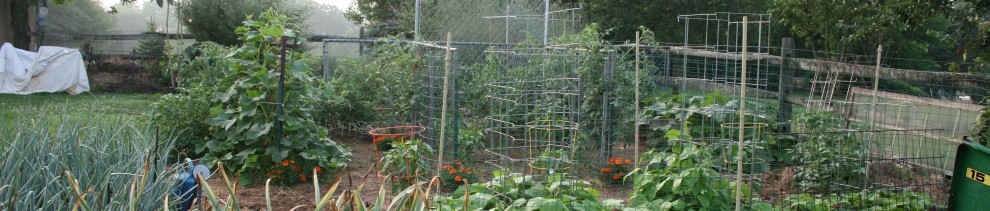
Organic Gardening Made Easy – How To Control Bugs Without Pesticides – Part I

It’s so very easy to reach for the spray or the powder and just pour it on your plants.  It’s so easy until you start reading labels and headlines about just what these various products do to you, to your family, your soil, your water and your neighbors.

Why not use chemicals?  Everybody else is.

Here’s the bottom line.  Before you unleash the myriad of products that will kill these pests, consider this.  While you are killing the bugs, you are also feeding your crops poison.  And it’s poison that can’t be washed off.

Root crops like potatoes, carrots, beets, radishes and fruit like apples, strawberries and peaches absorb and retain pesticides.  Even spinach isn’t safe in this chemical world.  Why?

When you eat these supposedly healthy foods, you are eating all the pesticides that come along for the ride and there are literally dozens of them as well as  growth retardants and fungus inhibitors.

How To Stop Using Pesticides
It’s really very simple.  Just say, “NO.” to using any herbicide or pesticide at all in your organic garden.

Yep, that’s it.  The answer is not to fall under the spell of easy and fast because these products are also deadly.   But the question still remains:  how do you control bugs without pesticides?

You may not like the answer because this bit of organic gardening will add time and tasks to your life. And you’ll also have to get a bit ruthless.  But don’t be seduced by products like Sevin, another “fast, easy” that some gardeners will tell you is okay to use.  It kills without discretion.

Sevin works but it also kills beneficials at the same time it kills pests.  And it is considered toxic to humans.  It is part of the Carbaryl family – N-methyl carbamate – and it can cause headaches, nausea, vomiting, diarrhea, dizziness, sweating and, in serious cases, pulmonary edema.  In other words, it just isn’t good for us or for our plants.

So, how does an organic gardener manage the pesky pests that will be in the garden and will do damage?  Here’s a hint; the title of this chapter should read how to get up your courage and get revenge.

How To Handle Being Bugged
First of all, know your enemy.  This means the good, the bad and the ugly.  I learned this after having killed a number of caterpillars eating my dill only to find out they were Monarch butterflies in larval stage.

You really will need a resource to help you figure out just what’s chowing down in your garden and whether or not to crush it, drown it, or boil it.  Remember the bug book I said I invested in?  It has saved the lives of countless thousands of good bugs and helped me identify and kill the bad ones.

Knowing what could be doing damage to your produce gives you a leg up on handling it.  Here’s my list of least favorite and most hated insect enemies.  They will probably end up on the top 10 list of anyone who grows anything, anywhere.

Ten Most Wanted Bugs
By the way, my top 10, most wanted (dirty, rotten, chewing, egg laying) bugs, are in order of how much I hate them:

  1. Colorado potato beetles
  2. Japanese beetles
  3. Asian beetles
  4. Cucumber beetles
  5. Mexican bean beetles
  6. Asparagus beetles
  7. Tomato horn worms (finally something not ending with beetle)
  8. Stink bugs
  9. Slugs
  10. Bag worms

Non-toxic Weapons of Mass Destruction
Handling each of these pests begins with putting healthy plants in the ground.  Healthy plants are more able to withstand an attack and less likely to keel over and die.

You can also put in some “sacrificial” plants, ones that will lure the marching army of pests to a spot that is not part of your garden.

Second on the list of non-toxic tactics is learn to use floating row covers to keep insects out but let light and moisture still get to your plants.  Most of the row covers on the market today are spun polyester. They are so light that you don’t need to buy hoops to hold them up.

You can get them in different weights but most backyard gardeners don’t need to use heavier stock.  And floating row covers can be used over and over again so you only have to invest in them once (or twice if you’re a lifelong gardener).

Next week:  A list of weapons (including my kluged recipe for handmade insecticidal soap with a kick) that will help you win the war on bugs without the  broad-based killing of the good bugs and without poisoning yourself or your loved ones.

Grow So Easy Organic – Nice-to-Have Gardening Tools

The first set of tools I suggested are all useful for any gardener.  But I’m a practical organic gardener so I love the fact that most of them are found, free or inexpensive.

This set of tools are nice to have and will make your life a bit easier but you don’t need them to be an organic gardener.  If you’re new to the hobby, you might not want to invest in anything but the necessities until you know if you like gardening.

If you try gardening and like it, you can start looking over this list and pick out the tools you think you would like to add to your collection.

Tools That Are Nice To Have
Here’s my list of “nice to haves” for organic gardeners:

  1. A kneeling pad – you can make one of these or buy one.  I’ve had my small green one for more than 15 years and it really, really saves your knees!
  2. Gloves – I consider these nice to have because you really can dig in the dirt, bare-handed, and suffer no ill effects.  In fact, I don’t use gloves because I love the feel of soil in my hands.
  3. Two hand tools – both of mine are Fiskars because of the grip, the design and the lifetime guarantee. The first tool is the “Fiskars 7079 Big Grip Garden Knife. The second tool is the Fiskars 7073 Big Grip Trowel.
  4. A pitch fork – used to move the straw back from the fence sections a couple of weeks before planting so the soil can warm a bit. Also handy when digging up potatoes or garlic or spreading mulch.
  5. A watering can – very nice to have if you want to hand-water fresh transplants or apply liquid fertilizer.
  6. Peat pots – I use 2” and 4” peat pots and hate paying the price for them.  But they make transplanting easier for me and less stressful for the baby plants so I pay.  Tip:  I try to get them online rather than in a big box store where the price is always higher.
  7. A sharp knife or pair of scissors nicked from the kitchen – nice to have on hand to cut baling twine and great for cutting off produce rather than trying to pull it off.  Having lost several battles with eggplant and peppers, I tend to keep a sharp knife in my garden basket and use it with malice aforethought.

Bonus Tools You Can Use
Here’s are a few more items I’ve learned to keep on hand or invest in.  They all help to make my gardening go a little easier:

  1. A good bug book – this could be one of your larger expenses but, believe me, you will be grateful for putting out the cash.  Why?  There are a whole lot of good bugs in the garden that will do battle with the bad ones without you lifting a finger.  But, if you don’t know the good from the bad, you could be killing your soldiers and giving the enemy a chance to overrun the battlefield, i.e. your garden.  I bought Garden Insects of North America by Whitney Crenshaw and the up close images of bugs help me identify what I’m battling.
  2. Soaker hoses – using soaker hoses saves water but they can also slow down or stop soil-born diseases that are spread by spraying and bouncing water on plants.  And I found and use what I think are the best soaker hoses in the world just last year – the Gilmour Flat Soaker hose.
  3. A small propane torch – the handheld kind – I use this to burn tent caterpillars off my fruit trees.  It’s a bit brutal but it burns the nest and the caterpillars before they can strip my trees.  Oh, and you can use it to burn out poison ivy, too.
  4. Raised beds – I make mine with 2 x 12’s (NOT pressure treated) and plastic anchor joints from Home Depot.
  5. A good pair of secateurs like Felco F-2 Classic Manual Hand Pruner. These hand held clippers can cut through a 1” branch like it was butter.  They let you trim inside the plant, bush or tree instead of hacking off the outer foliage or branches.

These lists contain all tools I consider nice to have if you want to move beyond dabbling in organic and decide to grow most of your produce every spring, summer and fall.

Bit of advice?  Before you buy any of these items, look on http://freecycle.org  or http://craigslist.org  to see if you can get them for free or cheap!

Tell me about your favorite gardening tools and why you like them!

Next week, how to handle being bugged without using pesticides.

Grow So Easy Organic: Organic Control Measures for Striped Cucumber Beetles

I will post about the tools that would be nice to have on Friday but I could NOT resist sharing this great post about doing battle with cucumber beetles.

This group – High Mowing Organic Seeds –  is truly organic – no pseudo sprays or powders for them.  Just some old-fashioned organic advice on how to fight these little striped demons.

Hope you enjoy it.

Organic Control Measures for Striped Cucumber Beetles | High Mowing Organic Seeds’ Blog – The Seed Hopper.

Organic Gardening Made Easy – Practical (Free) Tools You Will Use

I call this section in my book, “Practical Organic.”  Why do I think organic gardening is practical?  Just this.

Unlike traditional gardening, if you go organic, there are a lot of things you will NEVER have to buy.

You do not have to buy any chemicals or herbicides.  You don’t have to have fancy sprayers or a rototiller – not even one of those small ones named after the bug that prays.

The short list of what you need is dirt, water, seeds and sun.  If you try organic gardening and don’t like it, you’ve probably only invested a few dollars and some time.

But if you do try it and you do like it, you probably already own just about everything you might need to get started.  What you don’t own, you can usually get, for free.

So, here’s my list of what you need to be an organic gardener:

  1. Dirt – free.
  2. Seeds – cheap to buy and even cheaper if you save some for next year’s garden.
  3. A big spoon or small shovel – something to dig holes with when transplanting.
  4. Newspapers – free if you ask your neighbors and co-workers for them.  You can use them for mulch and make transplant pots with it, too.
  5. Straw – free if you find a farmer who has old or moldy straw to get rid of and which works just as well as the golden yellow stuff.
  6. Some found items that your cukes, tomatoes and peppers can climb
    Cucumbers growing up an old inner spring.

    Cucumbers like to climb and did great on this old bed spring.

    up or grow in.  When I say found, I mean things like the old double-bed spring I use for climbing vegetables or the headboard and footboard from the cast aluminum bed that I found on the side of the road.

  7. Epsom salts – dirt cheap in half gallon milk shaped containers.
  8. A bucket – free if you can get a hold of a kitty litter container or a dog food bucket.
  9. A mug – free if you liberate it from your kitchen and use it to deliver water or fertilizer right to the roots of your plants.
  10. Twine – free if you (or someone you know) buy straw by the bale, save the baling twine and use it to tie up plants.  You can also get tons of baling twine in any horse barn.  NOTE:  Do NOT use green baling twine.  It has been treated with strychnine to kill mice and rats.
  11. Old, sheer curtains, old bed sheets and even old mattress covers – free if you save yours or ask relatives and friends to give their old ones to you.  They don’t look as pretty as commercial row covers but they will keep frost off your baby plants.  And they’ll slow down all the bloody beetles that want to share your food.
  12. Access to a public library – free and there are always books and magazines about organic gardening ready for you to browse through, borrow and take notes from.Oh, and libraries have computers and internet connections. Using them is free. And online is just FULL of ideas, tips and advice on organic gardening.  All you have to do is put in your search terms and hit Go.
  13. An old 3-ring binder and some paper – can be free if you ask co-workers to save used copy paper and write on the back.  NOTE:  I consider this a requirement for my gardening.  If I don’t write down a tip or a “lesson learned”, I forget and end up repeating my mistakes again and again and again.
  14. A bit of inventiveness, a dollop of gumption and enough courage to try, fail and try again.

There’s no hurry.  You don’t have to have all of these things all at once in order to get started.  In fact, I accumulated all the items above over the years.

So, you can garden happily without most of them but there will be some challenges.   Next week, tools that are “nice to have.”  These may cost a bit up front but may also save you a lot over your lifetime as a gardener.

Organic Gardening Made Easy – Getting Started

When I wanted to learn about organic gardening, all those years ago, there was no Internet (hard to believe, right?).

I’d never heard of Ruth Stout or Jerome I. Rodale.  Euell Gibbons wasn’t touting Grape Nuts, yet and Adele Davis had already been dismissed as a “nutrition nut.”  Jim Crockett (Crockett’s Victory Garden on PBS) hadn’t even shown up on television (yes, Virginia, we did have television back then)!

So, I had to start my search the old-fashioned way.  I got on my bike and went to the library.

Using the Reader’s Guide to Periodical Literature (oh god…I am a dinosaur), I searched for magazines to help me get started.  There weren’t many — a handful really — but I did find information and people to help pave my path to becoming an organic gardener.

Today, it’s a lot easier to find organic gardening resources.  Connect to the Internet, search for those terms and you will get more than 4 million links to sites that offer everything from tips to tools.

But beware, many of these so-called “resources” just want to sell you something. I think I had it easier (back in the stone age), to find one or two clear voices, crying in the gardening wilderness!

I learned a lot from these “old guys and gurus” of organic gardening. I want to share what I learned and launch your gardening careers fast and easy.  So, I’m going to start with this basic truth:

…organic gardening is as easy as you want to make it.  It’s all about what you want to grow.

Start by figuring out what you want to plant, how many plants you want to put in (based on how large your garden space is) and what works in your planting zone (more on this later).

If you just want to get out there and get started…here are two staples in my garden that are easy to grow and don’t have many bugs that “bug” them.

I always have tomatoes – they’re a great vegetable to put into a pot (if you don’t have enough room to garden or your dirt’s not ready yet) or a plot.  If you’re just starting, try to buy compact or “bush” plants.  They’re easier to handle and don’t grow nearly as tall as indeterminate varieties like Brandywine or Early Girl.

I always plant lettuce, too.  A bag of spring greens  in my grocery store costs $5.00 for 12 ounces.  Fifty two weeks of buying greens comes to just under $300.  You can raise enough for you and your significant other for less than $3.00 a year.  

You can buy seed and follow the directions on the packet to plant it.  Or your can buy small starts or plants and toss them in your dirt (in a pot or a plot).  All lettuce needs is dirt, water and a little sun.

And when it gets a bit too warm for lettuce and it starts to bolt (get tall and taste bitter), if you let it go to seed, you can plant a new crop in the fall for free!

One tip from someone whose motto is, “If it’s worth doing, it’s worth overdoing.”   Start small and only plant those crops you want.

Since it’s already planting season just about everywhere in the United States, I want you to gather up your courage, grab your car keys and head out to a nursery near you to buy your first plants (time enough for seed starting next spring).

Dig a hole, water your transplants in and sit back and watch mother nature take over.

NEXT FRIDAY:  Tools for the practical gardener.  They’re “practically” free and are all you really need to begin organic gardening.

Just a note: There will be much more information on plant choices, transplanting and plant care as this e-book unfolds but since it’s growing season everywhere, I want to share some simple choices so gardening newbies could get started.

Organic Gardening Made Easy

Organic gardening is easy!

No matter what you’ve heard or read or been told, organic gardening is the easiest, most natural way to raise and grow your own vegetables, fruit and herbs.

Organic gardening is cheaper than gardening with chemicals.  The time and energy it takes to grow organic is about the same as chemical gardening and maybe even a little bit less.

So, just how easy is organic gardening?  I’ve been doing it for almost 30 years while working 80 or 90 hours a week and taking care of a family, pets and home. And I’ve loved every minute of it.

That’s just what my new e-book, Grow So Easy Organic; Organic Gardening for the Rest of Us, is all about.

Every week, I’ll post another chapter of Grow So Easy for you to read and enjoy.  It’s filled with practical ideas, funny stories, and straight advice on everything from choosing your plants to choosing your weapons for battling bugs.

The book is a work in progress, growing and changing as I grow and change.  And hopefully, it will grow and change as you share your tips, ideas and learning moments with the rest of the organic gardeners who subscribe!

I hope you’ll join me and learn all about organic gardening for the rest of us.