Growing Season Begins! Tips for Getting Ready

It’s time!

The weather is relenting; the cold retreating.  Birds are singing and trees are putting on their Spring buds.  It’s gardening season and I have some tips for you on how to make the most of the next two months.

Outside, it’s cool weather crop planting time in Zone 6A or 6B or whatever USDA is calling it now.  For me, that means putting in lettuce seeds in the old truck bed and sowing beet seeds.  I’ll keep both watered by hand (a hose would still freeze solid) for the next 2 to 3 weeks while their hard hulls soften, crack and start to reach for the sun.

Inside, I’ve transplanted the baby kale to small pots and given them a quick feed. IMG_2189They’ve been moved out of the basement to join the lettuce I started inside and I’m now hardening them off.  Both are starting to go outside for quick visits with the sun and the wind.

Meanwhile, back in the basement, the tomato and pepper seeds I started in cells just got transplanted into cow pots (which I got online at a great price).

Seedling tomatoes and sweet peppers

Transplanted tomatoes will live in the basement until early May.

Sweet Italian Pepper Transplants

These babies will stay in the basement, growing, being fanned and fed, until the first week of May when they will take their place in my office and begin their hardening off process.

NOTE:  I used to harden plants off haphazardly.  Dangerous! The seedlings you worked and worried over will quickly die if they are not properly introduced to the great outdoors – an hour a day for 2 days, 2 to 3 hours a day for 2 to 3 days, 8 hours a day for 3 days and only then (and only if it’s not hailing or very windy) do they get their first overnight!

DOUBLE NOTE:  I also used to hurry and plant my babies by May 7th or 8th. Frequently, the ground was too cold for warm weather crops like tomatoes and peppers and they simply stopped growing for a couple of weeks (or forever in some cases).  Putting plants in the ground too early can be deadly so give the soil a chance to warm while you get your plants ready for the great outdoors.

If you don’t want to start bedding plants from seed and you happen to live in Amish country or near some old, established nurseries, go check out their plants. Maple Shade Nursery in Kirkwood, PA is Amish run and you can watch the women tease baby plants apart and re-pot them right at the register.

In the Spring, I can get an early fix just by visiting and strolling through their greenhouses.   I supplement my seedlings with theirs and I buy herb plants from them like my Bay “bush”.
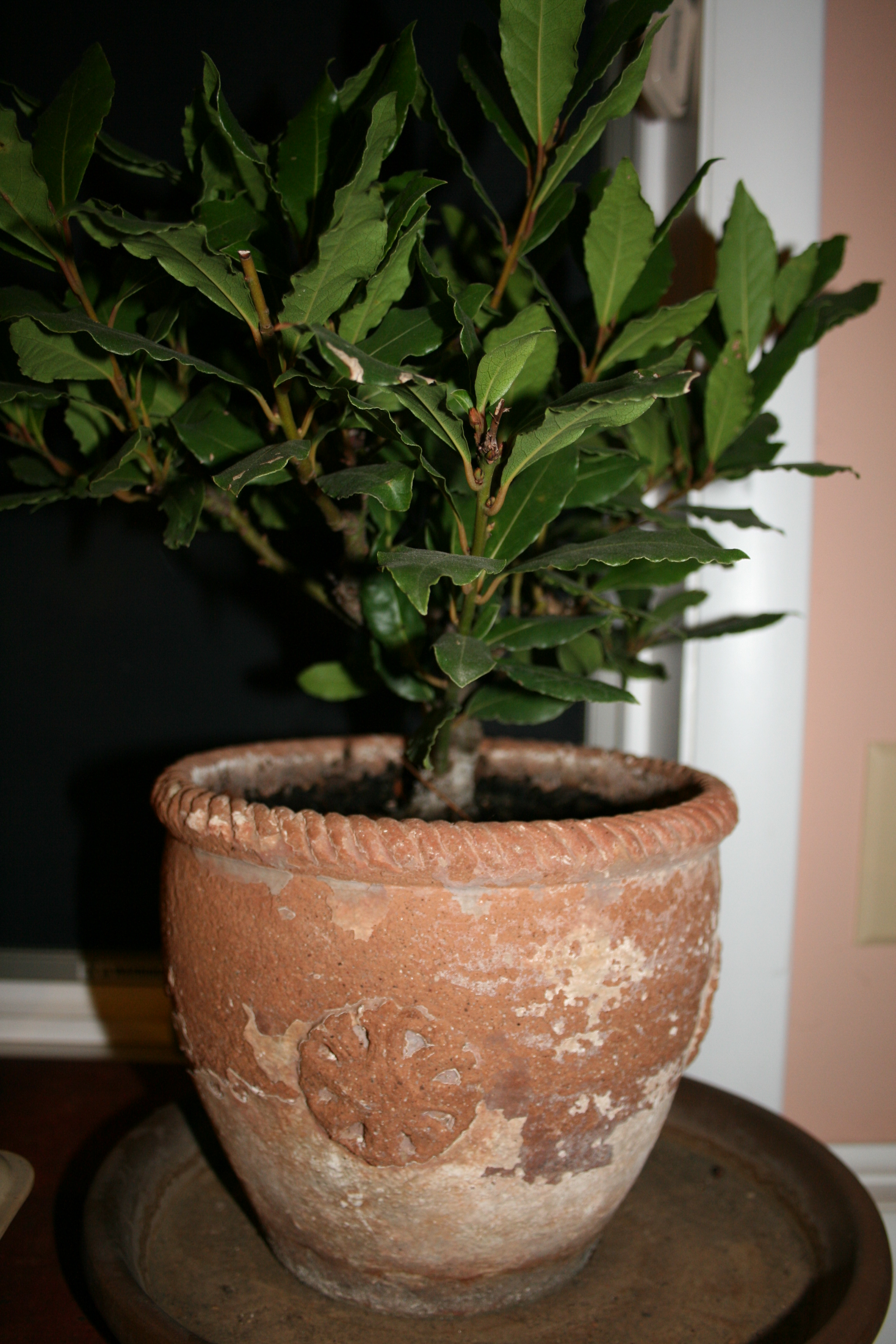
Bay plant, bay leaves, Amish nursery

“Bayby” is a bay plant I picked up at an Amish nursery 5 years ago.

“Bay-by” was in a 3 inch pot when I bought her but now, 5 years later, she graces my desk with her splendid inch wide trunk, stands a foot high and provides me with fresh, tasty bay leaves for my soups and stews.

I simply bring her in during the winter then set her out on the patio for late Spring, Summer and early Fall.

FYI – the reason I avoid big box stores when it comes to getting bedding plants is because I have NO idea where the seed came from (I want organic and no GMO) or what they’ve been fed.

Want to learn more about organic gardening?  Want to see just how easy it is to grow your own, healthy and organic food.  Take a look at my Kindle book – Grow So Easy; Organic Gardening for the Rest of Us.

RECIPE: Zucchini-Crusted Pizza

Tis the season for zucchini…fa la la la la la la la! So, I am reposting one of my favorite foods – Zucchini Crusted Pizza.

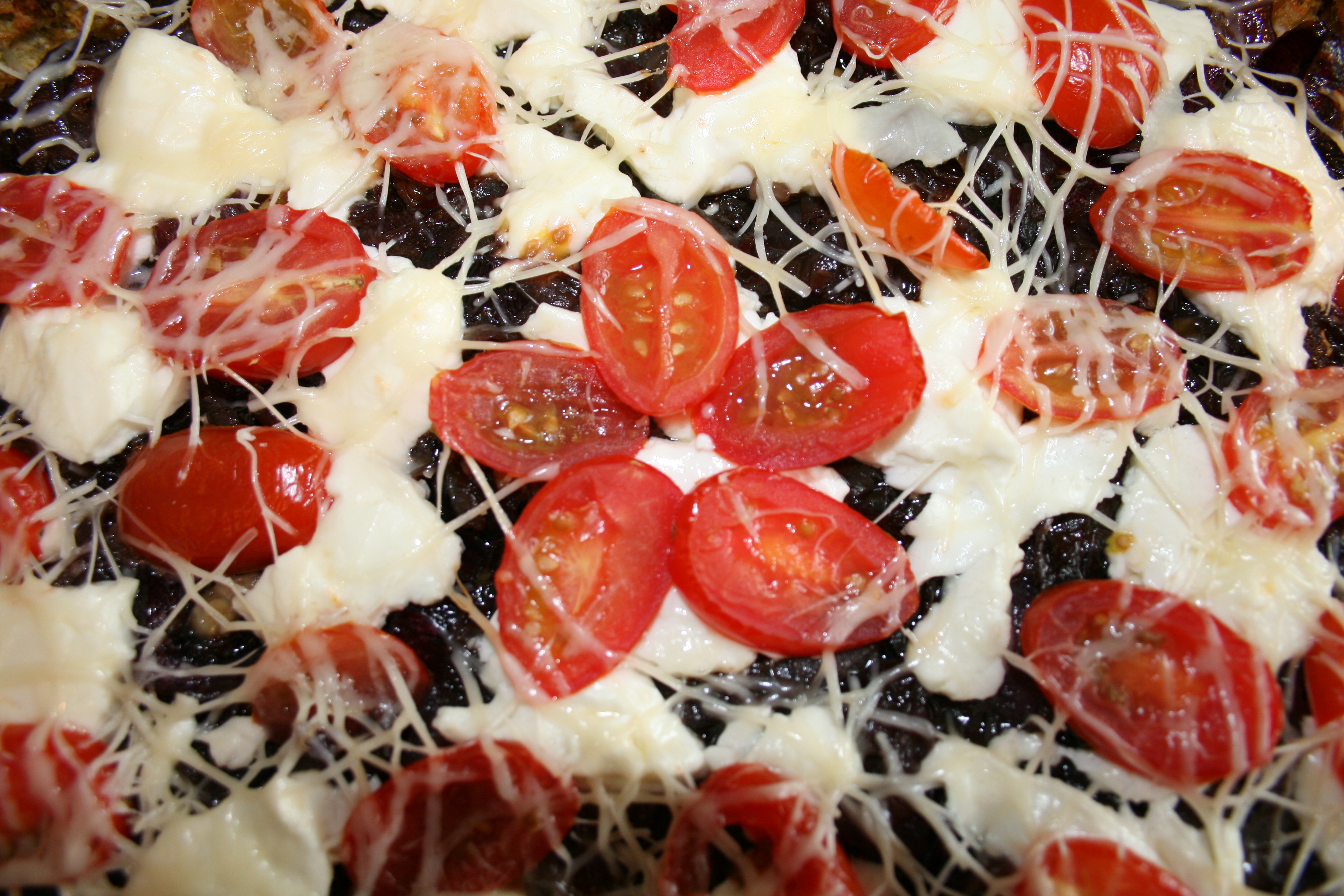
Zucchini Crusted Pizza

Zucchini Crusted Pizza

What’s really nice is that I had all the ingredients in house, already.  Even more special than that?  Almost all of the ingredients came from my backyard garden.

I raised the zucchini, garlic, fox cherry and roma tomatoes , onions, basil and oregano.  I give Trader Joe’s the nod for the black bean dip (which I mixed with my homemade tomato paste) and the goat cheese.

So, here’s the recipe!

Zucchini Pizza Crust
8 cups fresh shredded zucchini
1 cup shredded cheddar cheese
2/3 cup almond flour
2 cloves garlic, pressed or minced
3 tsp dried oregano
1 tsp basil
2 eggs, beaten
1/2 tsp salt

Pizza Sauce & Toppings
Homemade or organic tomato paste
Carmelized onions
Goat cheese
Thinly sliced, fresh organic tomatoes
Grated pecorino romano

Optional toppings:
Roasted peppers or roasted pepper spread
Black Bean dip
Mushrooms

Directions
Preheat oven to 550F.  If you have a pizza stone, put it in to pre-heat it.  I just use a stoneware deep dish pizza pan.

In a large bowl, toss the zucchini with 1 teaspoon coarse salt and set aside for 15 minutes. If frozen, thaw out and put into a large strainer.  Squeeze the excess moisture out of the squash by wrapping it up in a clean tea towel or piece of cheese cloth and wringing it out, discarding the water.

Once all of the excess moisture has been wrung out and discarded, place the shredded zucchini into the bowl and add the cheddar cheese, flour, garlic, oregano, basil, eggs, and salt.  Mix with your hands,

Place the zucchini mixture and using your fingers, spread the mixture to fill the pan or stone pushing it up the edges (if using a pizza pan) so that it forms a edge crust.

Bake the pizza shell itself until it starts to brown.  NOTE:  if your zucchini was too moist, just let the shell cook a bit longer to ensure it’s done, all the way through.

Pull the crust out of the oven and top with sauce, cheese, onions and any other ingredients you want, put it back in the oven and bake 10 to 15 more minutes – until the cheese melts and the sauces heat through.

Zucchini Crusted Pizza

All natural Zucchini Crusted Pizza

FYI this is good hot or cold – in case you lose power!  Bon appetit!

Grow So Easy – Planting Lettuce In the Dead Of Winter!

This winter, according to Accuweather, my Mid-Atlantic zone is running about 10 degrees colder than normal.  I would say so! With wind chills, we have hit  negative numbers like -17 and -24 degrees.

For a gardener, sitting inside, listening to the wind howl and watching the earth be scoured by shards of bright, shiny snow could be depressing.  But this week, I decided to head for the basement and start some seeds.

What could I possibly have in mind considering the arctic conditions outdoors? Just one crop…lettuce.

I love raising my own lettuce.  It’s a love born out of hate.  That sounds like an oxymoron but it isn’t

I started raising lettuce when the price for 12 ounces of the organic stuff hit $5.98 a bag.  For me, that’s $18 a week for just a bit over a pound of green leafy lettuce.  Do the math.  I was spending almost $1000 a year on lettuce!  Try doing that on a fixed income.

I hated paying the price so I stared planting and growing my own.  And guess what?  Lettuce is one of the easiest crops I have ever raised.  And, it’s a two-fer! Save your seeds and pay no more (well maybe you’ll have to buy every 3 or 4 years).  Just keep planting and harvesting.

So, let’s start with seeds.  I am pretty particular about whose seed I buy.  I want organic seed, especially if I plan on saving and sowing.  And I want flavorful leaf lettuce — not head lettuce you have to chop with a cleaver.  And I definitely do not want Genetically Modified (GMO) seed.

There are four places I buy seed:

Adaptive Seeds – this is relatively new company, established in 2009 and based at Open Oak Farm in Sweet Home, Oregon. Their seeds are absolutely wonderful.  The moving forces behind this company – Sarah Kleeger and Andrew Still — are devoted to “…finding, stewarding and sharing rare, diverse and resilient seed varieties for ecologically-minded farmers, gardeners and seed savers.” They sell only public domain, open pollinated (OP) seed, as well as many diverse gene pool mixes.

Hudson Valley Seed Library –  the variety they offer is impressive.  Their seed is  locally grown in a climate and soil not unlike mine here in Zone 6b.  And this company helps support school and community gardeners with donations of seeds.

Territorial Seeds – kind of the granddaddy of organic seed growers, this company was organic before organic went mainstream.  Family owned, Territorial Seeds has a fantastic reputation for the seeds it sells and the customer service it brings to the table.

Grow Italian – I discovered this company more than a decade ago and it’s my go to seed company for all things Italian including some lettuce and mixed greens.  When you buy a packet of lattuga from them, you get high quality, high-germinating seeds and a lot of them.

Lettuce is an easy crop to grow and so tasty.

I think the hardest part of growing lettuce is picking the kinds you want to try.  But once you have your seeds, planting is so easy, you’ll wonder why you didn’t do it sooner.

I tend to sow the seeds right in the garden bed.  One problem planting lettuce is that the seeds are small and lightweight and they tend to drop into the dirt in clumps or blow off my hand. I used to have a hard time getting them to spread out on the soil but here’s a trick my sister taught me.

  1. Get some soil – take it from your garden if it’s rich and light or grab some potting mix.
  2. Fill a quart jar about 2/3rds full of the soil.
  3. Put lettuce seeds in the jar.  I put different types together so I grow my own “mixed greens.”
  4. Shake the jar until all the seeds are mixed, uniformly, through the soil.
  5. Gently shake the soil out of the jar and into your beds. If you can still see some of them, put just a tiny bit of dirt over the visible ones.
  6. Water the seeds in.

Then all you have to do is water every day until the seeds spout.  Then water weekly and wait for the lettuce to grow.

A few more tips:

  1. Don’t plant in the summer!  Lettuce, like beets, likes cool weather.  You can plant in the spring and again in August for harvest in late September and October.
  2. Start lettuce plants indoors if you want.  I use 40-cell growing trays and start mine in early February.  When I transplant, I cover the babies with a small tunnel to protect them from frost.
  3. When you cut lettuce leaves, don’t cut them down to the ground.  Cut about an inch from the bottom and you will get a second crop.
  4. If you want to save the seeds, plant for a spring harvest but only cut the first crop.  Let the second set of lettuce leaves grow up and flower.  Then wait.  It will be tempting to take the flower heads off when they get their puffy, white hair.  DON’T.  The seeds need to mature.  Wait until the heads are dry, brown and about ready to burst.  Then pull the seed heads off, take the seeds out and let them dry in a small strainer for a couple of weeks.  I refrigerate mine once they’re dry and plant them in the fall.

So while the wind howls around our house, I am happily ensconced in the basement playing with and planting lettuce seeds.

Excerpted from my book – Grow So Easy: Organic Gardening for the Rest of Us – a guide to easy, fun and productive organic gardening for everyone.

Complete Guide to Seed Starting from High Mowing Seeds

Used to be seed catalogs were one of the first signs of spring for me.

Now, it’s posts by some of my favorite organic gardeners like this one!

This is from High Mowing organic seeds, one of my favorite East coast operations.  It’s a complete guide to seed starting.  And, as a bonus, it includes a link to Margaret Roach’s garden planting calculator!

High Mowing shares information freely and sells some of the best organic, heirloom seeds and what they call “future heirlooms” like their latest – Abundant Bloomsdale spinach.

Enjoy their wonderful tips and tools, buy their seeds knowing you are getting organic seed free of GMOs and get excited! Gardening season is here!

Gardening Means Living The Good Life

The approach of Spring always makes me thing about all the reasons I garden.  There are obvious ones:

  1. Gardening can mean the difference between eating, at all or eating well.
  2. Gardening saves money! No big investment is required.  You
    Found bed spring makes a free trellis for my cucumbers.

    Cukes growing up an old inner spring I found.

    probably own most of the tools you might need and you can get the rest on Craigslist — cheap!

  3. Gardening lets you choose what you grow and harvest instead of relying on what large-scale growers can grow quickly and cheaply so, heirlooms are always on the list at my house and so are some weird, wonderful and different veggies.
  4. Gardening can mean eating healthy fruits and vegetables that are NOT loaded with pesticides and fungicides and overtly and covertly changing your body’s ability to fight off chronic illnesses like diabetes, kidney and liver disease and even dental caries.

Then there are the reasons that only other gardeners might know:

  1. Visiting the garden early in the morning to pull weeds or maybe plant some more seeds, listening to birds waking up and calling to each other, watching mist swirl away — clouds returning to heaven — puts you a little closer to the center of the Universe than anything else can.
  2. Watching seeds sprout and plants grow, seeing the first fruit set and harvesting leaves of fresh kale or spinach or baby lettuce are all tender moments which every gardener savours, every time these moments occur.
  3. Sitting at your desk, closing your eyes, seeing your garden and feeling the peace you find there helps to let go of all the anger and sorrow that our long, stressful, work days can sometimes bring.
  4. Running home, ripping off your shoes and socks and standing, barefoot, in soil warmed by the sun literally grounds you.
  5. Celebrating life — gardening is a celebration of life — all kinds, all shapes, all sizes and all colors brings such deep joy.

Gardening is also a small but significant step on the road to saving ourselves and our planet.  If everyone in every community joined in – grew their own, shopped local, thought about the environment EVERY time they bought, used or tossed out, we could work together to help save this planet, our home which we sail through space on.

Why do you garden?

Grow Peppers as Perennials

Growing peppers organically is second nature to me but I really never thought about trying to keep my sweet Italian peppers alive through the winter.

Who knew that peppers are perennials?

Jeff W – who created diy2thrive – knew.

His most recent podcast is all about how to grow peppers as perennials. I had no idea that in their native environment, peppers can live 5 to 7 years!

And his podcast doesn’t stop there. He discusses how peppers like to grow, what they like to eat and why peppers are a miracle food.

I love Jeff’s podcasts in general and really love the ones where he adds history, health benefits and tips for use.

So enjoy this podcast and sign up for more. I did!

Eartheasy’s Composting Tips

If you are retired or you just like to work hard at gardening, Eartheasy offers some good tips on how to make compost over the winter.

The tips tell you how to cope if you have really cold, snowy winters or really wet ones.  And they cover location, additions and protection of your compost.

But if you are a lazy gardener, like me, one who thinks God handles composting pretty well, then you might want to read about my method of composting.

And if you want to know why composting is so important, check out why the magic of gardening truly is, “…in the dirt.”

BONUS:  two of my very favorite books on dirt are included in the Magic of Gardening.  Dirt: The Ecstatic Skin of the Earth by William Bryant Logan and Holy Shit: Managing Manure To Save Mankind by Greg Logsdson.

If you’re looking for a gift for your organic gardener, you can’t dig up any better than these two tomes.  Perfect for reading on the coming winter days!


6 Health Reasons to Garden

Eartheasy does it again!

The Eartheasy fall newsletter has a lot of wonderful information in it (as usual) but gardeners will love the article by Robin Jacobs.

Jacobs, who holds a master’s degree in counseling psychology, with special interests in holistic nutrition and community systems, identifies 6 ways gardening positively affects health!

Most of us gardeners know that our hobby is good for us, intuitively.  Jacobs provides some substantive information that shows that our hobby is definitely good for our health.

Enjoy the article….and all the other lovely fall bits and bobs of information that Eartheasy offers.  And sign up for their newsletter!

This family owned business offers information, innovative products and incredibly good articles about living lightly (and well) on our mother Earth.


Plants That WILL Kill You

I love to garden; I love growing new and different plants. My grandson likes to try new plants — from the garden but also ones he “finds.”

It’s hard to tell a boy becoming a man what he should or should not do but in this instance, the conversation was short, sweet and to the point.

“If you don’t know what it is, don’t eat it.”

This was followed by a short series of reasons why he shouldn’t eat anything or everything he found in the yard, the woods or by the pond.  He appeared to listen but I wasn’t sure he could hear me.  So I turned to the internet and a web site that I use when in doubt.

The site is The Poisoned Garden.  It’s out of the UK and it is one of the most comprehensive sites I have ever found on the topic of poisonous plants.

The owner of this site is John Robertson, the former Poison Garden Warden at the Alnwick Garden, which is located in North Umberland, England. Robertson’s site is one of the best sites for looking up and properly identifying deadly plants.

So if you or one of yours likes to experiment with wild flora and fauna, take a minute to browse the Poisoned Garden or pick up a copy of Robertson’s book before you slice, saute and taste.  Is That Cat Dead is a wonderfully written book that’s available in both Kindle and paperback and is based on years of his work at the garden.

Visit the garden; read the book but if you are thinking about eating an unknown plant…here’s my final advice;  If there is ANY doubt; DON’T EAT IT!

Late Bloomer – Summer Garden Wrap-up – Episode 2.19 – YouTube

I love gardeners who love what they’re doing so much that they take the time to share information, advice and stories with other gardeners, even if it is all about fall clean up.

Kaye Kittrell is one such gardener.  Kaye is a member of my LinkedIn group – Grow Girls Grow Organic.  And Kaye makes the most wonderful videos about her gardening experiences.

Kaye wraps up all the lessons she learned this past year about aphids, powdery mildew and cabbage worms.  One quick tip for her and other gardeners:  to kill cabbage worms, get an old-fashioned flour sifter, put some flour in it and head to the garden early in the morning.

Make sure you get to the worms while the dew is heavy. Sift flour on the plant and worms and watch the sun dry them into papier mache worms! When it rains, the flour washes right off.  My mom’s tip and it works like a charm.

Professionally shot and edited, these videos are fun to watch and always teach this old gardening girl something new. So, I thought I would share!

Enjoy this wonderful, warm weather gardener’s adventures in dirt, especially here in the Mid-Atlantic where we are currently sitting under about 10 inches of snow and 1/4 inch of ice…all delivered in the last 7 days.

Late Bloomer – Summer Garden Wrap-up – Episode 2.19 – YouTube.

via Late Bloomer – Summer Garden Wrap-up – Episode 2.19 – YouTube.