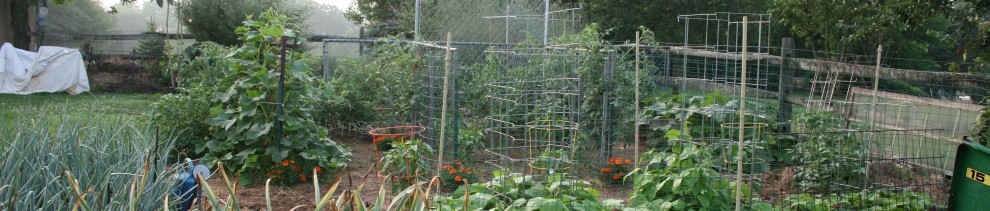
Grow So Easy – Fall Garden Clean Up

How much do you hate cleaning up your garden in the fall?

I used to.  When I  looked out my kitchen window and  saw more brown than green, I would grimace and think, “…next weekend.”  Inevitably, clean up kept getting pushed back by other, more pleasing events like the Hagley Car Show or lunch with friends at il Granaio.

But there comes a moment when I cannot put off the inevitable; I have to clean up the garden and put it to bed for the winter.  And I know I’ll be glad I did in the spring!

Garden Clean Up Tips
Anyone who has gardened for a few years has come up with their own tips and tricks for making garden clean up a bit easier.  Having 30 years of experience behind the hoe, I have discovered a few things that might make life easier for any organic gardener.

Be prepared.  When I go out to clean up, I always bring the tools I’ll need to make it easier.  So my tool bag (actually my wheel barrow) contains:

  1. Scissors – the knots you used to tie up tomatoes will be real tight after a summer of rain and heat.  Trying to pull them off just frustrates the gardener.
  2. Secateurs – if you try to cut back blackberries or blueberries without them, the chances are you’ll do more damage than good.  These small, sharp sheers can cut  through up to an inch of stalk or wood and are always in my bag of tricks.
  3. Baling Twine – picked up at the stable and used to bundle all the leggy tomato, pepper and eggplant carcasses.
  4. A shovel – I sometimes need to coax some of the plants from the ground.  Eggplant and tomatoes get stems more than an inch in diameter and their roots can extend up to 10 feet from the base of the plant.  So, a bit of shovel power comes in handy.
  5. A rake – I prefer the good, old-fashioned garden rake because it’s heavier than a leaf rake and the tines won’t work against me as I rake up fallen tomatoes and peppers.
  6. A bucket – I use an empty kitty litter container and I use it to pick up all the tomatoes that hit the ground at the end of the season.
  7. Garden gloves – I consider these optional.  I always start out wearing them but, inevitably, rip them off about 30 minutes into clean up.  I like the way the dirt feels on my hands.  But the manicure does suffer so it’s up to you whether you wear them or not.

Clearing The Ground
This is always the worst step for me.  I really hate  pulling off tomato cages, cutting vines out of my fence sections and tearing up the roots of the dying plants.  But once I get started, I actually enjoy it!

All plants (except perennials like asparagus, blackberries and herbs) need to be removed, tied and stacked up on the edge of the garden for disposal.  If you clip and clean up herbs at the same time,  you can use the wheelbarrow to hold these bodies.

If the flowers I use for pest control (and to jazz up the greenery), like  marigolds, nasturtiums and petunias, are still blooming, I leave them alone.  If they’re finished, they get tossed in the wheelbarrow, too.

I know some people put these plant bodies in their compost.  I don’t.

NOTE:  If you’re a slow composter like me –letting nature and God do the work for you — you probably shouldn’t put your garden detritus in the bins, either.  Seeds will germinate.  Diseases will survive.  When you spread your compost next year to welcome your new seedlings, you may be welcoming some very unwanted visitors.

One last task remains before you can move from clearing to covering.  If you grew tomatoes, grab a bucket and pick up all of the fallen tomatoes off the ground.  If you don’t you will have a whole lot of baby tomatoes to pull up next year.  This is a gooey task but well worth the effort.

Once the ground is cleared, it’s time to cover it.

Bug Control – A Pre-emptive Strike
During the growing and harvesting season, I don’t use any bug control except what I detailed in Getting Bugged.  However, if it’s been a very bad year for Mexican bean beetles, Asian Beetles, Japanese Beetles and Stink Bugs, just before I cover my garden, I do spray the straw remaining from last year and the ground in my raised beds.

Before you gasp, click unsubscribe and cry, “…traitor,”  know that I use only one product — Pyola.    The active ingredient is pyrethrin which comes from chrysanthemums and is mixed with canola oil.  I use Pyola to control next year’s bugs by killing the larva that are now safely snuggled into my garden ground.

NOTE:  Pyrethrin is a contact poison which quickly penetrates the nervous system of the insect.  It will affect bees and some  beneficials so don’t use it until there is no insect activity in your garden.   Also, pyrethrin is harmful to fish so if you have a pond or your garden borders on a stream, don’t use it at all.

Cornell University’s post on its ExToxNet provides a very thorough idea of what pyrethrin is, how it works and what it might do in the environment.  Read it before you use it so you’ll know if it will work in your garden.  And don’t use it if you don’t have to.

Blanketing the Garden
The last step in garden clean up is to lay down ground cover.  In my garden, that means a recipe of cardboard, newspaper, leaves and straw.

Cardboard goes down first.  I use it mostly to create  a barrier along the edge of my garden where crab grass and pig weed (to name a few of the likely suspects) like to lurk, slip under the fence and set up house in my garden.

I save boxes all year to get enough cardboard for my garden.  And if I come up short, I ask my friends to save boxes from work or home for me.  They know they’ll get plenty of tomatoes, peppers and green beans in payment next year.

Once the cardboard is down, I put down a layer of leaves.  Tip:  I don’t rake leaves.  I just troll the expensive neighborhoods and pick up the leaves their gardeners so nicely bag and put by the curb.

The last layer I put down is straw.  It helps hold the leaves in place.  And it breaks down, enriching my soil and making it better, every spring, for the seedlings to grow and thrive.

I use about 40 bales of straw  to cover everything including the blueberry and blackberry patches, the vegetable garden, raised beds and asparagus.  That may sound like a lot but by next spring, the 18 inches of straw I lay down now will have settled and started to break down.

So that’s my version of garden clean up.  Clean up really isn’t that hard but I avoid it because it signals the end of the growing season and the approach of cold winds and falling leaves.    It also means time for dreaming and planning next year’s garden…

And that’s what we’ll start doing next week.  I’ll share some resources for organic seeds and some tips to help make your next growing season easier and more productive.
Grow So Easy Organic – Apology

Due to technical difficulties, I have been offline for almost a week!  Which means I didn’t post last Friday.  My apologies….

I will post this coming Friday…all about putting the garden to bed.  Not a favorite job but one I am really glad I did come March of the following year.

Grow So Easy – Garlic – How To Grow & Harvest It

I got lucky when I married Italian because garlic is, was and always will be one of my favorite foods in the kitchen.

And it’s one of my favorites to plant.  Garlic is another crop that basically takes care of itself.

If you get the right cloves to plant then give those cloves a good start in the right soil at the right time, you should harvest enough nice-sized bulbs of garlic to last through the year.

Garlic is easy to grow and has much more taste if it's homegrown.

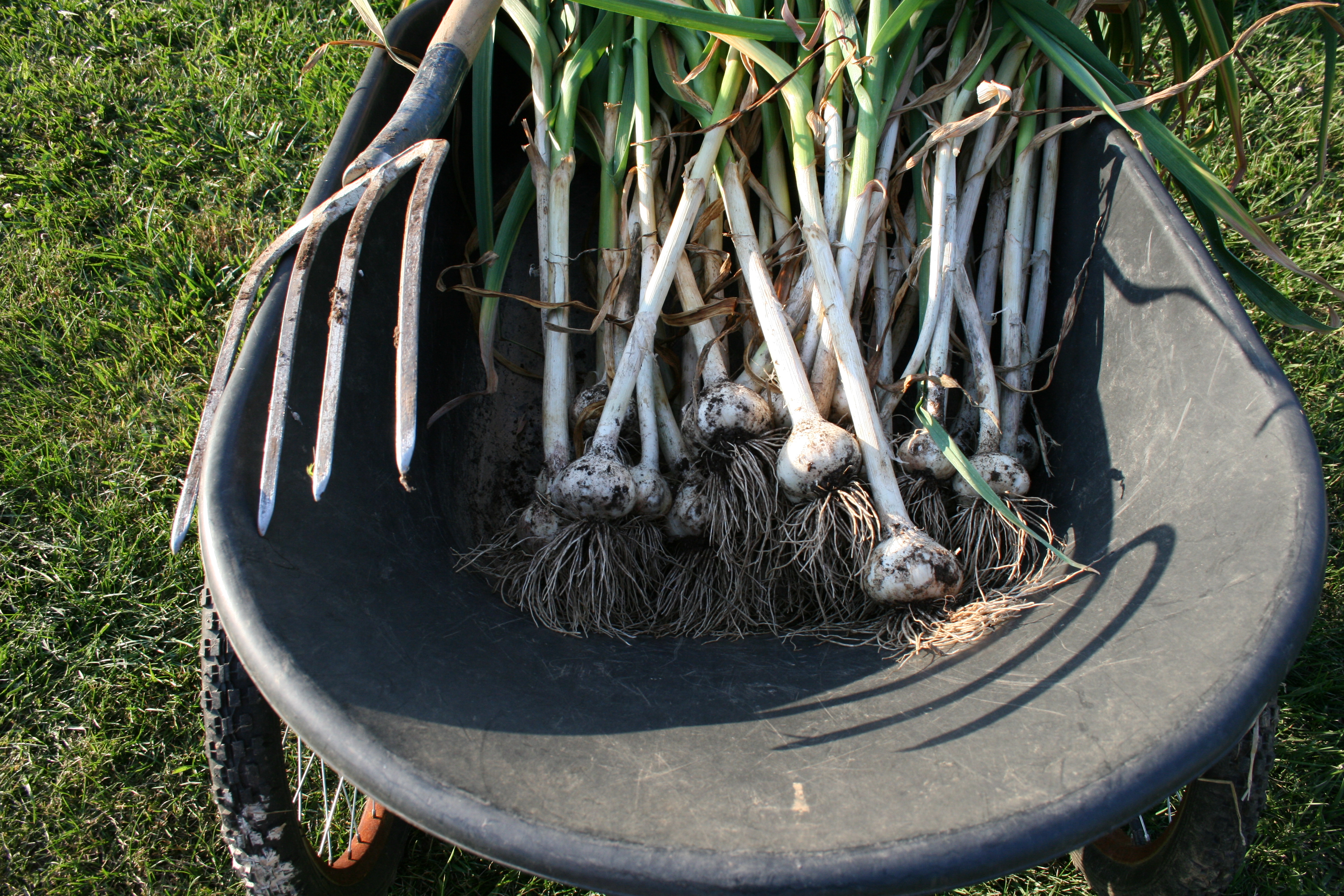
My garlic harvest for 2012.

Where To Buy
My first thought is to tell you where not to buy.

Don’t pick up garlic at the grocery store and expect to plant it and reap a big harvest.  You might get lucky, but you may also be planting cloves that have been treated not to sprout.

You could try buying garlic at a health food store but there is no way to know how viable it is.  If you want to try to grow garlic that is already growing in the soil in your region, try a farmer’s market.  Someone might be selling their garlic and you could get a good starter crop.

NOTE:  No matter where you get your first garlic bulbs, buy more than you think you will need.  Plant them all.  There are only two of us living here but I plant between 50 and 60 cloves of garlic (10 bulbs) every fall.  Sounds like a lot  because it is.  But it won’t all get used in my kitchen.

I share 10 or 12 bulbs but that still leaves 50 bulbs!  How many cloves can an Italian wife (by association) possibly use?  I actually go through about 35 heads a year.  So what do I do with the 15 left overs?

Most of them go right back into my garden.  I plant them.  I always plant enough so I can use my own garlic to raise my next crop.  There are a couple of reasons for using this method.  My garlic knows my soil.  And it’s adapted to my climate. It grows faster and stays healthier because it is acclimated.

Timing Is Everything
DON’T PLANT GARLIC IN THE SPRING!

If you do, you are doomed to fail.  The garlic cloves you plant are considered dormant.  They have to be exposed to cold temperatures in order for them to begin to grow and change from cloves to bulbs.

If you plant in spring, the bulbs don’t get exposed to low temperatures (32 degrees to 50 degrees for 2 months).  No cold means no bulbs, spindly growth and frustrated gardeners.

Besides, planting in the fall means that Mother Nature gets to do all the work while you sit inside browsing through seed catalogues and dreaming of spring.

Exact timing for planting day depends on where you live and yes, what zone you live in.  In my old Zone (6), garlic was planted on Columbus Day, October 12th.  However, with the slow warming of the earth, garlic planting day has moved back.

In Zone 6b, I don’t put it in the ground until the end of October and, sometimes, even as late as the second week of November.  Put it in too early and it sprouts then freezes.  Again, you could lose your entire garlic crop.

Planting when the world is getting frosty, the snow is falling and the wind is cold  seems wrong and it would be if that’s all you did.  But there’s an easy, cheap trick to keeping your garlic safe through the blustery winter months.

Blanketing Your Garlic
I don’t mean sacrifice one of your blankets and toss it on top of the newly planted garlic bed!  But you do have to cover your babies.

My cheap, easy trick?  Plant the bulbs then mulch with 24” to 36” of straw.  (This works with onions, too, by the way.)

The straw protects the bulbs from the cold, lets them overwinter safely and ensures they will be ready to start growing as early as March.

But once winter is over, it’s really important to uncover the garlic as early as possible so the sprouts don’t rot.  If they rot, you will lose your garlic crop.

Here’s an easy tip for knowing when to uncover garlic (and onions).  When the forsythia bloom, pull back the mulch.  You may even find a few garlic bulbs already sprouted under there.

Depending on your zone, you will probably get a few frosts after you uncover the garlic.  Just toss something over the young plants to protect them.  I use an old queen-sized mattress cover and drape it over the corners of the bed where the garlic is planted.

Harvesting Garlic
How do you know when to pull the garlic up?  Honestly, this has always been a struggle for me.

And the more I researched and read, the more confused I got.  Pull it up on this day/date.  When the leaves on one or two start to brown, push the rest of them over, wait a week and pull them up.  Wait until all the leaves on the plants are brown then pull them up.   Aaaaaaargh…as one our most famous philosophers used to say!

What finally cleared it all up for me was a simple, beautifully written article by one of my favorite garden gurus, Margaret Roach, who clearly understands the garlic harvest conundrum.

Too early, and the bulbs won’t have time to develop to their full size.  Too late and the bulbs will be over ripe, cloves will separate and the harvest won’t store as well.

Here’s the gist of Roach’s advice for harvesting garlic:  Harvest when several of the lower leaves go brown, but five or six up top are still green. Depending on the weather, this typically happens here (New York state) in late July.”

Rip & Regret
A word to the wise: healthy garlic develops a pretty serious root structure.  Do NOT try to pull garlic up by its greenery!  You will break the tops off and the garlic bulbs really need their tops to cure.

So, what’s the easiest way to pull these babies out of the ground?  With a garden fork – not the hand-held kind.  You want a flat-tined, digging fork like the kind you would use to dig out potatoes, like the one you see resting next to my garlic in my wheelbarrow.

  1. Start about 2 to 3 inches away from the garlic bulb.
  2. Push the tines down into the earth, almost as far as they will go.
  3. Rock the fork front to back and side to side to loosen the dirt around the roots of the bulb.
  4. Keep loosening until you can easily and gently pull the bulb from the ground.
  5. Equally gently, lay the cloves into a wheelbarrow.  Banging them will bruise them.

As soon as all your bulbs of garlic are out of the ground, you need to get them out of the sun and into a nice, dry, temperature controlled space with good air flow.  I use my shed.  I lay down an old sheet, then place the bulbs side by side but not touching.  I want air flow around each bulb.  And if one’s going south, I don’t want it to take the others with it.

Curing Garlic
Once you have them in your controlled drying spot, leave them alone for 6 to 8 weeks while they cure.  (I do check them to make sure none are going bad…). When they are cured, If they’re soft neck, braid away.

If they’re hard neck (what I always raise), you can cut the tops and the hairy roots off and store them inside.  I actually put mine in a big tray and shove the tray under the dresser in my sewing room.

The temperature is moderate in this room (I keep the thermostat at 62 in the winter) and the light is dim under the dresser.  My garlic seems to keep perfectly there.

NOTE:  check the cloves about every 6 weeks, especially if there is any aroma of  “garlic” wafting through the air.  If you can smell the garlic, it means one of the bulbs is probably going bad.  If you leave it in the general population, it may turn other heads bad, as well.

Save 8 to 10 bulbs of your garlic for planting in October and November and enjoy the rest, all winter and spring.

Aside

This winter, according to Accuweather, my Mid-Atlantic zone is running about 10 degrees colder than normal.  I would say so! With wind chills, we have hit  negative numbers like -17 and -24 degrees.

For a gardener, sitting inside, listening to the wind howl and watching the earth be scoured by shards of bright, shiny snow could be depressing.  But this week, I decided to head for the basement and start some seeds.

What could I possibly have in mind considering the arctic conditions outdoors? Just one crop…lettuce.

I love raising my own lettuce.  It’s a love born out of hate.  That sounds like an oxymoron but it isn’t

I started raising lettuce when the price for 12 ounces of the organic stuff hit $5.98 a bag.  For me, that’s $18 a week for just a bit over a pound of green leafy lettuce.  Do the math.  I was spending almost $1000 a year on lettuce!  Try doing that on a fixed income.

I hated paying the price so I stared planting and growing my own.  And guess what?  Lettuce is one of the easiest crops I have ever raised.  And, it’s a two-fer! Save your seeds and pay no more (well maybe you’ll have to buy every 3 or 4 years).  Just keep planting and harvesting.

So, let’s start with seeds.  I am pretty particular about whose seed I buy.  I want organic seed, especially if I plan on saving and sowing.  And I want flavorful leaf lettuce — not head lettuce you have to chop with a cleaver.  And I definitely do not want Genetically Modified (GMO) seed.

There are four places I buy seed:

Adaptive Seeds – this is relatively new company, established in 2009 and based at Open Oak Farm in Sweet Home, Oregon. Their seeds are absolutely wonderful.  The moving forces behind this company – Sarah Kleeger and Andrew Still — are devoted to “…finding, stewarding and sharing rare, diverse and resilient seed varieties for ecologically-minded farmers, gardeners and seed savers.” They sell only public domain, open pollinated (OP) seed, as well as many diverse gene pool mixes.

Hudson Valley Seed Library –  the variety they offer is impressive.  Their seed is  locally grown in a climate and soil not unlike mine here in Zone 6b.  And this company helps support school and community gardeners with donations of seeds.

Territorial Seeds – kind of the granddaddy of organic seed growers, this company was organic before organic went mainstream.  Family owned, Territorial Seeds has a fantastic reputation for the seeds it sells and the customer service it brings to the table.

Grow Italian – I discovered this company more than a decade ago and it’s my go to seed company for all things Italian including some lettuce and mixed greens.  When you buy a packet of lattuga from them, you get high quality, high-germinating seeds and a lot of them.

Lettuce is an easy crop to grow and so tasty.

I think the hardest part of growing lettuce is picking the kinds you want to try.  But once you have your seeds, planting is so easy, you’ll wonder why you didn’t do it sooner.

I tend to sow the seeds right in the garden bed.  One problem planting lettuce is that the seeds are small and lightweight and they tend to drop into the dirt in clumps or blow off my hand. I used to have a hard time getting them to spread out on the soil but here’s a trick my sister taught me.

  1. Get some soil – take it from your garden if it’s rich and light or grab some potting mix.
  2. Fill a quart jar about 2/3rds full of the soil.
  3. Put lettuce seeds in the jar.  I put different types together so I grow my own “mixed greens.”
  4. Shake the jar until all the seeds are mixed, uniformly, through the soil.
  5. Gently shake the soil out of the jar and into your beds. If you can still see some of them, put just a tiny bit of dirt over the visible ones.
  6. Water the seeds in.

Then all you have to do is water every day until the seeds spout.  Then water weekly and wait for the lettuce to grow.

A few more tips:

  1. Don’t plant in the summer!  Lettuce, like beets, likes cool weather.  You can plant in the spring and again in August for harvest in late September and October.
  2. Start lettuce plants indoors if you want.  I use 40-cell growing trays and start mine in early February.  When I transplant, I cover the babies with a small tunnel to protect them from frost.
  3. When you cut lettuce leaves, don’t cut them down to the ground.  Cut about an inch from the bottom and you will get a second crop.
  4. If you want to save the seeds, plant for a spring harvest but only cut the first crop.  Let the second set of lettuce leaves grow up and flower.  Then wait.  It will be tempting to take the flower heads off when they get their puffy, white hair.  DON’T.  The seeds need to mature.  Wait until the heads are dry, brown and about ready to burst.  Then pull the seed heads off, take the seeds out and let them dry in a small strainer for a couple of weeks.  I refrigerate mine once they’re dry and plant them in the fall.

So while the wind howls around our house, I am happily ensconced in the basement playing with and planting lettuce seeds.

Excerpted from my book – Grow So Easy: Organic Gardening for the Rest of Us – a guide to easy, fun and productive organic gardening for everyone.

Grow So Easy – Planting Cool Weather Crops Like Beets

One season gardening used to be all I did.  Put in the plants in the spring, harvest in July, August and sometimes in September and clean up in October.  Then the prices of organic produce shot through the roof and I started thinking that there had to be a way to get more out of my dirt than tomatoes, cukes, peppers and eggplant.

My adventure with growing more and longer began a bit late in my gardening life but I’m glad it did.  Truthfully, I probably will never get as far as master gardeners like Eliot Coleman.   who authored a favorite book of mine, Four Season Harvest, but I am enjoying cool weather crops like fresh lettuce, spinach and beets from March through October.


Let’s start this trip with one of my all-time favorites – beets

Beets
My mom raised the absolute best beets I have ever eaten.  Every time I drove to her farm in the far end of Virginia, she would somehow know exactly when I was arriving.  There, on the table, steam rising, butter melting, would be a big bowl of sliced beets, just for me.

But I never planted beets in my own garden.  Not before she died, not after she died.  Then, one day, while browsing through GrowItalian.com, I saw Chioggia beets.  Beautiful, round and ruby-red on the outside but when you cut them open, there are concentric white bands all the way through each slice.

I was in love with beets, again.

Beets Are Easy Peasy
I’ve had beets in my garden now for the last 5 years and think they are among the easiest plants to grow.  But if you Google “growing beets,” you will literally get more than 3 million entries.

Don’t be scared!

There are only a couple of things you need to know to raise not just 1 but at least 2 crops of beets every year. (That’s how many I can grow in Zone 6.)  WARNING: if you ignore what you are about to read, you will get red marbles…that will not cook or eat easy.  I know.  My first crop was used in a game of ringer.

The Dirt
This is almost one of the only requirements of beets and it’s one of the most important.  It’s also the bit of information I didn’t have when I raised my first crop of red marbles.  Beets really, really like loose, well-drained soil. They will put up with a wide range but won’t grow as big or as beautifully.

So do a bit of soil prep if you can. It may take a bit of time and effort but it’s worth it; I know.  And if you get the soil right, it’s smooth sailing to harvest time.

Remove stones since they will hinder growth.  If you’re growing in clay, add compost to loosen the soil and keep the soil from crusting after watering or rainfall.  And make sure your soil is acidic – beets like a pH range of 6.2 to 6.8.

When To Plant
Don’t plant in the middle of your summer season.  Beets won’t like it.  They are a perfect cool weather crop.  Although they can live through the heat (like the rest of us), they prefer a temperatures of 60 to 65 F and bright sunny days but they can also survive cold weather as long as they don’t get caught in a freeze.  So, beets are a great, “long-season” crop.

How To Plant
Beet seeds are outdoor babies from the get go.  As soon as your soil can be worked in the spring, you can plant them.  The seeds aren’t really just one seed – each of these little jewels contains a couple of beet seeds.  Sow the seeds 1/2-inch deep and I drop each seed about 3 inches away from the other seeds.  I also plant in rows about 12 inches apart.

Beets seeds are pretty slow to germinate so make sure you keep the bed moist until you see their little heads peeking out of the soil.  I usually water a bit, every day.  Once they start to pop up through the soil, I keep watering but usually every other day.

Once they are established, just make sure that you don’t let them dry out.  But don’t overwater either.  Too dry or too wet and your beets will not be happy.

Transplanting
TIP:  I don’t thin; I transplant.

Most advice online and in books says you have to thin beets rather than transplant.  Wrong!

Despite what people will tell you, you can transplant beet seedlings and almost double your crop. And it’s easy to do.

I wait until the leaves on the plants are about 2 inches long before I try transplanting.  The night before the big move, I water the bed thoroughly.  Then, early in the morning, armed with a #2 pencil, I head to the raised bed where my beets live.

I look for beet plants that are too close together. Because I’m not be most patient person when dropping seeds in soil, I can usually find 3 or 4 beet babies clumped together.

DON’T PULL THEM OUT ONE BY ONE!

Once I’ve found the baby beet clump I want to move, I gently dig around the whole clump and bring up a shovel full of soil with the beet roots intact.  Then I push my pencil into the ground, making holes spaced about 3 inches apart, for each of the babies.

Teasing the roots apart, gently, (a trick I learned from my Amish neighbors) I drop each beet baby into its own hole, pack dirt gently around it and move on to the next clump.

I have not lost one beet baby using this method and I practically double my yield.  Oh, and beets are a twofer in my garden – I also eat beet greens in salads.  Wait until the leaves are 3 to 4 inches high, then cut a couple off each beet plant.  The beets will keep growing and you’ll have some truly delicious greens for lunch or dinner.

Care & Feeding
Like I said, beets are easy peasy.

I have never fertilized my beets and they grow like champions.  It could be because I enrich my raised beds with a bit of compost every spring.  I do put a bit of mulch – straw – down around the plants once I divide and transplant them.  It helps hold moisture during the hotter, summer days.

Keep The Beets Coming
I plant in March, April, May then hold off until early August when I start putting in seeds, again.  I do that to avoid asking the beet seeds to germinate when the daytime temperature is above 80 degrees.  They don’t like it.  Plant in early August and within 55 to 70 days, you should have your next crop.

Nowadays there are so many varieties of beet to choose from — Early Wonder, Detroit Dark Red, and Red Ace.  You can even add some color to your beet dishes with the lovely striped Chioggia (which started me on my life of beet crime) or Burpee Golden and Albino White

No matter how you slice them…beets are a great addition to any garden.

By the way, one of my favorite resources when I am trying to get solid, informed, basic growing information is the so-called “land grant” colleges like Penn State and Ohio State.  They usually offer fact sheets like the one on beets that was posted by Ohio State.

Next week, another favorite in my fall garden (and another easy one to grow) — lettuce!

Grow So Easy – Fall Planting & Gardening Zones

Fall Planting in August?
We’re not even through summer vacation but if you want to extend your gardening season, you should already have the plan laid out and maybe even put some of those seeds in the ground!

That’s right, late July and early August, especially in my zone – 6b – starts right now!

But before we talk about what to plant, when and why, let’s take a quick look at two maps that will help you buy and grow plants best suited to your home town.

Who Says I Can’t Grow Avocadoes In My Back Yard?
When I first hit the dirt and started planning and planting my garden and grove, I considered it a challenge to be told by nameless people, “You’ll never get avocados (pineapple, artichokes, guava) to grow in this zone.”

Unfortunately “they” were right.

If you live in California or the Florida panhandle, you can grow avocados and other tropical fruits and veggies.  You can’t if you live in Pennsylvania.

With dead plants, bushes and trees piling up in my back yard, I decided that maybe, just maybe, I should look into this thing called “zones.”

In The Zone
If you aren’t familiar with zones, don’t panic.  This isn’t the periodic table of elements.  This is the updated (2012) United States Department of Agriculture (USDA) zone map.

organic gardeners use the USDA zone map to help them choose cold-hardy plants and trees,.

Gardeners have come to rely on the USDA zone map to choose cold-hardy plants and trees,.

Zones aren’t nearly as complicated as some people would like them to be.  They just look intimidating at first glance.    So, here’s how to read this thing.

Find your approximate location in your state.  For example, I live in Southeast Pennsylvania so my color is a medium green.  Then check the chart on the right side of the map.

Based on color and location, my zone is 6b.  The coldest my zone is supposed to get is -5 degrees Farenheit.  Notice the words “…supposed to be”  and take this information with a grain of salt.  It’s a guideline, not a rule.

The USDA zone chart, which has been published since 1960, helps with getting a handle on when you can set out plants without freezing them to death.  And if you look for the zone chart, you’ll find that it’s being used in lots of places that can help you, too.

Seed packets, plants, trees and bushes are usually sold with the same zone chart and the suggested planting times.  Both help you quickly figure out what will live or die in your backyard…based on environment, alone.

Armed with your zone, you could start to make plant choices that work for you. But there’s one other “zone map” you might want to know about before you buy.

Recently (1995 and if you’re talking planting, that’s recent), a new zoned map has entered the gardening scene.  This one, published by the American Horticultural Society (AHS), looks similar the USDA chart but it tracks heat.

Download your copy and start looking it over.  This map tells you how many days per year the temperature in your back yard is over 86 degrees.

So what?  That’s the magic temperature where plants start to suffer from too much heat.  Who cares?  Why should I track heat?

Because it can do as much damage as cold, maybe even more.  Frost kills plants, buds and sometimes even bushes and trees, instantly.  Heat is a little subtler but just as deadly. And heat damage is even worse during a drought.

What should you look for if you suspect the heat is hurting your plants?

The AHS says the damage can appear in several places.  Flower buds wither. Leaves droop. Leaves may turn brown or even white as the chlorophyll disappears.

AHS describes “death by hear” this way; “Plant death from heat is slow and lingering. The plant may survive in a stunted or chlorotic state for several years. When desiccation reaches a high enough level, the enzymes that control growth are deactivated and the plant dies.”

In his new book, Grow Fruit Naturally: A Hands-On Guide to Luscious, Homegrown Fruit ” , Lee Reich calls the AHS map, “…a work in progress” as it was just recently developed and is still being tweaked.  But the heat map is a good guide to understanding how hot it can get in your garden and how much damage heat can do.

And it should help you to start thinking about what might have a better chance of surviving once you put it in the ground.

Next week, armed with what will survive and thrive in the heat and the cold, we’ll get into what is going into the ground in my garden, right now.  Think beets, lettuce and spinach.

Grow So Easy – Gardening without Weeds! Really!!

Weeding is one thing that any gardener swiftly grows to hate.  And the older you get, the less fun it is to land on your knees, bend over and dig the little blighters out.  But not weeding can lead to a whole lot more pain than a sore back or a knee with twinges.

Weeds grow fast and set seeds even faster.  If you see one weed, you can bet that it’s invited about 500 of its closest relatives to join it in the ultimate comfort of your garden.

Deadly Rain
I want to kill weeds too.  And I want to do it quickly and painlessly.  But I won’t do what a lot of other backyard gardeners do.  I won’t reach for the handy spray bottle of herbicide conveniently sold at my local, big box, home improvement store.

Herbicides are fast and deadly.  But they don’t just kill weeds.

Research is beginning to unravel the reasons behind the death of millions of honey bees, worldwide and it looks like the root of the problem are products containing neo-nicotinoids – weed-killing products readily available in this country and in Europe.

The debate over cause and effect is in full swing right now but I’m old enough to remember a similar debate about two weed-killing agents – 2-4-D and 2-4-5T.  Supposedly so safe that as little children, we were given the job of filling weed wands with this chemical, adding water and running through our very big yard, barefoot, killing weeds.

So far, both my brothers have succumbed to brain tumors and my older sister survived ovarian cancer and is now battling kidney cancer.  So that’s one reason why I don’t recommend using any herbicides in any form.

I also live in the country.  Everyone has wells.  Do you really want to poison your neighbors, downstream?  There are days when I consider it (joking) but polluting the water supply just doesn’t seem like a nice thing to do.

The Queen of No Weed Gardening
What do I do to get rid of weeds?

I confess that in the early days of my organic gardening life, when I was still gainfully employed, I bought a flame thrower.  No, really, I bought a flame thrower and used it to burn weeds out. That’s how desperate I was.

But it was expensive, the propane tank was heavy, bulky and an added cost.  And frankly, I never really killed the weeds, just singed them enough to make them angry and hardy!  And I lit my house on fire…but that’s a story for another day.

When I found the method developed by Ruth Stout, a pioneer in organic gardening and, even more importantly, a pioneer in making it so easy, I jumped on board with both feet.  Here’s how she described her system in an interview done by Mother Earth News.

“My no-work gardening method is simply to keep a thick mulch of any vegetable matter that rots on both my vegetable and flower garden all year round. As it decays and enriches the soil, I add more. The labor-saving part of my system is that I never plow, spade, sow a cover crop, harrow, hoe, cultivate, weed, water or spray.  I use just one fertilizer (cottonseed or soybean meal), and I don’t go through that tortuous business of building a compost pile.” 

You can read the full article on Mother Earth News.  Or you can read her book aptly titled Gardening Without Work: For the Aging, the Busy & the Indolent

She has been my gardening guru for years and this book tells you how to suppress weeds but it also contains other organic gardening tips and lots of practical information and ideas that still work in the 21st century.

The Oxymoron of No Kill Weed Killing
Stout’s method may sound ridiculously simple but it works. I spend 4 hours in the fall mulching and about 10 hours in the spring and summer weeding. And my patch is pretty big – 20 feet wide and about 75 feet long.

It can’t get much easier than this.  Every fall I cover my entire garden with wet newspaper and straw – about 8 inches of it piled up on top of the paper.  Weeds (and all their seeds) are buried alive and prepping the garden for the next spring and summer is done.

And guess what?  While you are killing weeds and saving your back and knees, you are also feeding your soil.  All that mulch breaks down and enriches the dirt beneath it.

Sure, some weeds might poke their beady little heads up from time to time but they are few and far between.  All I have to do is just put more mulch on top of them and…they die.  But sometimes, I actually welcome the chance to break out my other secret weapon.

It’s the Fiskar’s Big Grip Garden Knife – the single, best tool I have ever bought and used in my garden.  No weed gets away and because of its design, it’s easy on my hands.  Made of aluminium, this knife comes with a lifetime guarantee and does the job efficiently and effectively.

What an amazing system – very few weeds and enriched soil served with a side order of revenge…and a back that doesn’t ache!

Next week I want to start talking about mid-season and fall planting and all the ways you can extend your garden crop!

How to Go Green: Like Celebrities : TreeHugger

Hey, maybe if going green, living local and growing organic  become popular ideas with big name celebrities, the rest of the world will hop on the band wagon (or hybrid)!

Had to repost this wonderful article from Collin Dunn of How To Go Green fame.  It’s not all about gardening but it is about people who have the money and power to live like rapacious Republicans (you know who they are) but have chosen a different path.

Enjoy!  And remember – weedless gardening is the topic this week.

How to Go Green: Like Celebrities : TreeHugger.

via How to Go Green: Like Celebrities : TreeHugger.

Grow So Easy – The Secrets of Composting

Most people think of composting then go back to the couch and sit down.

Who really wants to spend all that time gathering grass and hauling leaves and turning the compost pile?

Not me.   That’s why I compost the easy way…just like nature.

Compost By God
There is no pile turning nor measuring of straw or grass or dirt or water.  There is no formula other than this one:   Pile of waste  + time = compost.

I’m a Master Composter – having completed the course our county offers.  And I’m glad I went to class.  I learned that yes, you can go to a lot of work, a lot of trouble and some expense (if you add compost accelerators) but you don’t have to.

Composting is not a mystical process that requires an advanced degree.  It is the most natural thing in the world.  Everything becomes compost over time.  Think about that for a minute.

Where do all the leaves and twigs, pine needles and grass that fall to the forest floor go?  Does someone rush out, rake them up in a pile and watch the pile start to smolder?  Not in my neighborhood (yet).

How to Compost
Want to compost?  Here are the steps:

  1. Collect garbage (veggie and fruit scraps, coffee grounds, tea leaves, egg shells but no dairy or meat of any kind) in a bucket.
  2. Troll your neighborhood in the fall and take some of the leaves your neighbors nicely bagged up for you.
  3. Rake up grass clippings (if you feel like it) and weeds you’ve pulled up (knock the dirt off the roots or they may keep growing in the pile).
  4. Dump all of them in a pile.
  5. Wait…about a year.

That’s all you need to know to make compost – black gold – as most organic gardener’s (and marketing mavens) call it.  Here are a few other gems I took home from this class:

  1. There is no rigid method that will open up the pearly gates to composting heaven.  You can try to balance brown stuff with green stuff but even if you don’t, you will still get composted soil.
  2.  Composting is free!  You do not have to race out and buy accelerators, fancy, rotating tubs, or a compost thermometer.   You don’t even need a bin!
  3.  Magic tools and additives are not required to make compost.  You only need them if you are in a real hurry and can’t wait for nature to take its course.
  4.  Depending on how fast or slow you want to turn out compost, you don’t even have to rotate your compost – flip it over and bring the oldest stuff to the top, unless you want to speed up the process.

I’m a practical organic gardener.   I like to let God do all the work.  I have three bins made out of old dog kennel fencing.  I just toss all the brown, green and household garbage in one of them and leave it alone for a year or two.

When I need some composted soil to beef up my garden or feed my new transplants, I just lift the stuff that didn’t break down over the wall into the next bin.

At the bottom of the pile, I always find 6 to 8 inches of beautiful dark brown, loamy soil.  I dig it out, use what I need and plant something in the bin that I just emptied.

Like everything else in the organic gardening world, composting is always treated as a mystical process; it isn’t.  It’s really just the natural process of decay.  And you can just let it sit and do its thing while you work around the yard.  When you need it, the compost will be there, waiting for you.

Any composting tips?  Please share!  And next week,  tips on how NOT to weed!

I know this isn’t Friday but…I will be on the road in Virginia and thought I would post early.  (Oh, and apologies for the false start on this post!  I hit a couple of magic keystrokes and off it sailed into the ethernet.)

Organic Gardening Made Easy – How To Control Bugs Without Pesticides – Part II WMD

If you’re a gardener, killing is in the cards.

If you’re an organic gardener, you will kill, too. But you won’t kill indiscriminately.  Your Weapons Of Mass Destruction (WMD) will be kind to you and your family and kind to the environment.  WARNING: THIS IS A LONG POST…but worth the read.  Oh and some of the ideas are gruesome…but they work.

Insecticidal Soap
Let’s start with an easy weapon you’ve heard about before – insecticidal soap.

Insecticidal soap is a good way to try to control pests before they get a foothold.  You can use dishwashing liquid for your base because it is mild and, used in small quantities, won’t damage the plants.

The soap enhances the ability of the other additives to stick to the leaves of the plant for a bit longer. Soap also dehydrates the bug’s cell membranes and speeds their trip to bug heaven. One word of caution, don’t use too much soap.  If you do, you could kill your plants right along with the bugs.

RECIPE:  Home Brewed Insecticidal Soap
Here’s a base recipe for making insecticidal soap that may discourage your pests including the cucumber beetle.

INGREDIENTS
6 cloves of garlic
1 large onion
1 to 2 tablespoons of red pepper flakes or 1 to 2 tablespoons of powdered cayenne pepper
1 tablespoon dishwashing soap
1 gallon water

DIRECTIONS
Put the garlic, onion and pepper in a blender or food processor and liquefy.
Steep these ingredients for an hour.
Strain through cheesecloth.
Stir the blended mixture into a gallon of hot water.
Stir in the dishwashing liquid.
Cover and let it stand for two days so the bits of garlic, onion or pepper flakes settle to the bottom.

Strain again, stopping about an inch from the bottom to keep the bits of garlic or pepper flakes on the bottom of the jar from flowing into the newly strained liquid.

Pour the liquid into a spray bottle and spray affected plants thoroughly to discourage bad bugs!

WMD In The War on Bugs
Like any good general who goes to war, you can’t just rely on one weapon.  There are a few more that really took me a couple of years to come to grips with.

Before gardening, I was a wimp.  If a bug of any variety crossed my path, I drew myself up to my full 64 inch height, screamed and ran.  Oh, yes I did.

Then I became an organic gardener.  Bugs moved from the nuisance category to sworn  enemy.  And my arsenal expanded to include some pretty weird (and previously unthinkable) weapons.

Rocks
Rocks are a favorite.  They’re cheap and readily available.  And they’re effective.  Just hold a rock on either side of a squash leaf that’s harboring stink bugs and bring them down quickly, bashing the brains out of the vine borer before it lays eggs or pokes holes in your squash, cuke or pumpkin stems.

Oh, and make sure you check the bottoms of the leaves of your zucchini, summer squash, cucumbers and pumpkins for eggs.  Once you see a stinkbug you can be sure you have a little batch of bright orange eggs stashed somewhere on the plant.  Find them, crush them and move on.

Hands
Hands do the job with a bit more finesse than rocks.  Okay, it’s a bit gross to grab a bug and squash it with your bare hands.  But smaller beetles like cucumber, asparagus and Mexican bean beetles are much more agile than stink bugs so rocks rarely work.

NOTE:  be prepared to spend a bit of time every afternoon or evening catching and crushing these beetles.    I used to come home from the office, change and go out and vent all the pent up hostility of handling my staff, my peers and my bosses by crushing as many bugs as I could find.

Finding these winged pests and their crawling, larval offspring means taking the time to shake each plant.  When they fly up and land again, squash them between thumb and forefinger while perhaps reciting the litany of crimes your co-workers have committed and the punishment you are meting out.

Be methodical.  Flip the leaves of every plant over to look for larva and eggs.  This is especially important for Mexican bean beetles.  “Where there’s one,” my Mom used to say, “There are a million.”  So be ruthless.  Think sheer volume and crush away.

Slotted Spoon & A Pot of Water
There are some bugs I just will not tackle, bare-handed.  When the Japanese beetles and their cousins, the Asian beetle and the Green Fruit beetle (looks like a Japanese beetle on steroids) come calling, I break out my slotted spoon and a pot of cold water.  Weird weapons of choice for dealing with flying beetles that can hook to your clothes and get caught in your hair but, believe me, they work.

There’s just one trick.  You have to go out to the infested plants early in the morning, as dawn breaks and before the sun begins to warm the air.  These beetles are heavy sleepers and don’t start stirring until the sun is up.  So it’s really easy to whack them into the pot of water with the spoon and wait for them to drown.  Or if you’ve got chickens, set the pot in the coop and stand back.  It will look like a Japanese horror movie as the chickens move in to eat their fill.

Sifter and flour
This is a trick my Mom taught me.  She raised a lot of cole crops – cabbage, broccoli, brussel sprouts.  And these plants were really plagued by things like the codling moth.  Well, Mom showed me how to use morning dew, white flour and a sifter to turn the moths and their larvae into – well, how can I say this – papier mache bugs.

The flour and water mixed together to create a paste that baked in the sun and froze this insect enemy into tiny sculptures that could no longer chew their way through my plants.  By the way, this also works for flea beetles.

Chili Powder
Here’s another ingredient from the kitchen that works, all on its own, to help control roly-polies, earwigs, and some of our other not-so-welcome bugs.  And it’s simple and cheap (my favorite combination).  Sprinkle chili powder under targeted plants. It doesn’t hurt the plants but it sure does make the creepy crawlies take off and never come back.

Diatomaceous Earth
Diatomaceous earth is a blessing for any gardener plagued by slugs.  And if you plant tender lettuce and young pepper plants, you will probably have slugs coming over for dinner every night.  Like the trick for killing codling moths, I tend to put the diatomaceous earth in the flour sifter and sift it gently over the affected plants but don’t inhale it. It can hurt you, too.

I also use a spoon to lay down little circles of diatomaceous earth around the stems of my plants and around the outside of the lettuce plants.  Diatomaceous earth is made of the sharp, jagged skeletal remains of microscopic creatures. It acts like finely ground glass and lacerates soft-bodied slugs causing them to dehydrate. 

Grandsons
I don’t want to be sexist here and I was going to write grandchildren but I just could not get my granddaughter engaged in this particular game.  I paid my grandsons cash on the barrel head for Japanese beetle bodies.  And they earned a considerable amount of money some years by just banging the beetles into a pot or crushing them with rocks.

Some of the tactics seem downright cruel but, remember, this is war!

Closing Thoughts on Controlling Bugs
There will be days when you are on the battlefield, armed with your weapon of choice and you’ll still feel a bit like David to the insect kingdom’s Goliath.

Take heart and smash, bash, drown and pick until you’ve cut into the insect front line troops.  And remember that resisting a quick squirt of pesticide means knowing that your food will not kill you, your family or your friends.

Got any weird or wonderful ways to control bugs, organically?  Please share them!  Next week, composting successfully.  Composting always sounded like it required a lot of work and a pretty good dose of luck. I’ll show you just how easy it can be.