Category Archives: Seeds & Seed Starting

Avoid GMO Food – GROW YOUR OWN!

Lettuce, spinach and onions growing in raised truck bed.

Cool weather and cool raised bed of a 55 Chevy truck making for happy lettuce, spinach and onions.

Organic gardening is the easiest, best way to avoid all the GMO foods currently on the market – estimated to be 80% of US food chain.

I know – I wrote the book on just how easy it is to get going and get growing.  And I share tips and tricks on how to raise just about every possible vegetable and fruit you can find in the store (well, no kiwi, avocado or olives – too cold here).

Now, another doctor adds his voice to the growing chorus of educated, intelligent people who just don’t want to eat “frankenfood” that is definitely affecting our health and our children’s health.

Grow lettuce. Try blueberries – in pots or the yard.  20110628_0377

Heirloom tomatoes growing up happy with just sunshine and epsom salts!

Heirloom tomatoes on the vine in my backyard just weeks away from picking!

Add tomatoes and peppers.  And start being sure where your food has been and who it’s been hanging out with.

Share your ideas, your recipes and your success stories with other gardeners – just step out onto your patio or into your yard and start down the path to healthy food, health eating and healthy lives.  It is…oh so easy!

A School Garden & The Green Bronx Machine

Schools should be places where kids just don’t learn to repeat back answers for standardized tests.  They should be places where kids grow, are exposed to new and different things and actually want to be in the classroom and involved.

As a long time, organic gardener, I know, anecdotally, that showing kids how to grow their own food, sharing time and knowledge with them, and letting them get their hands dirty, literally, make them excited about learning.

Now a school, a teacher and a group of students are proving that my theory is correct.

The school is in South Bronx; the teacher is Stephen Ritz.  And his students  at PS 55 have grown more than 30,000 pounds of produce in vertical aeroponic growing systems called Tower Garden.

All gardeners know that there is so much you can learn just by digging in dirt.  Now hundreds of students are learning and growing in the heart of one of the biggest cities in the country.  It’s a beautiful story and one I had to share.

A School Garden Born in a Food Desert May Change the Way Kids Eat—and Learn | TakePart.


How To Grow Spring Crops

Encore blog: Today is the first day of Spring, 2016. It snowed here and more snow is predicted for tonight. As usual (see below) I tend to put cool weather crops like beets, lettuce and kale, in the ground early. My weather has been so unpredictable here in the Mid-Atlantic for the lasts couple of years but win, lose or draw, I usually just plant.

Some tips on getting cool weather crops started and some cheap tips on how to protect them when snow and frost return to their curtain calls.

Window frames protect plants from frost.

Old sheers stapled to old window frames.

It was gray and cool day, perfect weather for the baby plants that I put in the old ’55 Chevy truck bed!

Lettuce, spinach and onions growing in raised truck bed.

Cool weather and cool raised bed of a 55 Chevy truck making for happy lettuce, spinach and onions.

All of butterhead lettuce and the spinach slid right into the soil and the plants responded to the cloudy skies and low temperatures beautifully.

The oak leaf lettuce (lower left hand side of the picture) didn’t fare as well.  It got a bit battered by the wind which rose to 35 miles per hour the day after transplant.

Baby beets grown indoors from seed.

Beets started indoors can be transplanted outdoors as soon as you can work the soil — if you protect them from frost.

Next to go out, will be the baby beets I started in the basement from seed.

I used a 40 cell propagation tray and put 2 or 3 seeds in each cell. When I transplant the beets, I will separate them by gently teasing apart their tiny roots (cilia). Using a pencil, I will punch a hole in the ground and set each beet in, tamping gently around the stem.

The kale, which is a mixture of dinosaur, curly and seeds from Adaptiv which came from around the world, will go in on the same day as the beets.

And if another frost is in the forecast, it will be easy to protect all these small plants using materials I got for free. The old window frames came from a friend’s house.

Window frames and sheers protect baby plants

Free row covers from old window frames and sheers

The sheer curtains came from my own living room. Both were being replaced and could have been thrown out but I saw opportunity. I knocked out the glass and cleaned the frames up a bit. Then I stapled the curtains to the window frames. In 20 minutes I made half a dozen “raised bed” covers.

These covers can be used year after year and make protecting transplants easy.

Protect cool weather crops with window frames

Sheers stapled to window frames

Just make sure your raised beds are the same width as the length of the windows so you can use the sides of the beds to prop up your covers – just lay them across the raised bed and…instant coverage.

Are your transplants in the ground yet? Are you getting ready to harvest? Share the state of your garden and any tips you have for getting plants into the ground!

Happy gardening, everyone!

Growing Season Begins! Tips for Getting Ready

It’s time!

The weather is relenting; the cold retreating.  Birds are singing and trees are putting on their Spring buds.  It’s gardening season and I have some tips for you on how to make the most of the next two months.

Outside, it’s cool weather crop planting time in Zone 6A or 6B or whatever USDA is calling it now.  For me, that means putting in lettuce seeds in the old truck bed and sowing beet seeds.  I’ll keep both watered by hand (a hose would still freeze solid) for the next 2 to 3 weeks while their hard hulls soften, crack and start to reach for the sun.

Inside, I’ve transplanted the baby kale to small pots and given them a quick feed. IMG_2189They’ve been moved out of the basement to join the lettuce I started inside and I’m now hardening them off.  Both are starting to go outside for quick visits with the sun and the wind.

Meanwhile, back in the basement, the tomato and pepper seeds I started in cells just got transplanted into cow pots (which I got online at a great price).

Seedling tomatoes and sweet peppers

Transplanted tomatoes will live in the basement until early May.

Sweet Italian Pepper Transplants

These babies will stay in the basement, growing, being fanned and fed, until the first week of May when they will take their place in my office and begin their hardening off process.

NOTE:  I used to harden plants off haphazardly.  Dangerous! The seedlings you worked and worried over will quickly die if they are not properly introduced to the great outdoors – an hour a day for 2 days, 2 to 3 hours a day for 2 to 3 days, 8 hours a day for 3 days and only then (and only if it’s not hailing or very windy) do they get their first overnight!

DOUBLE NOTE:  I also used to hurry and plant my babies by May 7th or 8th. Frequently, the ground was too cold for warm weather crops like tomatoes and peppers and they simply stopped growing for a couple of weeks (or forever in some cases).  Putting plants in the ground too early can be deadly so give the soil a chance to warm while you get your plants ready for the great outdoors.

If you don’t want to start bedding plants from seed and you happen to live in Amish country or near some old, established nurseries, go check out their plants. Maple Shade Nursery in Kirkwood, PA is Amish run and you can watch the women tease baby plants apart and re-pot them right at the register.

In the Spring, I can get an early fix just by visiting and strolling through their greenhouses.   I supplement my seedlings with theirs and I buy herb plants from them like my Bay “bush”.

Bay plant, bay leaves, Amish nursery

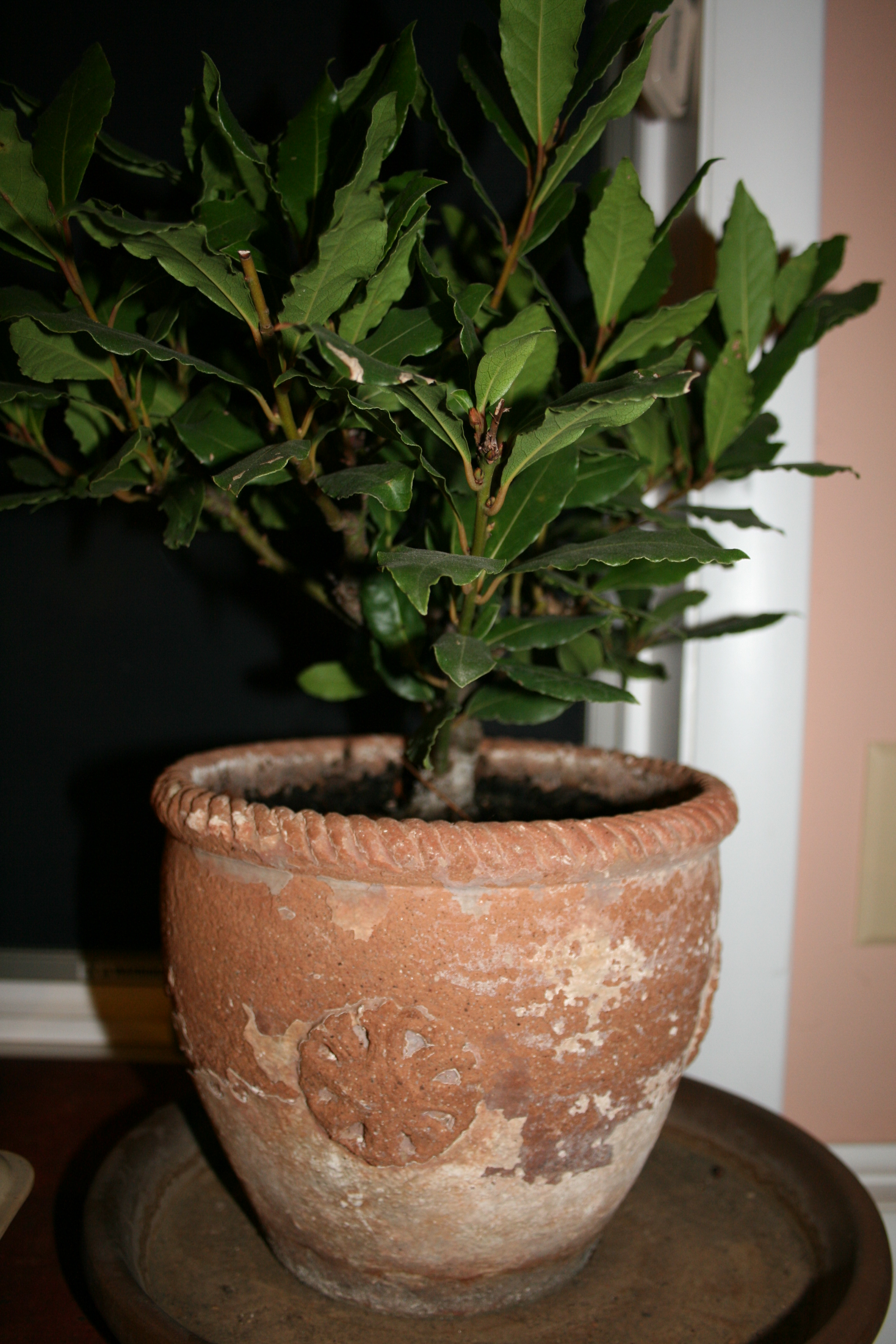
“Bayby” is a bay plant I picked up at an Amish nursery 5 years ago.

“Bay-by” was in a 3 inch pot when I bought her but now, 5 years later, she graces my desk with her splendid inch wide trunk, stands a foot high and provides me with fresh, tasty bay leaves for my soups and stews.

I simply bring her in during the winter then set her out on the patio for late Spring, Summer and early Fall.

FYI – the reason I avoid big box stores when it comes to getting bedding plants is because I have NO idea where the seed came from (I want organic and no GMO) or what they’ve been fed.

Want to learn more about organic gardening?  Want to see just how easy it is to grow your own, healthy and organic food.  Take a look at my Kindle book – Grow So Easy; Organic Gardening for the Rest of Us.
Complete Guide to Seed Starting from High Mowing Seeds

Used to be seed catalogs were one of the first signs of spring for me.

Now, it’s posts by some of my favorite organic gardeners like this one!

This is from High Mowing organic seeds, one of my favorite East coast operations.  It’s a complete guide to seed starting.  And, as a bonus, it includes a link to Margaret Roach’s garden planting calculator!

High Mowing shares information freely and sells some of the best organic, heirloom seeds and what they call “future heirlooms” like their latest – Abundant Bloomsdale spinach.

Enjoy their wonderful tips and tools, buy their seeds knowing you are getting organic seed free of GMOs and get excited! Gardening season is here!