Tag Archives: easy organic gardening

Japanese Beetles Decimating My Plants

It must be July.

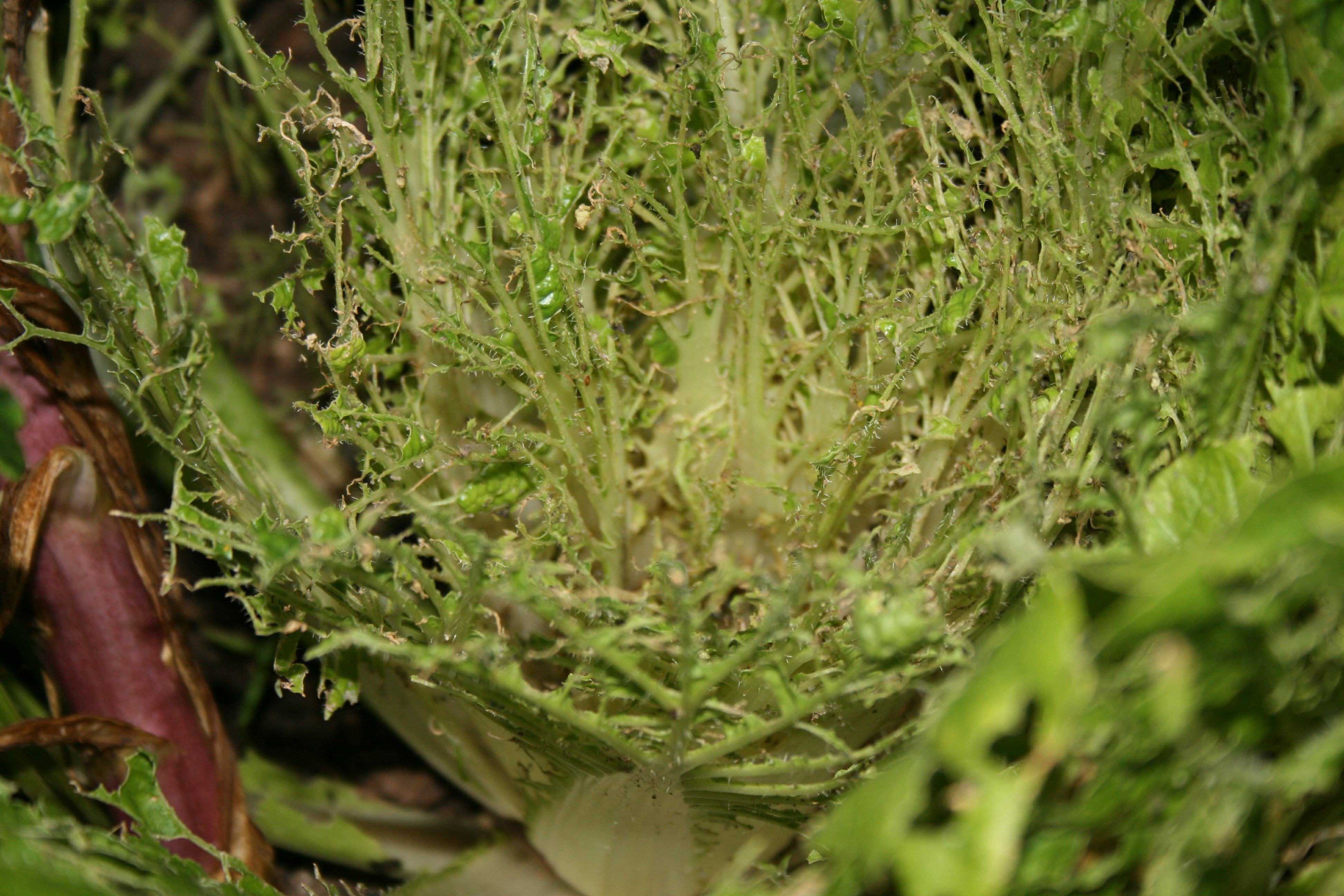
This is the month when the Japanese Beetles swarm in, over and under all of my plants and make veritable skeletons where once there was beautiful green.

Japanese Beetles destroy Chinese Cabbage

Japanese beetles make lace with Chinese Cabbage.

My Chinese cabbage fell to the Japanese beetles but I am determined NOT to lose the battle over my green beans and my blackberry bushes.

Unfortunately, because the beetles are so bad this year, I have resorted to using my apple tree as a distraction.

Japanese Beetles eat my apple tree.

Every leaf on this apple tree is eaten.


And the Japanese beetles are attacking with a vengeance.  The leaves are being eaten on every branch.  I hate using the tree to attract the beetles but, as an organic gardener, I have to or I wouldn’t have a prayer of holding the line in my garden.

So, how do I kill the ones that make it into the garden and chew through leaves of just about any plant?  Well, it isn’t pretty but my method works and it is organic.

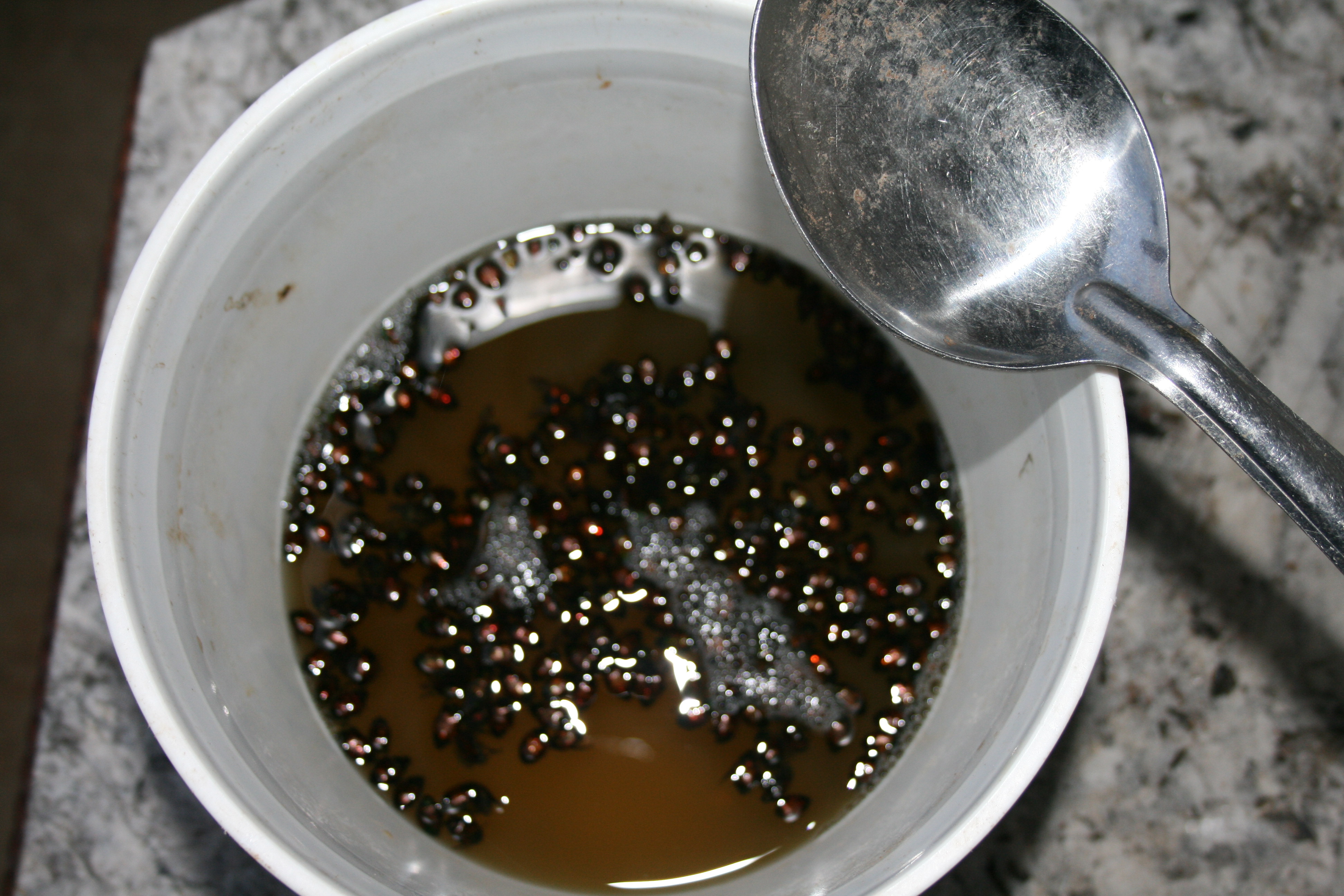
Every morning and every evening, I fill a small container with dishwater, grab my big spoon and head out to the garden.  I spend about 25 minutes smacking beetles into the bucket.

Drowning Japanese Beetles

Japanese Beetles to drown in dishwater.

When I’m done, I usually have between 100 and 150 beetles floating in the water.

Okay is sounds gross and the resulting “bucket of beetles” looks gross but it works.  And there is a perverse satisfaction in slapping them into the water, knowing their destructive activities are over.

So, the battle continues and I have good and bad days relative to control but I don’t spray; I don’t give up and I do, eventually beat them back.

Volunteer sunflowers

Sunflowers make me smile.

And when I am feeling outnumbered or a bit down, I just look out my office door at  one of the hundred or more volunteer sunflowers that are in my garden and yard and smile.

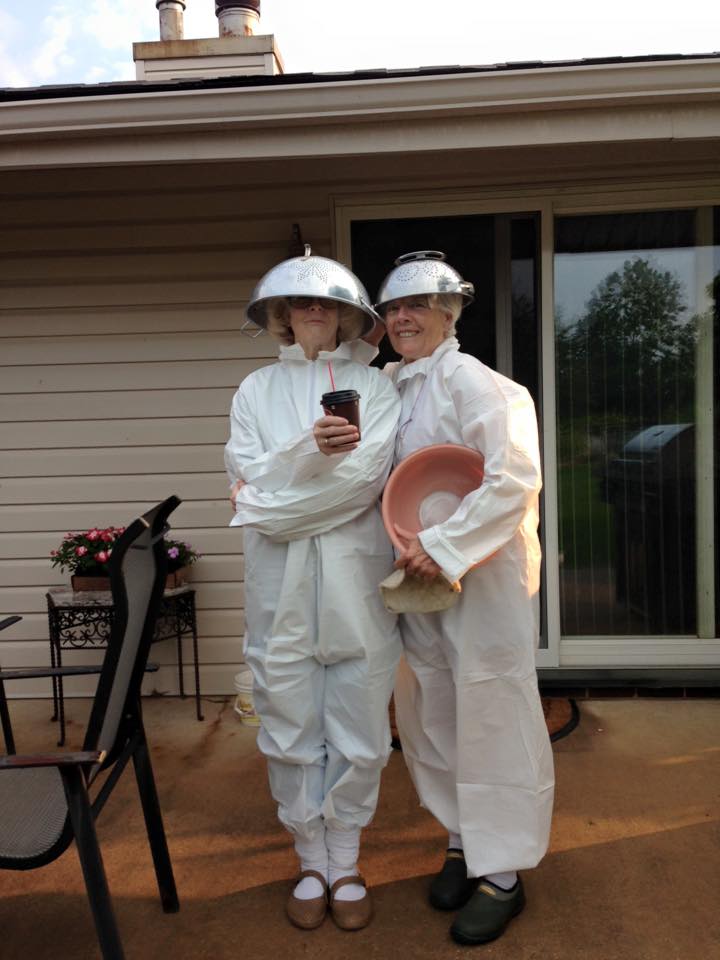
And to make you smile, I am sharing a picture of my sister Meg, now known as Commander Colander Head, and I heading out to the blueberry patch to do battle with the vicious and varied invaders we call hornets.

This year I’ve got Bald-faced and European hornets and even hornets that look like bumblebees. And of course, there are honey bees, yellow jackets and genuine bumblebees.

So, when we go out to pick, we “suit up” – Tyvex suits are tucked into socks.  Muck shoes are worn and, if it’s really warm, nitrile gloves.

Blueberry picking around hornets

Meg and I do battle with hornets for blueberries.

The protective gear really does make it safer to pick.  And starting just as the sun cracks over the horizon also helps.

I’ve gotten about 85 quarts of blueberries this year and not one bite or one “fatality”, either human or bee!

COLD Air in the Mid-Atlantic & My Garden is Shivering!

Holy cats! It’s so cold here that the heat came on last night!  Temps dropped into the low 40’s and the wind has been keeping up a constant dialogue, sweeping across my recently planted veggie babies at speeds between 15 and 20 MPH with gusts into the 30 MPH range.

Organic blueberries and zuchetta

Zuchetta share space with blueberry bushes.

All of my warm weather plants are speed dialing their lawyers.

But it is May.  And there always is a bit of back and forth with the weather before everything settles down and the warm nights and warmer days of summer arrive.

I did bank straw up around the peppers, eggplant, zuchetta, summer squash and tomatoes.  And I talked with them a bit about the current conditions and the expected warming trend.

I may lose some of my plants.  And some of them may just slow down their growth but, by and large, most of them will be okay.  And so it goes in the beautiful but not always predictable world of growing your own organic produce.

How are your newly planted gardens faring?

Avoid GMO Food – GROW YOUR OWN!

Lettuce, spinach and onions growing in raised truck bed.

Cool weather and cool raised bed of a 55 Chevy truck making for happy lettuce, spinach and onions.

Organic gardening is the easiest, best way to avoid all the GMO foods currently on the market – estimated to be 80% of US food chain.

I know – I wrote the book on just how easy it is to get going and get growing.  And I share tips and tricks on how to raise just about every possible vegetable and fruit you can find in the store (well, no kiwi, avocado or olives – too cold here).

Now, another doctor adds his voice to the growing chorus of educated, intelligent people who just don’t want to eat “frankenfood” that is definitely affecting our health and our children’s health.

Grow lettuce. Try blueberries – in pots or the yard.  20110628_0377

Heirloom tomatoes growing up happy with just sunshine and epsom salts!

Heirloom tomatoes on the vine in my backyard just weeks away from picking!

Add tomatoes and peppers.  And start being sure where your food has been and who it’s been hanging out with.

Share your ideas, your recipes and your success stories with other gardeners – just step out onto your patio or into your yard and start down the path to healthy food, health eating and healthy lives.  It is…oh so easy!

Grow So Easy Organic: How To Grow Great Green Cucumbers

One of my favorite, childhood memories is eating cool crisp cucumber slices on homemade bread slathered with mayonnaise.  My mom could raise just about anything but she really got a ton of cucumbers out of the dozen or so plants she put in the ground every spring.

Cucumber Flowers

Cucumber plants early in the growing season

When Mom was gardening (way back in the 50’s and 60’s), there wasn’t a slew of choices when it came to what you put in the ground.  Cucumbers were cucumbers.  Today, there are a whole lot of varieties that you might want to try.

Like tomatoes, cucumbers come in two varieties – hybrid and heirloom.  There are three general categories or types of cucumbers, too, slicing, pickling and  burpless.

I’m an equal opportunity cucumber person.  I grow and eat them all.  But if you’ve got a yen for a certain type of cuke or a bit less space than you’d like, it helps to know just how big the plants will get and what type of cucumber you will harvesting.

Let’s start with the ones that most people buy in the grocery store, the long green slicing cukes.  There are a couple of varieties that have gained popularity in the last few years.

Slicing Cucumbers
Burpless Cucumbers – burpless cukes are, according to researchers in the Department of Horticultural Research at North Carolina State University, actually Oriental Trellis cucumbers.  And they are a little less bitter and a little less prone to cause burping.  Whatever you call them, these sweeter, long hybrids grow well on trellises and are a nice addition to any garden.  But remember, this is a hybrid so seed-saving may not work.

Marketmore 76 & Marketmore 80 – this cuke likes to have a trellis to climb, too.  I use an old box spring for my cukes.  Like the burpless cucumber, Marketmore cukes are dark green and straight (unless they grow through a bit of the bedspring) and quite tasty.  And, they’re disease resistant, too.

Straight 8 –  another dark green, cuke that grows long and straight (hence its name) is a wonderful slicing cucumber.  It’s crisp flesh and mild flavor make it a favorite for cucumber salads and sandwiches.  Straight 8 is an heirloom so you can save its seeds.  Once most of your harvest is in, leave a cucumber on the vine and let it turn yellow.  Pick it, scoop out the seeds, clean them off then dry them, thoroughly.  Refrigerate and use next year.

Cukes for Limited Spaces
If you don’t have a lot of space to garden in or you’re working with container gardening, you can try a couple of the bush cucumbers.  They’ll still give you long, green slicing cukes but they’ll take up much less real estate doing it.

Bush Crop – these plants are ideal for small gardens or containers.  The Bush cucumber produces the same size cukes as it’s bigger brothers – 8 to 12 inch long – but it does it on a dwarf, mound-shaped plant.  There are no runners, either.

Fanfare is a hybrid but oh what a cucumber it is.  It’s got it all, great taste; high yield, extended harvest and disease resistant, the Fanfare produces fruit on compact vines.  It’s a great choice for someone with small gardening space or the container gardener.  The cuke is slim, dark green and grows to 8 to 9 inches long.  And it has a wonderful, sweet cucumber taste.

Salad Bush is another hybrid but it matures in just 57 days.  This tomato plant only grows that are 18 inches long but it still produces beautiful straight, 6 –plus inch long, dark green cukes. The seed is a bit expensive but if you’re garden space is small or your raising cukes in pots, this may be the one you want to try.  Direct seed the Salad Bus and sit back and wait for your beautiful, compact bush to produce beautiful, flavorful cucumbers for your table.

Pickling Cukes
Pickling cucumbers are smaller, have more spines and hold up to brining better than slicing pickles.  But I think of the pickling cuke as a “two fer.”  You can pickle them; you can also slice them and eat them right off the vine!  Here are a couple that you might want to consider but don’t limit yourself to just these varieties.

The Bush Pickle is fast to harvest – producing fruit in just 48 days.  It’s another compact plant so it’s good for container growing – no need for trellises or stakes! The Bush Pickle may be small but it produces a good-sized crop while taking up just 3 to 4 feet of space. The fruit is about 4 inches long, light to mid-green, with a crisp, tender flavor – perfect for pickles!

Carolina (Hybrid  matures just one day after the Bush Pickle, taking 49 days to produce its straight, blocky fruit.  The Carolina has medium-sized vines so you may want to trellis the plants.  Vigorous, with great yields, the Carolina produces medium green fruit that are generally about 3 inches long and a bit blocky.  The Carolina comes with spines, too and makes a great dill pickle.

Tips on Planting
Cucumbers are usually started from seed.  Like their relatives, squash and melons, cucumbers like warm soil so only plant them after all danger of frost is past.  In fact, I don’t plant my cukes until almost the end of May.  They have to have warm soil and planting them early just means the seed may not germinate.  Or if they do, growth will be slow and the plants will be small.

So, wait for the warm soil and warm air before putting cuke seeds in the ground.  The same is true for transplants.  But transplanting cucumbers is a bit tricky.

“Cucumbers resent transplanting.”  I laughed out loud when I read that sentence in Moosewood Restaurant Kitchen Garden: Creative Gardening for the Adventurous Cook.

Then I transplanted some by pulling them out of their little plastic pots and shoving them in the ground.  Needless to say the seeds I planted in the ground on the same day grew a whole lot faster than the transplants.

Apparently, cukes have lots of little tendrils  – small branches off the central root that uptake water and nutrients and feed the plants.  Harsh transplanting damages the branches and the plant may not recover, at all.

Mine didn’t.

But since I like to have a jump on the growing season, I have worked out a way to do the least damage to the baby cuke plants while giving them about a 6 week jump on being put out in the ground.

I start seeds indoors in mid-March (Zone 5 ½) and once they get their true second set of leaves I simply place the 2 inch peat pot into a 4 inch peat pot and cover with soil.  No transplant blues, no disruption and by mid-May, when these babies hit the dirt, they are tall, healthy and frequently covered with blooms

NOTE:  when transplanting into the garden, do NOT remove from the peat pot.  Just dig a hole deep enough to accommodate the 4 inch peat pot, place the whole pot in the ground and cover with soil.

Make sure you cover the top of the peat pot with soil or, just tear the first inch or so of the top of the pot.  If you don’t, the wind will blow on the top of the peat pot and wick moisture right off the plant.

If you’re using seeds, you can put a single seed in the soil about every 12 inches and cover them with ½” to 1” of soil.  Or you can create a small “hill” of soil and put 3 or 4 seeds in each hill and cover with 1/2 to 1 inch of soil and water them, gently.  NOTE:  you MUST water these seeds daily.  If they dry out in the act of sprouting, they die.

If using the hill method. Leave 24” to 30” between each hill to give the plants a chance to grow without being crowded.  If you’re using transplants, plant them in warm soil about 12 inches apart.

I usually put transplants on one side of the trellis I use for cukes (actually an antique bed spring I found by the side of the road) and put seeds in on the other side.  This ensures that I have a longer picking season and, if I lose a plant or two to cucumber beetles, I have others to replace it.

By the way, unless you live in Maine or Canada, you can do a second planting for fall harvest by planting seeds in mid- to late summer.

Make sure you water cucumbers frequently.  They have shallow roots and have to have moisture, especially when they are setting and maturing fruit.  Try to use soaker hoses for cukes, too.

Cucumbers also like mulch – something that keeps the soil warm in early spring. And floating row covers can help keep your baby cucumbers warm, too.    Once the cucumber transplants have settled into their new home, you can side-dress with nitrogen fertilizer when the plants begin to vine.

Be careful not to handle cucumber plants when they are wet as you can transmit diseases from plant to plant that way.  I only harvest in the afternoon, after the sun has dried off the leaves, top and bottom.

Next week, how to find and destroy the bugs that bug cukes and my favorite refrigerator pickle recipe
Grow So Easy – Fall Garden Clean Up

How much do you hate cleaning up your garden in the fall?

I used to.  When I  looked out my kitchen window and  saw more brown than green, I would grimace and think, “…next weekend.”  Inevitably, clean up kept getting pushed back by other, more pleasing events like the Hagley Car Show or lunch with friends at il Granaio.

But there comes a moment when I cannot put off the inevitable; I have to clean up the garden and put it to bed for the winter.  And I know I’ll be glad I did in the spring!

Garden Clean Up Tips
Anyone who has gardened for a few years has come up with their own tips and tricks for making garden clean up a bit easier.  Having 30 years of experience behind the hoe, I have discovered a few things that might make life easier for any organic gardener.

Be prepared.  When I go out to clean up, I always bring the tools I’ll need to make it easier.  So my tool bag (actually my wheel barrow) contains:

  1. Scissors – the knots you used to tie up tomatoes will be real tight after a summer of rain and heat.  Trying to pull them off just frustrates the gardener.
  2. Secateurs – if you try to cut back blackberries or blueberries without them, the chances are you’ll do more damage than good.  These small, sharp sheers can cut  through up to an inch of stalk or wood and are always in my bag of tricks.
  3. Baling Twine – picked up at the stable and used to bundle all the leggy tomato, pepper and eggplant carcasses.
  4. A shovel – I sometimes need to coax some of the plants from the ground.  Eggplant and tomatoes get stems more than an inch in diameter and their roots can extend up to 10 feet from the base of the plant.  So, a bit of shovel power comes in handy.
  5. A rake – I prefer the good, old-fashioned garden rake because it’s heavier than a leaf rake and the tines won’t work against me as I rake up fallen tomatoes and peppers.
  6. A bucket – I use an empty kitty litter container and I use it to pick up all the tomatoes that hit the ground at the end of the season.
  7. Garden gloves – I consider these optional.  I always start out wearing them but, inevitably, rip them off about 30 minutes into clean up.  I like the way the dirt feels on my hands.  But the manicure does suffer so it’s up to you whether you wear them or not.

Clearing The Ground
This is always the worst step for me.  I really hate  pulling off tomato cages, cutting vines out of my fence sections and tearing up the roots of the dying plants.  But once I get started, I actually enjoy it!

All plants (except perennials like asparagus, blackberries and herbs) need to be removed, tied and stacked up on the edge of the garden for disposal.  If you clip and clean up herbs at the same time,  you can use the wheelbarrow to hold these bodies.

If the flowers I use for pest control (and to jazz up the greenery), like  marigolds, nasturtiums and petunias, are still blooming, I leave them alone.  If they’re finished, they get tossed in the wheelbarrow, too.

I know some people put these plant bodies in their compost.  I don’t.

NOTE:  If you’re a slow composter like me –letting nature and God do the work for you — you probably shouldn’t put your garden detritus in the bins, either.  Seeds will germinate.  Diseases will survive.  When you spread your compost next year to welcome your new seedlings, you may be welcoming some very unwanted visitors.

One last task remains before you can move from clearing to covering.  If you grew tomatoes, grab a bucket and pick up all of the fallen tomatoes off the ground.  If you don’t you will have a whole lot of baby tomatoes to pull up next year.  This is a gooey task but well worth the effort.

Once the ground is cleared, it’s time to cover it.

Bug Control – A Pre-emptive Strike
During the growing and harvesting season, I don’t use any bug control except what I detailed in Getting Bugged.  However, if it’s been a very bad year for Mexican bean beetles, Asian Beetles, Japanese Beetles and Stink Bugs, just before I cover my garden, I do spray the straw remaining from last year and the ground in my raised beds.

Before you gasp, click unsubscribe and cry, “…traitor,”  know that I use only one product — Pyola.    The active ingredient is pyrethrin which comes from chrysanthemums and is mixed with canola oil.  I use Pyola to control next year’s bugs by killing the larva that are now safely snuggled into my garden ground.

NOTE:  Pyrethrin is a contact poison which quickly penetrates the nervous system of the insect.  It will affect bees and some  beneficials so don’t use it until there is no insect activity in your garden.   Also, pyrethrin is harmful to fish so if you have a pond or your garden borders on a stream, don’t use it at all.

Cornell University’s post on its ExToxNet provides a very thorough idea of what pyrethrin is, how it works and what it might do in the environment.  Read it before you use it so you’ll know if it will work in your garden.  And don’t use it if you don’t have to.

Blanketing the Garden
The last step in garden clean up is to lay down ground cover.  In my garden, that means a recipe of cardboard, newspaper, leaves and straw.

Cardboard goes down first.  I use it mostly to create  a barrier along the edge of my garden where crab grass and pig weed (to name a few of the likely suspects) like to lurk, slip under the fence and set up house in my garden.

I save boxes all year to get enough cardboard for my garden.  And if I come up short, I ask my friends to save boxes from work or home for me.  They know they’ll get plenty of tomatoes, peppers and green beans in payment next year.

Once the cardboard is down, I put down a layer of leaves.  Tip:  I don’t rake leaves.  I just troll the expensive neighborhoods and pick up the leaves their gardeners so nicely bag and put by the curb.

The last layer I put down is straw.  It helps hold the leaves in place.  And it breaks down, enriching my soil and making it better, every spring, for the seedlings to grow and thrive.

I use about 40 bales of straw  to cover everything including the blueberry and blackberry patches, the vegetable garden, raised beds and asparagus.  That may sound like a lot but by next spring, the 18 inches of straw I lay down now will have settled and started to break down.

So that’s my version of garden clean up.  Clean up really isn’t that hard but I avoid it because it signals the end of the growing season and the approach of cold winds and falling leaves.    It also means time for dreaming and planning next year’s garden…

And that’s what we’ll start doing next week.  I’ll share some resources for organic seeds and some tips to help make your next growing season easier and more productive.

Grow So Easy – Garlic – How To Grow & Harvest It

I got lucky when I married Italian because garlic is, was and always will be one of my favorite foods in the kitchen.

And it’s one of my favorites to plant.  Garlic is another crop that basically takes care of itself.

If you get the right cloves to plant then give those cloves a good start in the right soil at the right time, you should harvest enough nice-sized bulbs of garlic to last through the year.

Garlic is easy to grow and has much more taste if it's homegrown.

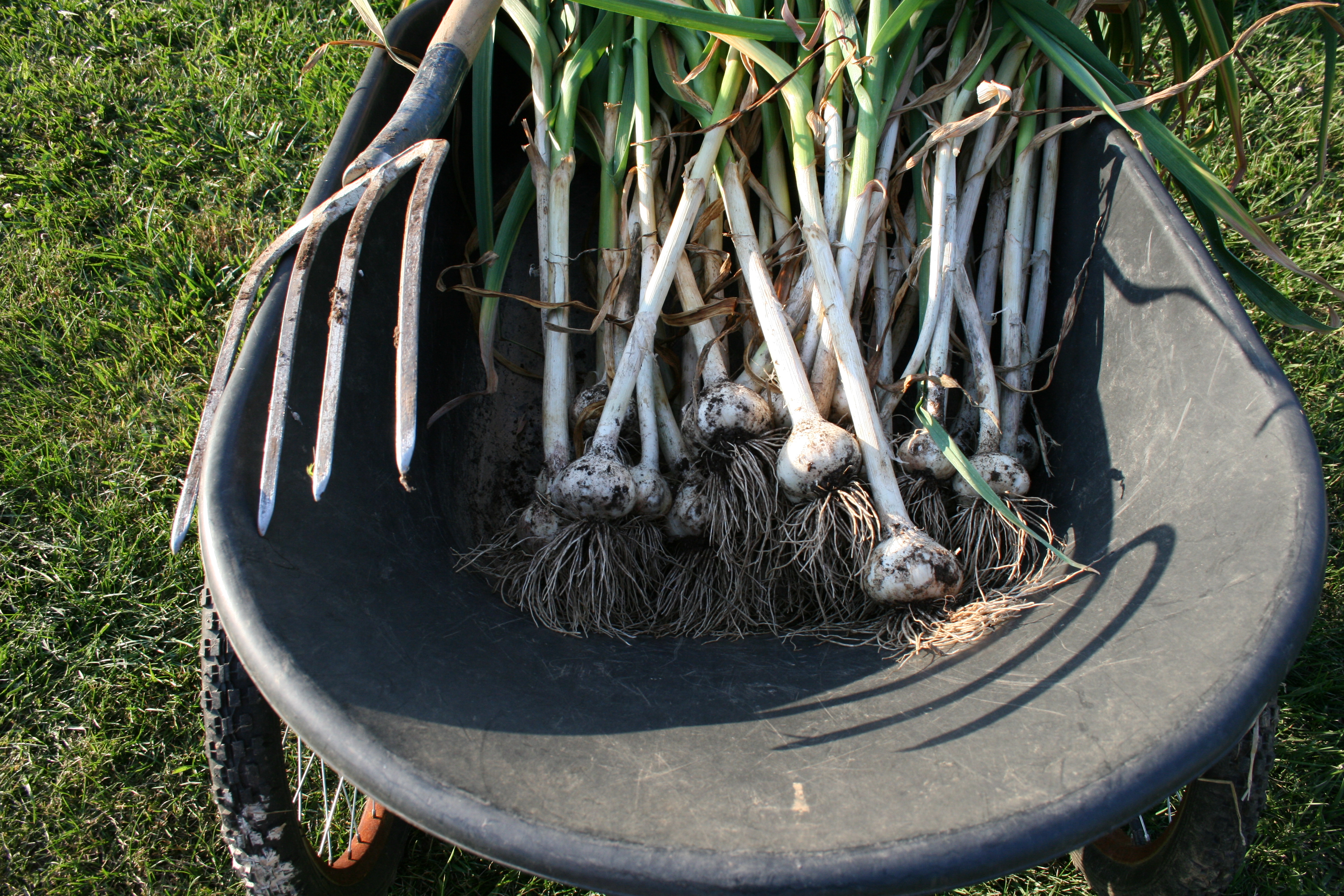
My garlic harvest for 2012.

Where To Buy
My first thought is to tell you where not to buy.

Don’t pick up garlic at the grocery store and expect to plant it and reap a big harvest.  You might get lucky, but you may also be planting cloves that have been treated not to sprout.

You could try buying garlic at a health food store but there is no way to know how viable it is.  If you want to try to grow garlic that is already growing in the soil in your region, try a farmer’s market.  Someone might be selling their garlic and you could get a good starter crop.

NOTE:  No matter where you get your first garlic bulbs, buy more than you think you will need.  Plant them all.  There are only two of us living here but I plant between 50 and 60 cloves of garlic (10 bulbs) every fall.  Sounds like a lot  because it is.  But it won’t all get used in my kitchen.

I share 10 or 12 bulbs but that still leaves 50 bulbs!  How many cloves can an Italian wife (by association) possibly use?  I actually go through about 35 heads a year.  So what do I do with the 15 left overs?

Most of them go right back into my garden.  I plant them.  I always plant enough so I can use my own garlic to raise my next crop.  There are a couple of reasons for using this method.  My garlic knows my soil.  And it’s adapted to my climate. It grows faster and stays healthier because it is acclimated.

Timing Is Everything
DON’T PLANT GARLIC IN THE SPRING!

If you do, you are doomed to fail.  The garlic cloves you plant are considered dormant.  They have to be exposed to cold temperatures in order for them to begin to grow and change from cloves to bulbs.

If you plant in spring, the bulbs don’t get exposed to low temperatures (32 degrees to 50 degrees for 2 months).  No cold means no bulbs, spindly growth and frustrated gardeners.

Besides, planting in the fall means that Mother Nature gets to do all the work while you sit inside browsing through seed catalogues and dreaming of spring.

Exact timing for planting day depends on where you live and yes, what zone you live in.  In my old Zone (6), garlic was planted on Columbus Day, October 12th.  However, with the slow warming of the earth, garlic planting day has moved back.

In Zone 6b, I don’t put it in the ground until the end of October and, sometimes, even as late as the second week of November.  Put it in too early and it sprouts then freezes.  Again, you could lose your entire garlic crop.

Planting when the world is getting frosty, the snow is falling and the wind is cold  seems wrong and it would be if that’s all you did.  But there’s an easy, cheap trick to keeping your garlic safe through the blustery winter months.

Blanketing Your Garlic
I don’t mean sacrifice one of your blankets and toss it on top of the newly planted garlic bed!  But you do have to cover your babies.

My cheap, easy trick?  Plant the bulbs then mulch with 24” to 36” of straw.  (This works with onions, too, by the way.)

The straw protects the bulbs from the cold, lets them overwinter safely and ensures they will be ready to start growing as early as March.

But once winter is over, it’s really important to uncover the garlic as early as possible so the sprouts don’t rot.  If they rot, you will lose your garlic crop.

Here’s an easy tip for knowing when to uncover garlic (and onions).  When the forsythia bloom, pull back the mulch.  You may even find a few garlic bulbs already sprouted under there.

Depending on your zone, you will probably get a few frosts after you uncover the garlic.  Just toss something over the young plants to protect them.  I use an old queen-sized mattress cover and drape it over the corners of the bed where the garlic is planted.

Harvesting Garlic
How do you know when to pull the garlic up?  Honestly, this has always been a struggle for me.

And the more I researched and read, the more confused I got.  Pull it up on this day/date.  When the leaves on one or two start to brown, push the rest of them over, wait a week and pull them up.  Wait until all the leaves on the plants are brown then pull them up.   Aaaaaaargh…as one our most famous philosophers used to say!

What finally cleared it all up for me was a simple, beautifully written article by one of my favorite garden gurus, Margaret Roach, who clearly understands the garlic harvest conundrum.

Too early, and the bulbs won’t have time to develop to their full size.  Too late and the bulbs will be over ripe, cloves will separate and the harvest won’t store as well.

Here’s the gist of Roach’s advice for harvesting garlic:  Harvest when several of the lower leaves go brown, but five or six up top are still green. Depending on the weather, this typically happens here (New York state) in late July.”

Rip & Regret
A word to the wise: healthy garlic develops a pretty serious root structure.  Do NOT try to pull garlic up by its greenery!  You will break the tops off and the garlic bulbs really need their tops to cure.

So, what’s the easiest way to pull these babies out of the ground?  With a garden fork – not the hand-held kind.  You want a flat-tined, digging fork like the kind you would use to dig out potatoes, like the one you see resting next to my garlic in my wheelbarrow.

  1. Start about 2 to 3 inches away from the garlic bulb.
  2. Push the tines down into the earth, almost as far as they will go.
  3. Rock the fork front to back and side to side to loosen the dirt around the roots of the bulb.
  4. Keep loosening until you can easily and gently pull the bulb from the ground.
  5. Equally gently, lay the cloves into a wheelbarrow.  Banging them will bruise them.

As soon as all your bulbs of garlic are out of the ground, you need to get them out of the sun and into a nice, dry, temperature controlled space with good air flow.  I use my shed.  I lay down an old sheet, then place the bulbs side by side but not touching.  I want air flow around each bulb.  And if one’s going south, I don’t want it to take the others with it.

Curing Garlic
Once you have them in your controlled drying spot, leave them alone for 6 to 8 weeks while they cure.  (I do check them to make sure none are going bad…). When they are cured, If they’re soft neck, braid away.

If they’re hard neck (what I always raise), you can cut the tops and the hairy roots off and store them inside.  I actually put mine in a big tray and shove the tray under the dresser in my sewing room.

The temperature is moderate in this room (I keep the thermostat at 62 in the winter) and the light is dim under the dresser.  My garlic seems to keep perfectly there.

NOTE:  check the cloves about every 6 weeks, especially if there is any aroma of  “garlic” wafting through the air.  If you can smell the garlic, it means one of the bulbs is probably going bad.  If you leave it in the general population, it may turn other heads bad, as well.

Save 8 to 10 bulbs of your garlic for planting in October and November and enjoy the rest, all winter and spring.

Aside

This winter, according to Accuweather, my Mid-Atlantic zone is running about 10 degrees colder than normal.  I would say so! With wind chills, we have hit  negative numbers like -17 and -24 degrees. For a gardener, sitting inside, listening to … Continue reading

Grow So Easy – Planting Cool Weather Crops Like Beets

One season gardening used to be all I did.  Put in the plants in the spring, harvest in July, August and sometimes in September and clean up in October.  Then the prices of organic produce shot through the roof and I started thinking that there had to be a way to get more out of my dirt than tomatoes, cukes, peppers and eggplant.

My adventure with growing more and longer began a bit late in my gardening life but I’m glad it did.  Truthfully, I probably will never get as far as master gardeners like Eliot Coleman.   who authored a favorite book of mine, Four Season Harvest, but I am enjoying cool weather crops like fresh lettuce, spinach and beets from March through October.


Let’s start this trip with one of my all-time favorites – beets

Beets
My mom raised the absolute best beets I have ever eaten.  Every time I drove to her farm in the far end of Virginia, she would somehow know exactly when I was arriving.  There, on the table, steam rising, butter melting, would be a big bowl of sliced beets, just for me.

But I never planted beets in my own garden.  Not before she died, not after she died.  Then, one day, while browsing through GrowItalian.com, I saw Chioggia beets.  Beautiful, round and ruby-red on the outside but when you cut them open, there are concentric white bands all the way through each slice.

I was in love with beets, again.

Beets Are Easy Peasy
I’ve had beets in my garden now for the last 5 years and think they are among the easiest plants to grow.  But if you Google “growing beets,” you will literally get more than 3 million entries.

Don’t be scared!

There are only a couple of things you need to know to raise not just 1 but at least 2 crops of beets every year. (That’s how many I can grow in Zone 6.)  WARNING: if you ignore what you are about to read, you will get red marbles…that will not cook or eat easy.  I know.  My first crop was used in a game of ringer.

The Dirt
This is almost one of the only requirements of beets and it’s one of the most important.  It’s also the bit of information I didn’t have when I raised my first crop of red marbles.  Beets really, really like loose, well-drained soil. They will put up with a wide range but won’t grow as big or as beautifully.

So do a bit of soil prep if you can. It may take a bit of time and effort but it’s worth it; I know.  And if you get the soil right, it’s smooth sailing to harvest time.

Remove stones since they will hinder growth.  If you’re growing in clay, add compost to loosen the soil and keep the soil from crusting after watering or rainfall.  And make sure your soil is acidic – beets like a pH range of 6.2 to 6.8.

When To Plant
Don’t plant in the middle of your summer season.  Beets won’t like it.  They are a perfect cool weather crop.  Although they can live through the heat (like the rest of us), they prefer a temperatures of 60 to 65 F and bright sunny days but they can also survive cold weather as long as they don’t get caught in a freeze.  So, beets are a great, “long-season” crop.

How To Plant
Beet seeds are outdoor babies from the get go.  As soon as your soil can be worked in the spring, you can plant them.  The seeds aren’t really just one seed – each of these little jewels contains a couple of beet seeds.  Sow the seeds 1/2-inch deep and I drop each seed about 3 inches away from the other seeds.  I also plant in rows about 12 inches apart.

Beets seeds are pretty slow to germinate so make sure you keep the bed moist until you see their little heads peeking out of the soil.  I usually water a bit, every day.  Once they start to pop up through the soil, I keep watering but usually every other day.

Once they are established, just make sure that you don’t let them dry out.  But don’t overwater either.  Too dry or too wet and your beets will not be happy.

Transplanting
TIP:  I don’t thin; I transplant.

Most advice online and in books says you have to thin beets rather than transplant.  Wrong!

Despite what people will tell you, you can transplant beet seedlings and almost double your crop. And it’s easy to do.

I wait until the leaves on the plants are about 2 inches long before I try transplanting.  The night before the big move, I water the bed thoroughly.  Then, early in the morning, armed with a #2 pencil, I head to the raised bed where my beets live.

I look for beet plants that are too close together. Because I’m not be most patient person when dropping seeds in soil, I can usually find 3 or 4 beet babies clumped together.

DON’T PULL THEM OUT ONE BY ONE!

Once I’ve found the baby beet clump I want to move, I gently dig around the whole clump and bring up a shovel full of soil with the beet roots intact.  Then I push my pencil into the ground, making holes spaced about 3 inches apart, for each of the babies.

Teasing the roots apart, gently, (a trick I learned from my Amish neighbors) I drop each beet baby into its own hole, pack dirt gently around it and move on to the next clump.

I have not lost one beet baby using this method and I practically double my yield.  Oh, and beets are a twofer in my garden – I also eat beet greens in salads.  Wait until the leaves are 3 to 4 inches high, then cut a couple off each beet plant.  The beets will keep growing and you’ll have some truly delicious greens for lunch or dinner.

Care & Feeding
Like I said, beets are easy peasy.

I have never fertilized my beets and they grow like champions.  It could be because I enrich my raised beds with a bit of compost every spring.  I do put a bit of mulch – straw – down around the plants once I divide and transplant them.  It helps hold moisture during the hotter, summer days.

Keep The Beets Coming
I plant in March, April, May then hold off until early August when I start putting in seeds, again.  I do that to avoid asking the beet seeds to germinate when the daytime temperature is above 80 degrees.  They don’t like it.  Plant in early August and within 55 to 70 days, you should have your next crop.

Nowadays there are so many varieties of beet to choose from — Early Wonder, Detroit Dark Red, and Red Ace.  You can even add some color to your beet dishes with the lovely striped Chioggia (which started me on my life of beet crime) or Burpee Golden and Albino White

No matter how you slice them…beets are a great addition to any garden.

By the way, one of my favorite resources when I am trying to get solid, informed, basic growing information is the so-called “land grant” colleges like Penn State and Ohio State.  They usually offer fact sheets like the one on beets that was posted by Ohio State.

Next week, another favorite in my fall garden (and another easy one to grow) — lettuce!

Grow So Easy – Fall Planting & Gardening Zones

Fall Planting in August?
We’re not even through summer vacation but if you want to extend your gardening season, you should already have the plan laid out and maybe even put some of those seeds in the ground!

That’s right, late July and early August, especially in my zone – 6b – starts right now!

But before we talk about what to plant, when and why, let’s take a quick look at two maps that will help you buy and grow plants best suited to your home town.

Who Says I Can’t Grow Avocadoes In My Back Yard?
When I first hit the dirt and started planning and planting my garden and grove, I considered it a challenge to be told by nameless people, “You’ll never get avocados (pineapple, artichokes, guava) to grow in this zone.”

Unfortunately “they” were right.

If you live in California or the Florida panhandle, you can grow avocados and other tropical fruits and veggies.  You can’t if you live in Pennsylvania.

With dead plants, bushes and trees piling up in my back yard, I decided that maybe, just maybe, I should look into this thing called “zones.”

In The Zone
If you aren’t familiar with zones, don’t panic.  This isn’t the periodic table of elements.  This is the updated (2012) United States Department of Agriculture (USDA) zone map.

organic gardeners use the USDA zone map to help them choose cold-hardy plants and trees,.

Gardeners have come to rely on the USDA zone map to choose cold-hardy plants and trees,.

Zones aren’t nearly as complicated as some people would like them to be.  They just look intimidating at first glance.    So, here’s how to read this thing.

Find your approximate location in your state.  For example, I live in Southeast Pennsylvania so my color is a medium green.  Then check the chart on the right side of the map.

Based on color and location, my zone is 6b.  The coldest my zone is supposed to get is -5 degrees Farenheit.  Notice the words “…supposed to be”  and take this information with a grain of salt.  It’s a guideline, not a rule.

The USDA zone chart, which has been published since 1960, helps with getting a handle on when you can set out plants without freezing them to death.  And if you look for the zone chart, you’ll find that it’s being used in lots of places that can help you, too.

Seed packets, plants, trees and bushes are usually sold with the same zone chart and the suggested planting times.  Both help you quickly figure out what will live or die in your backyard…based on environment, alone.

Armed with your zone, you could start to make plant choices that work for you. But there’s one other “zone map” you might want to know about before you buy.

Recently (1995 and if you’re talking planting, that’s recent), a new zoned map has entered the gardening scene.  This one, published by the American Horticultural Society (AHS), looks similar the USDA chart but it tracks heat.

Download your copy and start looking it over.  This map tells you how many days per year the temperature in your back yard is over 86 degrees.

So what?  That’s the magic temperature where plants start to suffer from too much heat.  Who cares?  Why should I track heat?

Because it can do as much damage as cold, maybe even more.  Frost kills plants, buds and sometimes even bushes and trees, instantly.  Heat is a little subtler but just as deadly. And heat damage is even worse during a drought.

What should you look for if you suspect the heat is hurting your plants?

The AHS says the damage can appear in several places.  Flower buds wither. Leaves droop. Leaves may turn brown or even white as the chlorophyll disappears.

AHS describes “death by hear” this way; “Plant death from heat is slow and lingering. The plant may survive in a stunted or chlorotic state for several years. When desiccation reaches a high enough level, the enzymes that control growth are deactivated and the plant dies.”

In his new book, Grow Fruit Naturally: A Hands-On Guide to Luscious, Homegrown Fruit ” , Lee Reich calls the AHS map, “…a work in progress” as it was just recently developed and is still being tweaked.  But the heat map is a good guide to understanding how hot it can get in your garden and how much damage heat can do.

And it should help you to start thinking about what might have a better chance of surviving once you put it in the ground.

Next week, armed with what will survive and thrive in the heat and the cold, we’ll get into what is going into the ground in my garden, right now.  Think beets, lettuce and spinach.

Organic Gardening Made Easy – How To Control Bugs Without Pesticides – Part II WMD

If you’re a gardener, killing is in the cards.

If you’re an organic gardener, you will kill, too. But you won’t kill indiscriminately.  Your Weapons Of Mass Destruction (WMD) will be kind to you and your family and kind to the environment.  WARNING: THIS IS A LONG POST…but worth the read.  Oh and some of the ideas are gruesome…but they work.

Insecticidal Soap
Let’s start with an easy weapon you’ve heard about before – insecticidal soap.

Insecticidal soap is a good way to try to control pests before they get a foothold.  You can use dishwashing liquid for your base because it is mild and, used in small quantities, won’t damage the plants.

The soap enhances the ability of the other additives to stick to the leaves of the plant for a bit longer. Soap also dehydrates the bug’s cell membranes and speeds their trip to bug heaven. One word of caution, don’t use too much soap.  If you do, you could kill your plants right along with the bugs.

RECIPE:  Home Brewed Insecticidal Soap
Here’s a base recipe for making insecticidal soap that may discourage your pests including the cucumber beetle.

INGREDIENTS
6 cloves of garlic
1 large onion
1 to 2 tablespoons of red pepper flakes or 1 to 2 tablespoons of powdered cayenne pepper
1 tablespoon dishwashing soap
1 gallon water

DIRECTIONS
Put the garlic, onion and pepper in a blender or food processor and liquefy.
Steep these ingredients for an hour.
Strain through cheesecloth.
Stir the blended mixture into a gallon of hot water.
Stir in the dishwashing liquid.
Cover and let it stand for two days so the bits of garlic, onion or pepper flakes settle to the bottom.

Strain again, stopping about an inch from the bottom to keep the bits of garlic or pepper flakes on the bottom of the jar from flowing into the newly strained liquid.

Pour the liquid into a spray bottle and spray affected plants thoroughly to discourage bad bugs!

WMD In The War on Bugs
Like any good general who goes to war, you can’t just rely on one weapon.  There are a few more that really took me a couple of years to come to grips with.

Before gardening, I was a wimp.  If a bug of any variety crossed my path, I drew myself up to my full 64 inch height, screamed and ran.  Oh, yes I did.

Then I became an organic gardener.  Bugs moved from the nuisance category to sworn  enemy.  And my arsenal expanded to include some pretty weird (and previously unthinkable) weapons.

Rocks
Rocks are a favorite.  They’re cheap and readily available.  And they’re effective.  Just hold a rock on either side of a squash leaf that’s harboring stink bugs and bring them down quickly, bashing the brains out of the vine borer before it lays eggs or pokes holes in your squash, cuke or pumpkin stems.

Oh, and make sure you check the bottoms of the leaves of your zucchini, summer squash, cucumbers and pumpkins for eggs.  Once you see a stinkbug you can be sure you have a little batch of bright orange eggs stashed somewhere on the plant.  Find them, crush them and move on.

Hands
Hands do the job with a bit more finesse than rocks.  Okay, it’s a bit gross to grab a bug and squash it with your bare hands.  But smaller beetles like cucumber, asparagus and Mexican bean beetles are much more agile than stink bugs so rocks rarely work.

NOTE:  be prepared to spend a bit of time every afternoon or evening catching and crushing these beetles.    I used to come home from the office, change and go out and vent all the pent up hostility of handling my staff, my peers and my bosses by crushing as many bugs as I could find.

Finding these winged pests and their crawling, larval offspring means taking the time to shake each plant.  When they fly up and land again, squash them between thumb and forefinger while perhaps reciting the litany of crimes your co-workers have committed and the punishment you are meting out.

Be methodical.  Flip the leaves of every plant over to look for larva and eggs.  This is especially important for Mexican bean beetles.  “Where there’s one,” my Mom used to say, “There are a million.”  So be ruthless.  Think sheer volume and crush away.

Slotted Spoon & A Pot of Water
There are some bugs I just will not tackle, bare-handed.  When the Japanese beetles and their cousins, the Asian beetle and the Green Fruit beetle (looks like a Japanese beetle on steroids) come calling, I break out my slotted spoon and a pot of cold water.  Weird weapons of choice for dealing with flying beetles that can hook to your clothes and get caught in your hair but, believe me, they work.

There’s just one trick.  You have to go out to the infested plants early in the morning, as dawn breaks and before the sun begins to warm the air.  These beetles are heavy sleepers and don’t start stirring until the sun is up.  So it’s really easy to whack them into the pot of water with the spoon and wait for them to drown.  Or if you’ve got chickens, set the pot in the coop and stand back.  It will look like a Japanese horror movie as the chickens move in to eat their fill.

Sifter and flour
This is a trick my Mom taught me.  She raised a lot of cole crops – cabbage, broccoli, brussel sprouts.  And these plants were really plagued by things like the codling moth.  Well, Mom showed me how to use morning dew, white flour and a sifter to turn the moths and their larvae into – well, how can I say this – papier mache bugs.

The flour and water mixed together to create a paste that baked in the sun and froze this insect enemy into tiny sculptures that could no longer chew their way through my plants.  By the way, this also works for flea beetles.

Chili Powder
Here’s another ingredient from the kitchen that works, all on its own, to help control roly-polies, earwigs, and some of our other not-so-welcome bugs.  And it’s simple and cheap (my favorite combination).  Sprinkle chili powder under targeted plants. It doesn’t hurt the plants but it sure does make the creepy crawlies take off and never come back.

Diatomaceous Earth
Diatomaceous earth is a blessing for any gardener plagued by slugs.  And if you plant tender lettuce and young pepper plants, you will probably have slugs coming over for dinner every night.  Like the trick for killing codling moths, I tend to put the diatomaceous earth in the flour sifter and sift it gently over the affected plants but don’t inhale it. It can hurt you, too.

I also use a spoon to lay down little circles of diatomaceous earth around the stems of my plants and around the outside of the lettuce plants.  Diatomaceous earth is made of the sharp, jagged skeletal remains of microscopic creatures. It acts like finely ground glass and lacerates soft-bodied slugs causing them to dehydrate. 

Grandsons
I don’t want to be sexist here and I was going to write grandchildren but I just could not get my granddaughter engaged in this particular game.  I paid my grandsons cash on the barrel head for Japanese beetle bodies.  And they earned a considerable amount of money some years by just banging the beetles into a pot or crushing them with rocks.

Some of the tactics seem downright cruel but, remember, this is war!

Closing Thoughts on Controlling Bugs
There will be days when you are on the battlefield, armed with your weapon of choice and you’ll still feel a bit like David to the insect kingdom’s Goliath.

Take heart and smash, bash, drown and pick until you’ve cut into the insect front line troops.  And remember that resisting a quick squirt of pesticide means knowing that your food will not kill you, your family or your friends.

Got any weird or wonderful ways to control bugs, organically?  Please share them!  Next week, composting successfully.  Composting always sounded like it required a lot of work and a pretty good dose of luck. I’ll show you just how easy it can be.