Category Archives: Farming

Tips for Fall Garden Clean Up

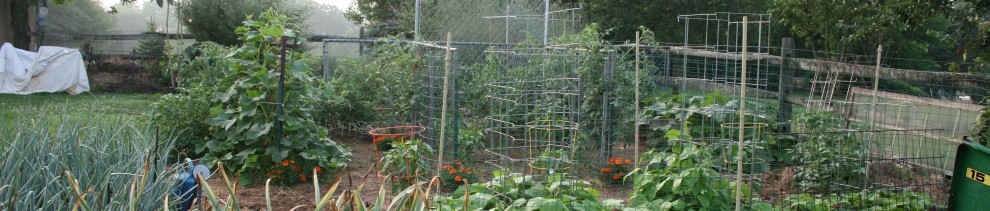
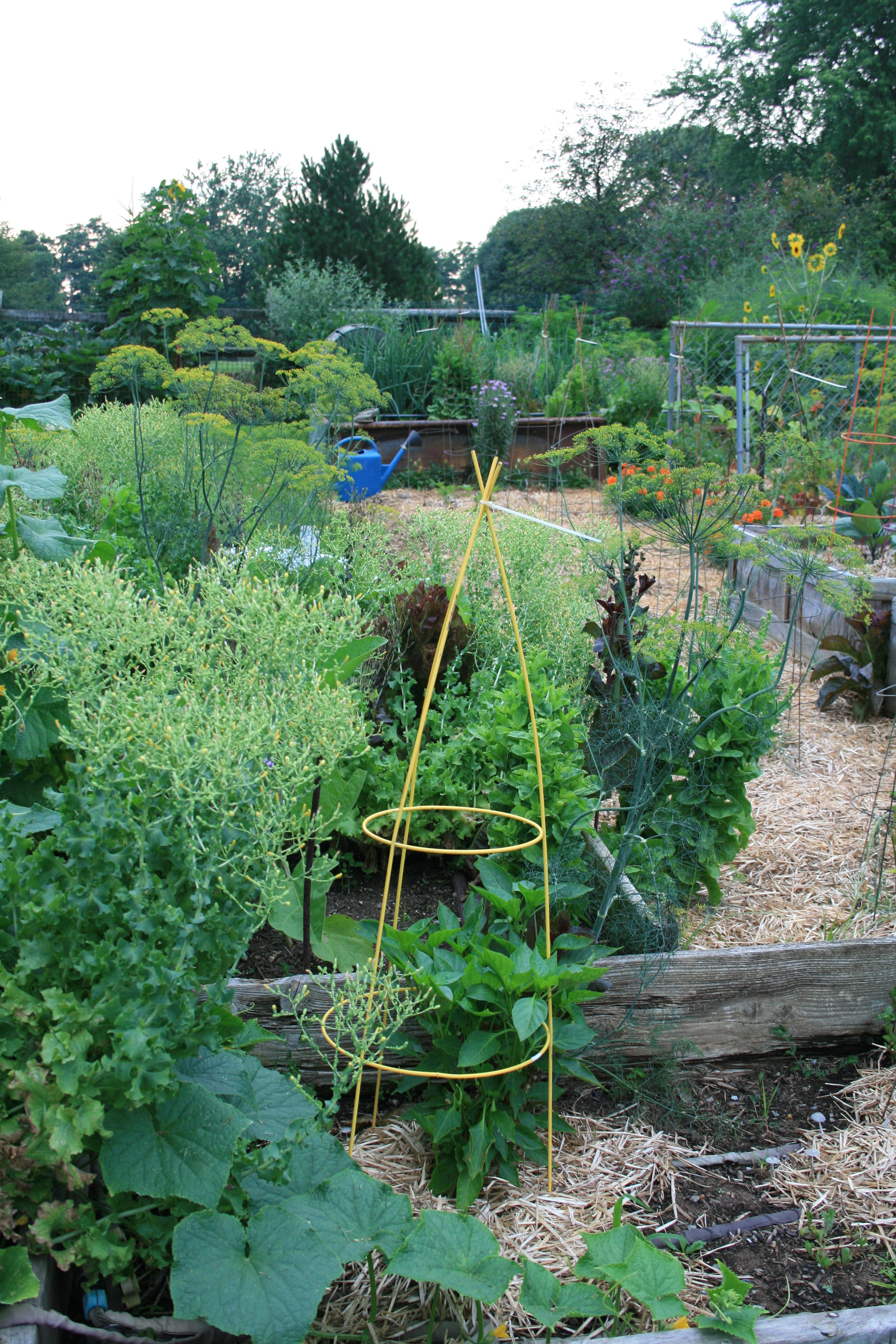
Green and organic garden in summer.

My garden in July, 2016.

T.S. Eliot got it wrong. April isn’t the cruelest month; it’s September. It’s the time of year when your garden goes from lush, green, verdant…

Tips for cleaning up your garden

Garden clean up in progress

To brown and gold broken up only by beets, Swiss chard, kale and lettuce.

Not only is the growing season drawing to a close for many of us…but it’s time to clean up!

I used to hate cleaning up my garden in the fall. When I  looked out my kitchen window and  saw more brown than green, I would grimace and think, “…next weekend.”  Inevitably, clean up kept getting pushed back by other, more pleasing events like the Brewfest in Kennett Square or the Hagley Car Show .
But not anymore.
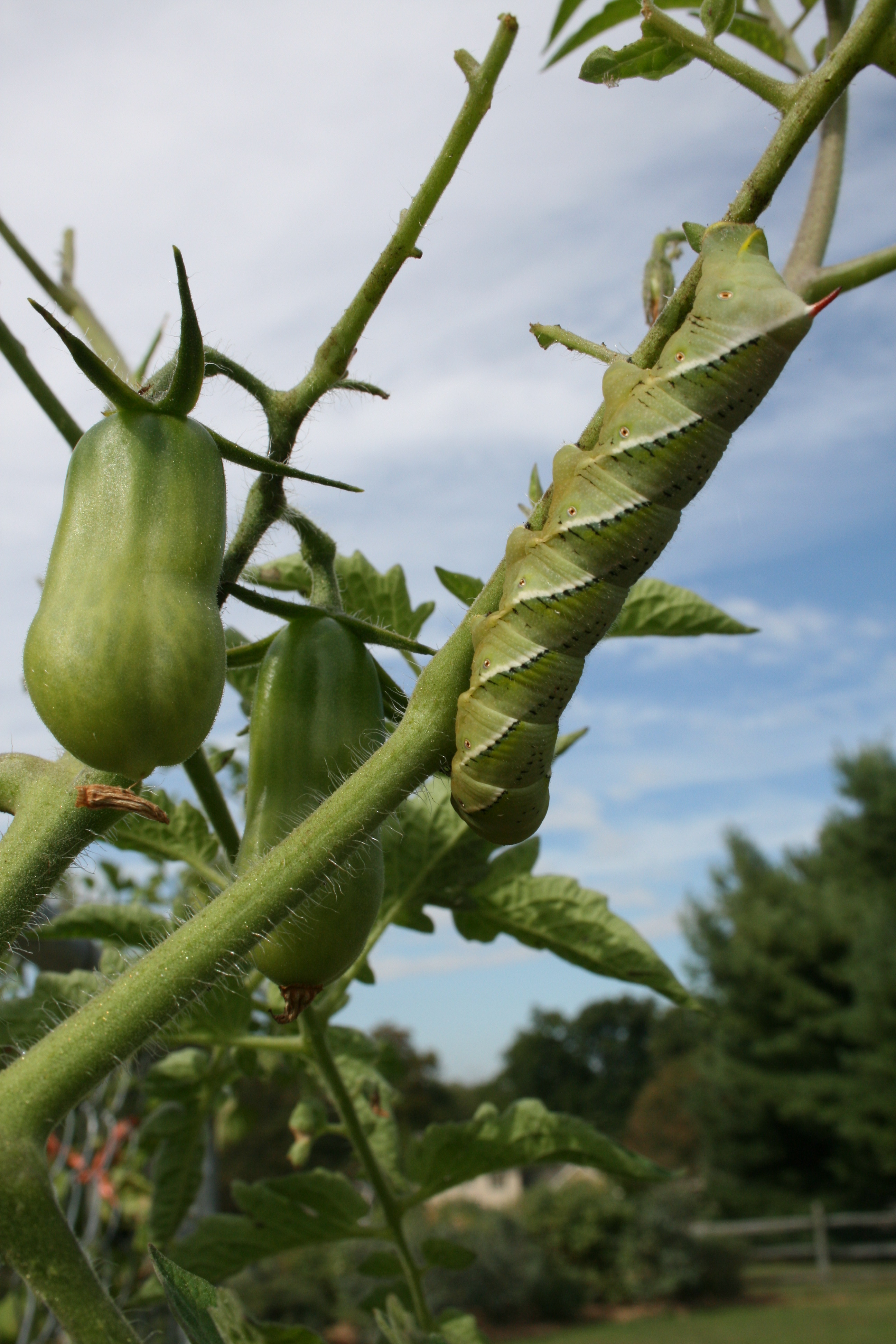
Tomato horn worm eating tomatoes.

A tomato horn worm in my garden.

I’ve discovered that cleaning up is the perfect time to find unwanted visitors like the varmint that was eating my tomatoes. This fat and happy tomato horn worm is enjoying his last meal.

While tearing down my tomato trellises, I found a dozen of these beautiful but sinister worms as I cleaned up the tomato bed. But I also learned that all but 2 were covered with trichogramma wasp eggs, like the little fellow below.

Trichogramma wasp eggs on hornworm

Wasp eggs on hornworm

Fall cleaning, removing leaves, vines and stems, raking up fallen bits and pieces of this year’s green bean and tomato plants, all these activities help me get a jump-start on my garden next spring.

Garden Clean Up Tips
Anyone who has gardened for a few years has come up with their own tips and tricks for making garden clean up a bit easier.  Having 30 years of experience behind the hoe, I have discovered a few things that might make life easier for any organic gardener.

My first bit of advice? Be prepared.  When I go out to clean up, I always bring the tools I’ll need to make it easier.  So my tool bag (actually my wheel barrow) contains:

  1. Scissors – the knots you used to tie up tomatoes will be real tight after a summer of rain and heat.  Trying to pull them off just frustrates the gardener.
  2. Secateurs – if you try to cut back blackberries or blueberries without them, the chances are you’ll do more damage than good.  These small, sharp sheers can cut through up to an inch of stalk or wood and are always in my bag of tricks.
  3. Baling Twine – picked up at the stable and used to bundle all the leggy tomato, pepper and eggplant carcasses.
  4. A shovel – I sometimes need to coax some of the plants from the ground.  Eggplant and tomatoes get stems more than an inch in diameter and their roots can extend up to 10 feet from the base of the plant.  So, a bit of shovel power comes in handy.
  5. A rake – I prefer the good, old-fashioned garden rake because it’s heavier than a leaf rake and the tines won’t work against me as I rake up fallen tomatoes and peppers.
  6. A bucket – I use an empty kitty litter container and I use it to pick up all the green or rotten produce that hits the ground at the end of the season.
  7. Garden gloves – I consider these optional.  I always start out wearing them but, inevitably, rip them off about 30 minutes into clean up.  I like the way the dirt feels on my hands.  But the manicure does suffer so it’s up to you whether you wear them or not.
  8. Large trash bags – I didn’t use to bag any of my garden waste but I learned that trying to compost vines from tomatoes, zukes, cukes and even green beans meant giving diseases like wilt a head start next spring. It also meant providing warm, cozy homes for Mexican Bean beetles and cucumber and squash beetles among others.

Clearing The Ground
This is always the worst step for me.  I really hate pulling off tomato cages, cutting vines out of my fence sections and tearing up the roots of the dying plants.  But once I get started, I actually enjoy it!
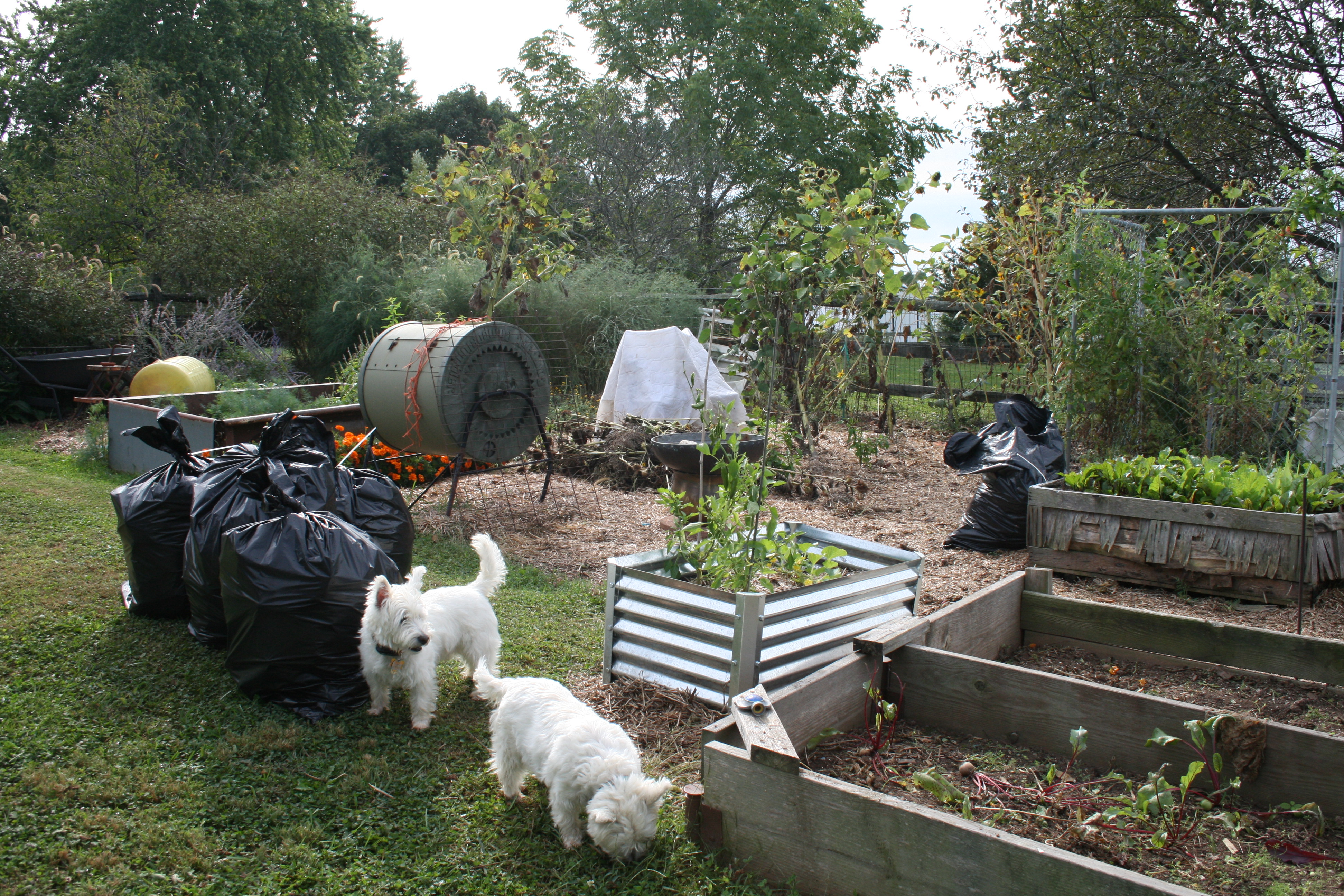
Bag garden waste

My dogs helping me to bag .

I pull all plants (except perennials), shove the waste into bags and stack them on the edge of the garden. I know some people put their plant bodies in the compost but I don’t. Why not?

If you’re a slow composter like me, letting nature and God do the work for you, you probably shouldn’t put your garden detritus in the bins, either.  Seeds will germinate.  Diseases will survive.  When you spread your compost next year to welcome your new seedlings, you may be welcoming some very unwanted visitors.

One last task remains before you can move from clearing to covering.  If you grew tomatoes, grab a bucket and pick up all of the fallen tomatoes off the ground.  If you don’t you will have a whole lot of baby tomatoes to pull up next year.  This is a gooey task but well worth the effort.

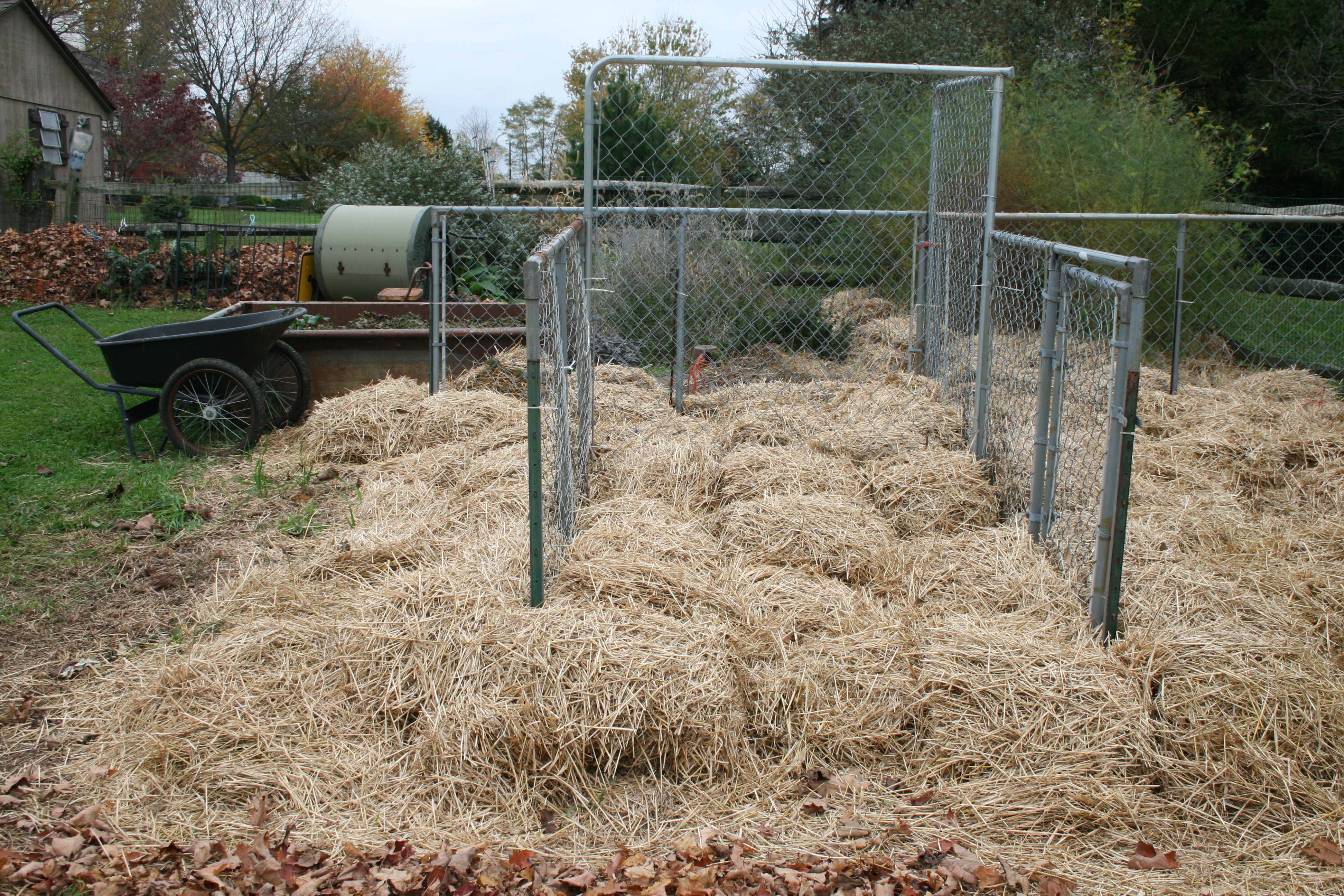
Once the ground is cleared, it’s time to cover it. I use straw and a lot of it. It mulches the ground, protects perennials and annuals like garlic and beets and sets me up for weed free gardening in the spring.

I use about 40 bales of straw  to cover everything including the blueberry and blackberry patches, the vegetable garden, raised beds and asparagus.  That may sound like a lot but by next spring, the 18 inches of straw I lay down now will have settled and started to break down.

Bug Control – A Pre-emptive Strike
I offer one last bit of advice for wrapping up the growing season and getting ready for your garden next spring.

During the growing and harvesting season, I don’t use any bug control except what I detailed in Getting Bugged.  However, if it’s been a very bad year for Mexican bean beetles, Asian Beetles, Japanese Beetles and Stink Bugs, just before I cover my garden, I do spray the straw remaining from last year and the ground in my raised beds.

Before you gasp, click unsubscribe and cry, “…traitor,”  know that I use only one product — Pyola.    The active ingredient is pyrethrin which comes from chrysanthemums and is mixed with canola oil.  I use Pyola to control next year’s bugs by killing the larva that are now safely snuggled into my garden ground.

NOTE:  Pyrethrin is a contact poison which quickly penetrates the nervous system of the insect.  It will affect bees and some  beneficials so I wait until I have had two hard frosts to use it. I want to make sure there is no insect activity in the garden.   Also, pyrethrin is harmful to fish so if you have a pond or your garden borders on a stream, don’t use it at all.

Cornell University’s post on its ExToxNet provides a very thorough idea of what pyrethrin is, how it works and what it might do in the environment.  Read it before you use it so you’ll know if it will work in your garden.  And don’t use it if you don’t have to.

So that’s my version of garden clean up.  Clean up really isn’t that hard but I avoid it because it signals the end of the growing season and the approach of cold winds and falling leaves.    It also means time for dreaming and planning next year’s garden…


The Summer of 2016 Is Ending

Am I crazy? Is summer really ending??

August heat baking my garden

Garden baking in the August sun

Today’s heat index in Southeast Pennsylvania says it will be 114 degrees out. It’s only August 13th. Summer isn’t over. It can’t be!

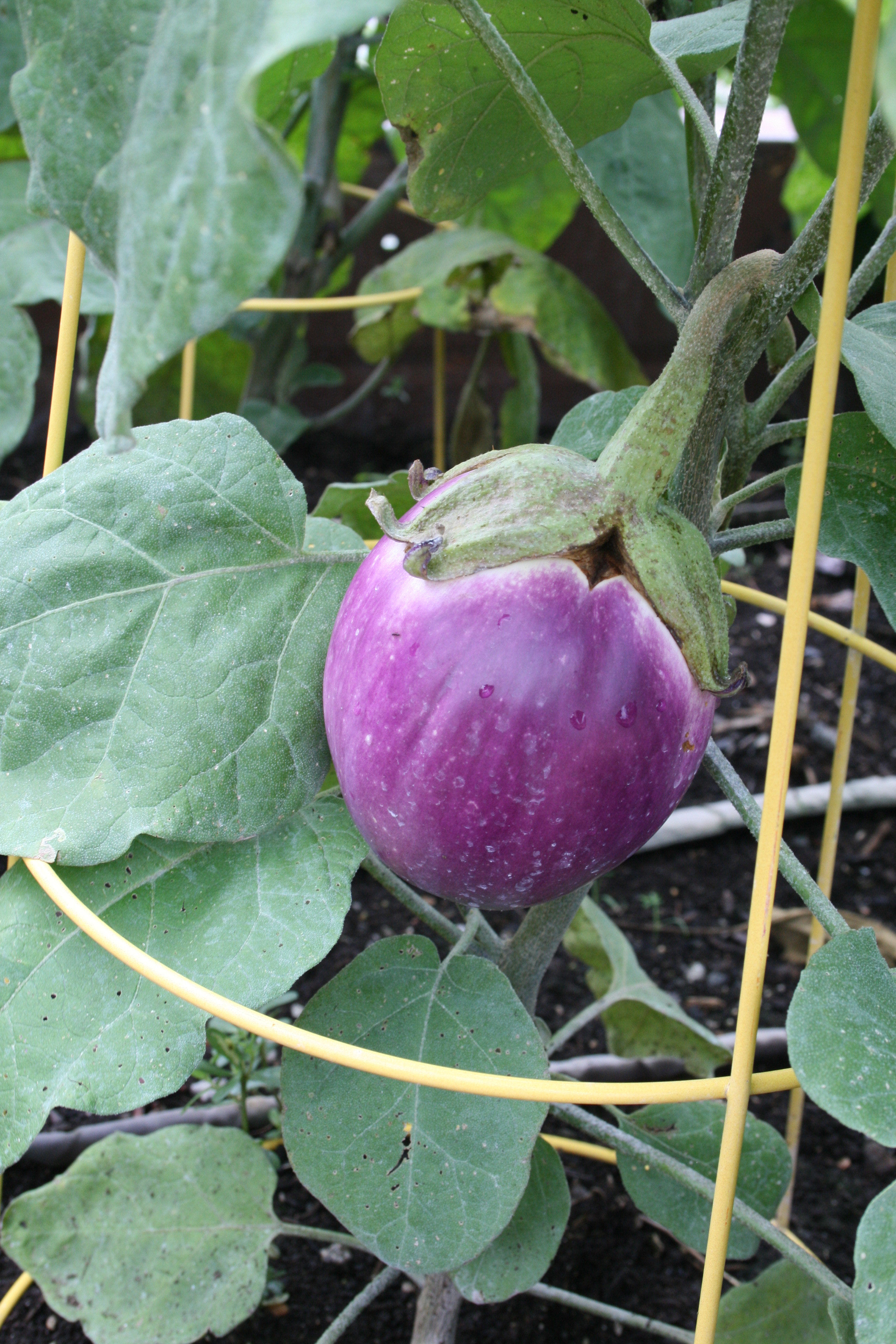
Bianca Rosa eggplant

Bianca Rosa eggplant enjoying the heat.

I am still harvesting like mad. My Bianca Rosa eggplant have given me 15 beautiful globes and there are more than that still on the plants. The Fox Cherry tomatoes are coming in so fast it’s hard to pick them (especially when you were silly enough to plant 10 of them!).

Growing giant Zucchini

Sicilian zucchini gone rogue.

The Sicilian Zucchetta are downright frightening in their productivity and sheer size.

I’ve been giving them away, cooking with them, jousting in the back yard and leaving them on neighbor’s doorsteps in the dark of night (too big for their mailboxes).

Green beans are producing about a pint a day and my Frigatello Sweet Italian peppers are just warming up, throwing off 5 or 6 peppers a day.

And I’m still getting beets, inter-planted among the tomatoes, keeping cool and waiting for me to harvest them.

Fox Cherries protect beets

Fox Cherry tomatoes shade my beets.

IMG_2568

So how can it possibly be summer’s end?

It happens every year, I wake up and step outside before the dawn light and something has changed.

The feel of the breeze on my skin. The smell of the air. A tiny change in the song of the insects. Every year, there is a single moment when I know that summer is ending.

2016 Perseid meteor showers

Perseid meteor cuts across the night sky (courtesy AMS, Ltd)

This morning, sitting on my patio watching the Perseid meteor shower (image courtesy of the American Meteor Society, Ltd.), I knew as any long time gardener whose blood runs to soil and whose bare feet crave time connecting to the earth knows.

Summer into Autumn is always bittersweet for me. My garden, this garden, will never come again. Next year, the war with Japanese Beetles and the ongoing struggle with Mexican Bean Beetles will begin again. Triumphs and defeats will eddy and swirl across my back yard.

Sunflowers grace my garden

Sunflowers tower over my garden…and me!

But then there will be all that glorious, organic food flowing from my garden to my kitchen table and the tables of friends, relatives and neighbors, again.

And sunflowers, bachelor buttons, chamomile, marigolds and lemon verbena will open for the bees. Lemon balm, milkweed and borage will offer food and nectar to butterflies, wasps and beneficials.

Blueberries and blackberries will be joined by elderberries and goji berries, adding to the delicious, healthy treasures growing just steps from my back door.

And I will once again know why I garden.

Note: the image of the meteor, above, was taken by Eddie Popovits and used with the express permission of the American Meteor Society, a non-profit, scientific organization founded in 1911 and established to inform, encourage, and support the research activities of both amateur and professional astronomers

How To Kill Mexican Bean Beetles

I used to ask myself, “What’s a Mexican Bean Beetle?” Now, every summer, I ask myself, “Of all the bugs in all the world, why does the Mexican Bean Beetle have to find my garden?”

Mexican bean beetle life cycle

Photo reproduced w/permission of Purdue University

As with any pest, it pays to know your enemy. I call this picture, “The Circle of Life” and am grateful to Purdue University Entomology Department and Dr. Christian Krupke, Principal Investigator, for letting me use it.

If you have been invaded, these are all the forms the enemy takes while ravaging your crops. Since it’s mid-July in Pennsylvania, I know the invasion of my back yard, all organic garden has begun.

Of all the pests I do battle with, the Mexican Bean Beetle is the worst of the worst when it comes to green beans.  One day there is nothing there.  The next day there are some holes in a few leaves on a couple of plants.

Flip up the leaves and if you see pudgy yellow larvae with lots of legs and one big old mouth chewing away, you’ve been invaded. Grab a bucket, sit down, methodically flip up every single leaf on every single plant and crush the yellow menace. Then get up and do it again, tomorrow and the next day or you will lose your bean crop.

Mexican Bean Beetles are members of the lady beetle family.  But they aren’t the Lady Beetle relatives you want in your garden.  Small, copper or khaki colored, these beetles are about 6 mm (1/4 inch) long and 5 mm (1/5 inch) wide.

Pesky bean beetle

Tiny & destructive (Photo credit: Michael Bok)

Some have 8 small black spots on each wing, resembling large lady beetles. Some are brown with barely discernible stripes. No matter what they look like, they’re really wholesale destruction machines.  And they come in force.

How do they find your garden and your bean plants so quickly?

Chances are they never left when the winter came; they simply tucked in to the ground in leaf litter and other sheltered areas in fence rows of your garden plot and waited out the freezing temperatures and the snow.

Adults begin emerging from these protected areas when beans begin sprouting and continue to emerge for up to two months. The adults feed for approximately two weeks before depositing their eggs on the underside of leaves.  And when I say feed, I mean ravage.

Nasty beetles eating everything.

Mexican Bean Beetles will literally eat the life out of my bean plants, if I let them.

Yellow eggs 1 mm (1/20 inch) in length are laid in groups of 40-60 on the lower leaf surfaces.  Females may deposit an egg-mass every two to three days. Eggs hatch in 5-24 days.  Immature larvae are yellow and are covered with large spines.  Larvae feed for two to five weeks before pupation.

You have 3 chances to kill these beetles off – crush the eggs, crush the larvae and crush the mature beetles.  The first two are the easiest but you can catch and kill the beetles too.  You just have to be persistent.  I like to think of it as my summer time exercise program, bend, search, crush, start again.

If you can make it through July and early August, when the greatest amount of injury occurs and the adults begin to disappear, you might save some of your bean harvest.

So, every spring I take a chance and plant some beans.  They grow fast.  They set tons of beans.  If I plant them properly, train them right (if they’re pole beans) and aggressively crush all variations of the Mexican Bean Beetle, I can harvest and enjoy green beans all summer long.


Controlling Japanese Beetles Naturally

I am at war with Japanese beetles, the offspring of last year’s huge and devastating population. This year, I think I’m going to win!

Surround stops Japanese Beetles.

Japanese Beetles hate Surround!

Why? My secret weapon? I am using Surround.

Surround is 95% kaolin clay (5% inert) which is mixed with water and sprayed on plants.

This year, all the blackberries and the blueberries in my yard are wearing coats made

Blueberries covered by Surround.

Beetle free blueberries coated by Surround.

of Surround which I sprayed at the first sign of Japanese Beetles in my back yard.

When I say “first sign” I mean it. Apparently, the beetles release a pheromone when they find good food. Any beetles in the vicinity fly in and start feasting.

Surround doesn’t harm any other insects. But Surround does make berries and leaves taste really bad to the beetles! The proof is on the plants and in the bucket.  This year I have only gotten about 45 beetles, total.

Very few Japanese Beetles in 2016 thanks to Surround

Surround meant fewer than 45 Japanese Beetles in a week!

Last year, I plucked morning and evening, got thousands of Japanese beetles in my bucket and I still lost all the blackberries, beans and apples. The only difference this year is Surround!

Surround also keeps my 10 most hated bugs, including Colorado Potato Beetles, Cucumber and Squash beetles, off of plants so, yes, every squash and cucumber plant in my garden is also sporting a beautiful coat of kaolin clay.

FYI the beetles I have found were on the only 2 plants I didn’t spray with Surround — a Pussy Willow and Borage, which I planted for the bees.

Borage without Surround equals Japanese Beetles.

Borage is one plant I didn’t spray!

Based on my current state, which is only one week into beetle season, I may win the war this year.

If I do, I give all the credit to Surround. If you’re being “bugged,” consider giving it a try.

Tips for Gardening For Aging Backs

I admit it.  My back hurts.

It pretty much hurts all the time now. Following two surgeries on my left hip, I was left with two scars (7 inches and 4 inches) slashing horizontally from spine to hip bone and doing battle every day to see which cut muscle can spasm the most.

Some days, it seems like they are both winning but a little pain is not stopping me from putting in my garden this year. In fact, it’s made me rethink a few things.

Straw protects my garden.

Straw protects my garden in the winter.

First tip: Prep the Beds Early
All of my soil is covered by straw for over-wintering. Straw keeps down weeds but it also keeps the soil cooler, longer.

If you grow Mediterranean veggies like I do — tomatoes, peppers, eggplant – you know the soil has to be warm, warm, warm so the first job is pulling the straw back.

Instead of trying to get all my prep done is a day, now I spread it out over a week or two. The steps are easy but all of them require bending to which my back says, “No!”

So here are the steps I take to prep the garden:

  1. The first thing I do is pull back straw from my planting areas.
  2. Next, I move the fences and rails I am going to use to trellis everything from tomatoes to cucumbers to new locations.
  3. The raised beds get the next look-see. I add soil or compost to the beds, level them off and get them ready to receive my transplants.
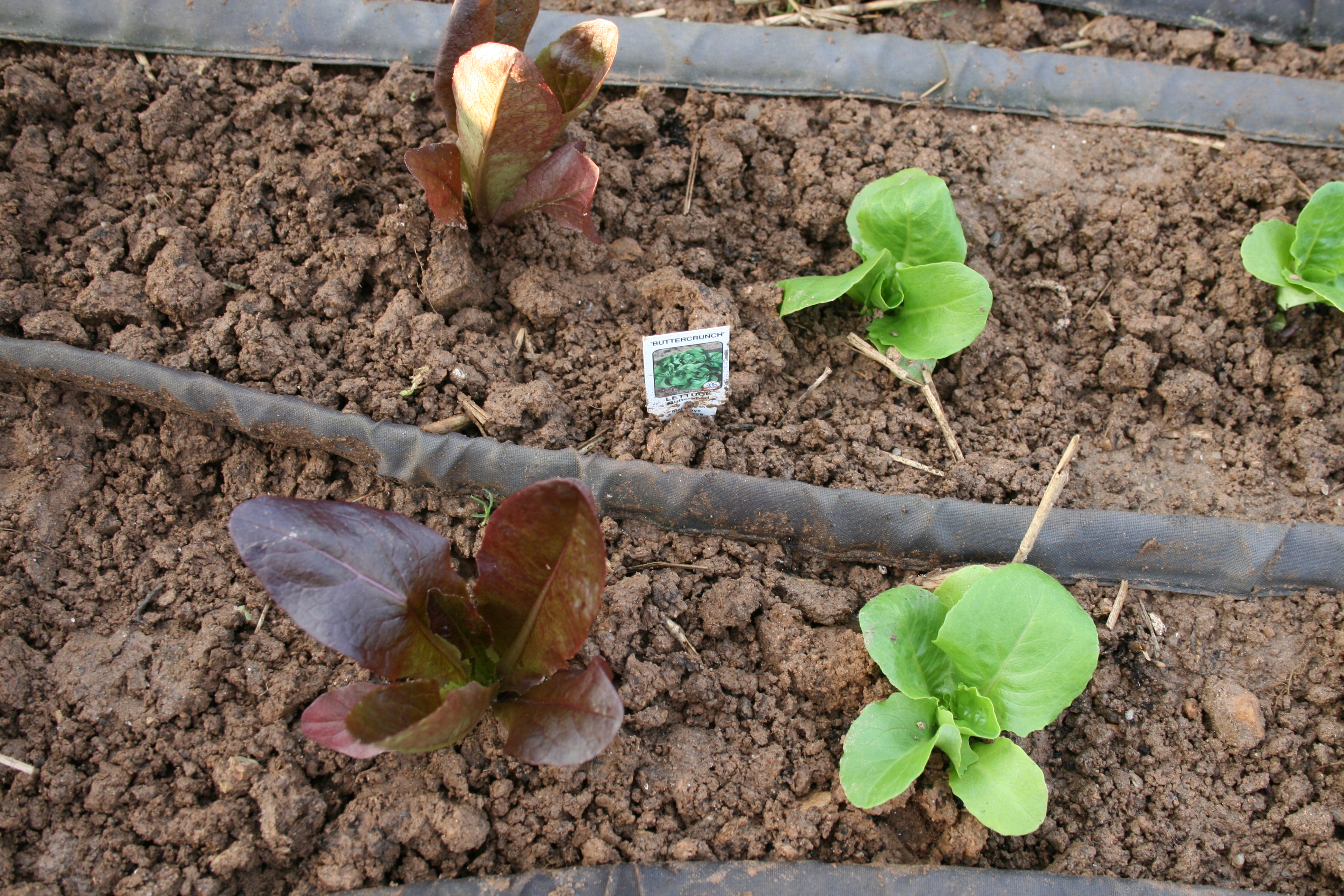
  4. Last but definitely not least, I lay out my soaker hoses being careful not to knock about the baby lettuce already growing.

    Soaker hoses around baby lettuce.

    Soaker hoses are set in place early.

Second tip: Fast versus Slow
That blasted tortoise showed up this year and gave me some advice on how to win the race to put my garden in without too much pain. I am following it.

I used to put ALL of my plants in the ground on one day. When I say all, let me give you my count for 2016:

  • 16 cherry tomatoes
  • 4 San Marzano tomatoes
  • 12 Sweet Italian Peppers
  • 5 Rosa Bianca Eggplants
  • 6 Zuchetta
  • 14 cucumbers
  • 4 basil plants
  • 2 Italian parsley plants
  • Countless flowers for interplanting

That’s 63 plants and 63 holes of varying depths, all at once. And this list doesn’t include the 3 types of beans I put in the ground now that the lilac is finally in full bloom.

This year, I am staging my planting. I dug 16 holes for the tomatoes, a week before I needed them. All I have to do is set the tomatoes in holes, press, water them in and stake them and quit for the day. The “quitting” is the hardest part for me but I am letting my back give me orders this year.

If my back feels okay the next day, I will dig the holes for the eggplant and the peppers and plant the following day. Holes for herbs will be next, then planting. Last to go in the ground will be zukes and cukes around the end of May because these babies really like their soil warm.

Third tip: Plan for the Future

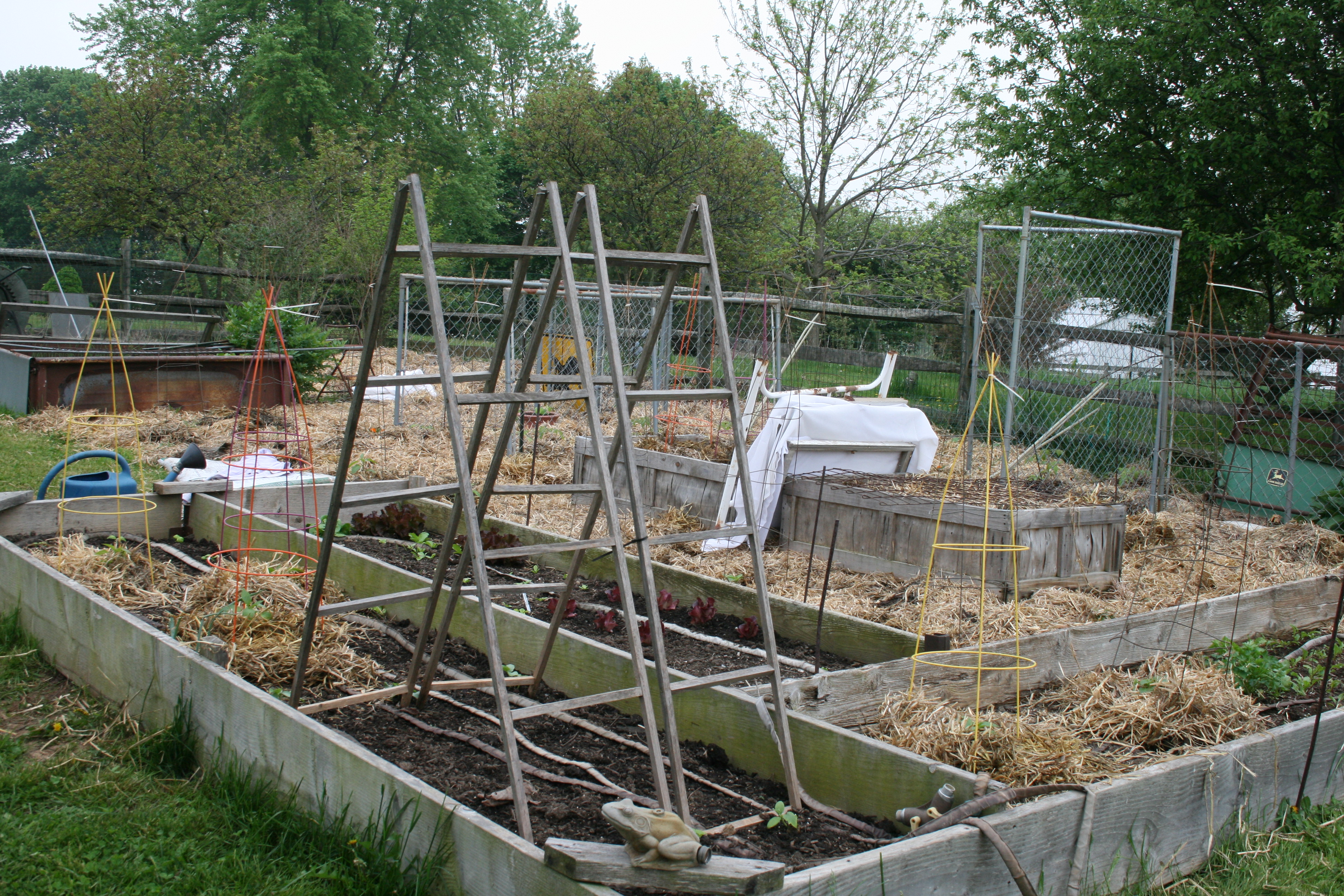
Raised beds keep my back happier.

Raised beds are easier on my back.

The size of my garden hasn’t changed much over the years but how I garden has.

I started with no raised beds; this year 6 of them. One is an old Chevy truck bed in the background.

Two are new galvanized oval-shaped beds and

3 are home-made, 12 foot long boards held together with corners from Gardener’s Supply.

Raised beds let me work with soil that is softer, more friable and easier to dig in. I also can reach the ground a bit easier as it is close to my knees. I can sink stakes and cages and trellises into my raised beds without my hand sledge.

I plan on adding 2 more raised beds next year so I will have even less digging to do when it comes to prep and planting.


Planting Elderberries in the Meadow

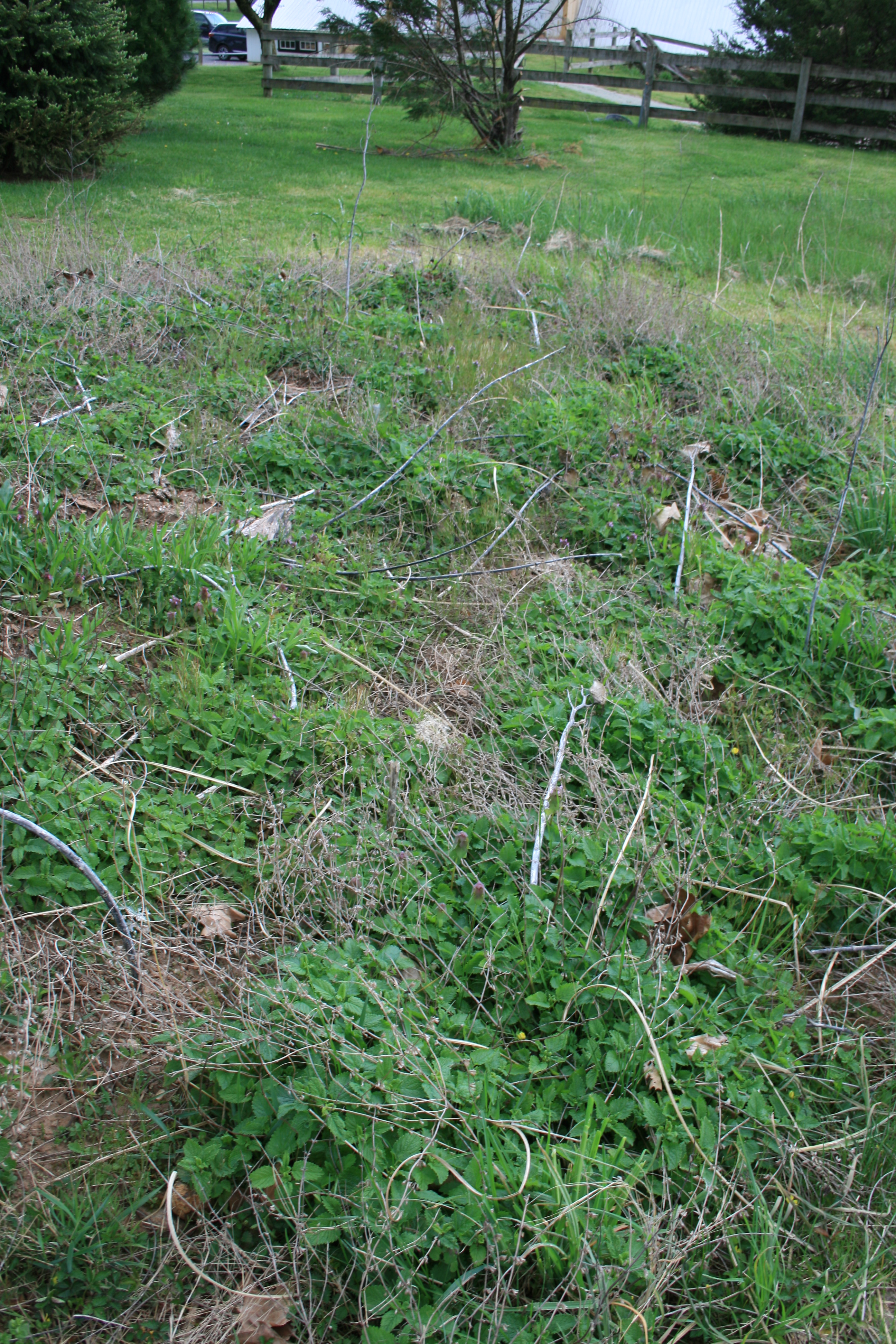
Grassy meadow in my backyard.

Our meadow grows great grass!

We call this our meadow. Honestly, it’s really just half an acre of ground we
didn’t want to mow any more.

Lemon balm likes the meadow

Lemon balm took over the old firewood pile.

The idea started when I transplanted some of my mom’s Lemon Balm in an area that had been the firewood pile.                    Lemon balm grows fast and this took off and created an oval that’s about 6 feet wide and 12 feet long. Then milkweed dropped by for a visit and decided to stay, creating a ring around half of the lemon balm bed. The only plants that have tried to interfere were two invasives – Mile A Minute (it grows that fast) and every surface including the back of the leaves has stickers) and Bittersweet Vine.

The rest of the half acre is “naturalized.”

Okay, it looks pretty seedy but I have been working on this for a couple of years with little or no success. The grass is MONSTER and its rhizomes are about 1/2″ thick!

I’ve planted 18 perennials out in the meadow…black-eyed susans, shasta daisies, perennial flox, and cone flowers — all supposed to be hardy, to love the sun and to return, year after year. Most of them packed up in the dead of night and moved to the neighbors.

So, now my new approach is to plant bushes.

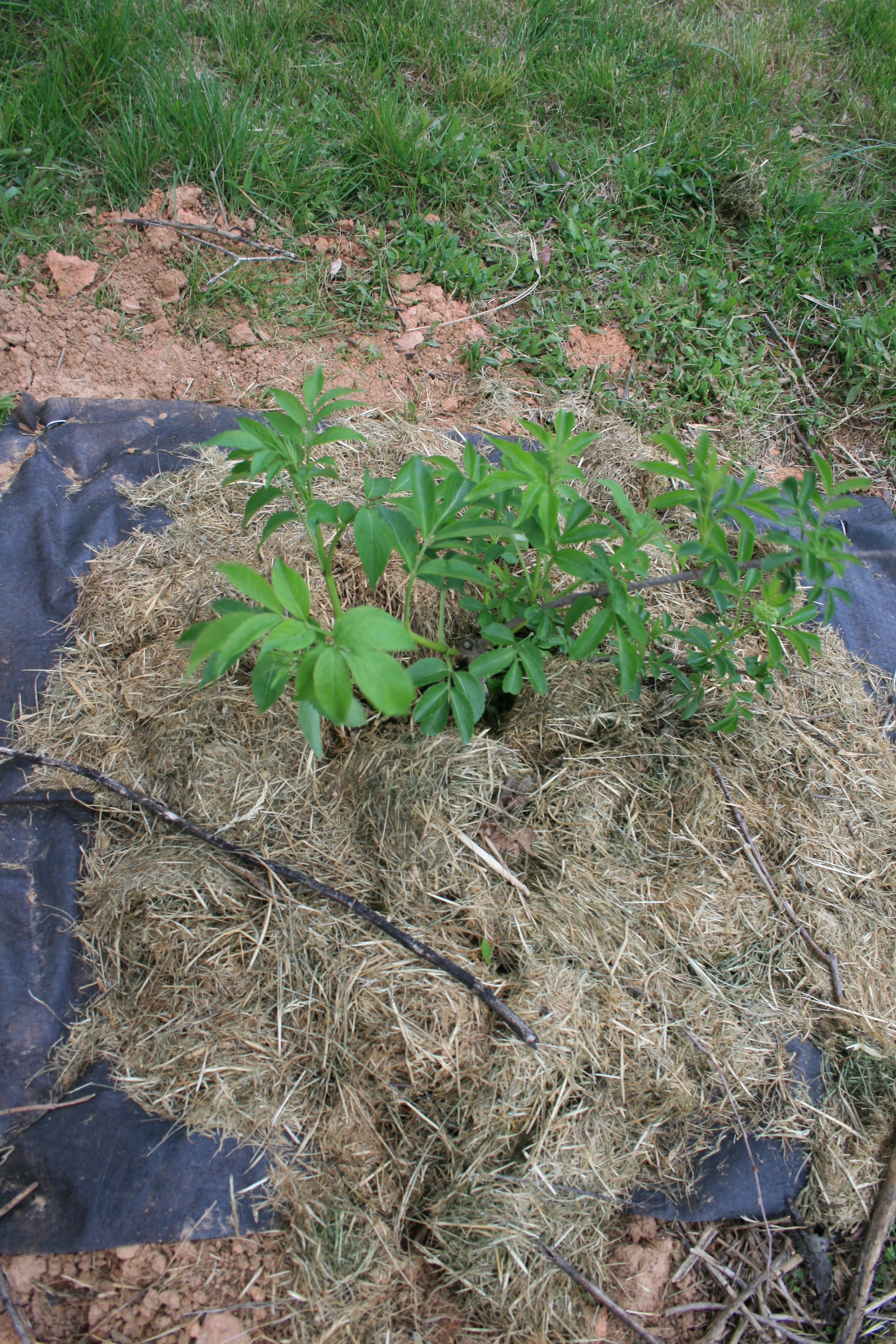
Transplanted elderberry growing in the meadow.

The first elderberry goes into the meadow.

Of course, the bushes have to produce so, I am putting 3 elderberry bushes in and 2 Goji Berry bushes. Just for fun, I picked up a Hazelnut tree at Sugar Bush Nursery and am adding it to the mix.

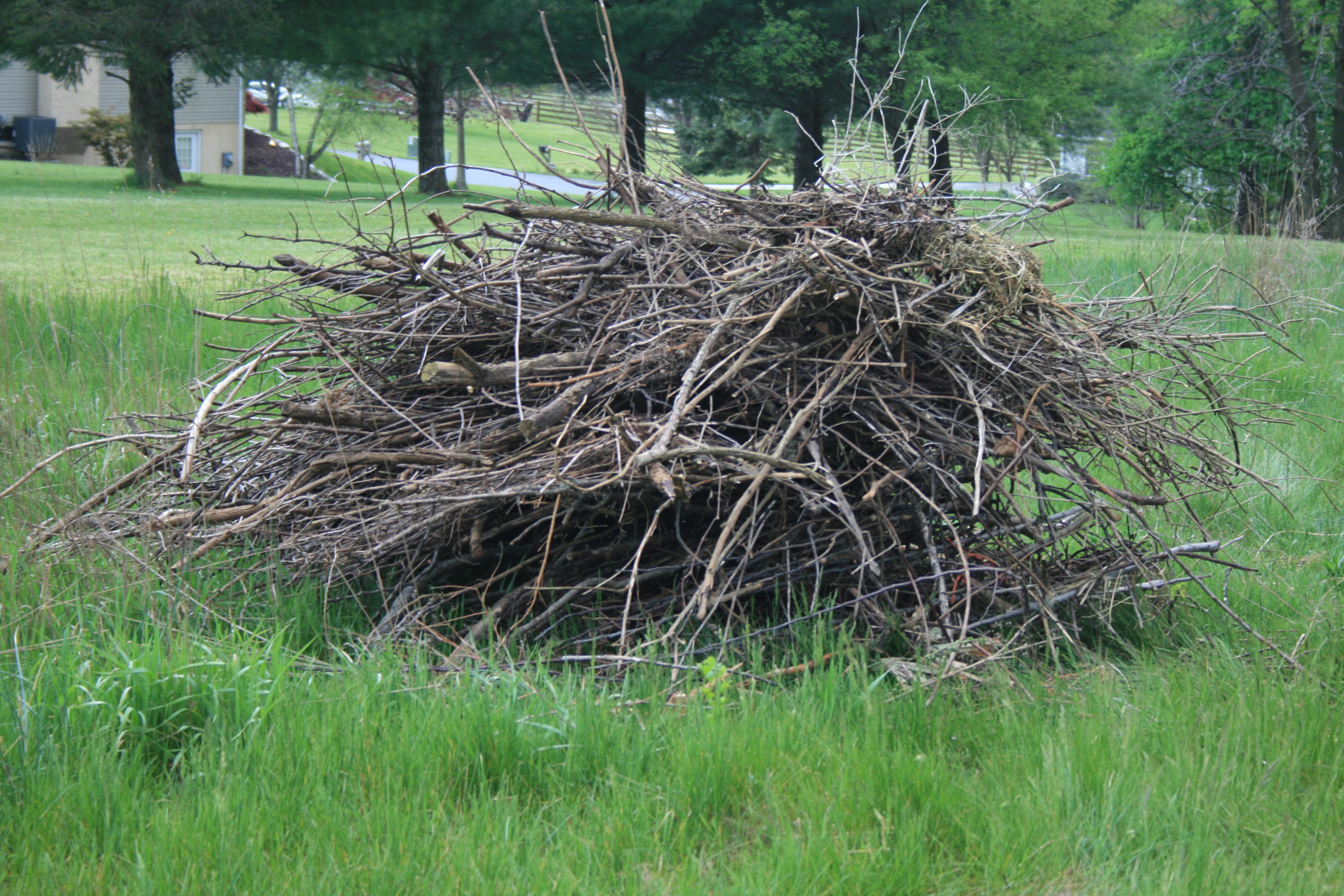
Luckily, we had dragged branches out to the meadow over the last 2 years, piled them up and left them. Occasionally we would look at each other, look at the pile and say, “We need to clean that up.” That didn’t happen until today.

Sticks moved so I could plant elderberries.

I call this sticks with ticks.

And when I started moving the pile from one bit of the meadow to another, I found absolutely beautiful, grass-free soil and a nice place to plant my berry bushes! (I also found 6 ticks on my neck, arms and head — I’m still itching.)

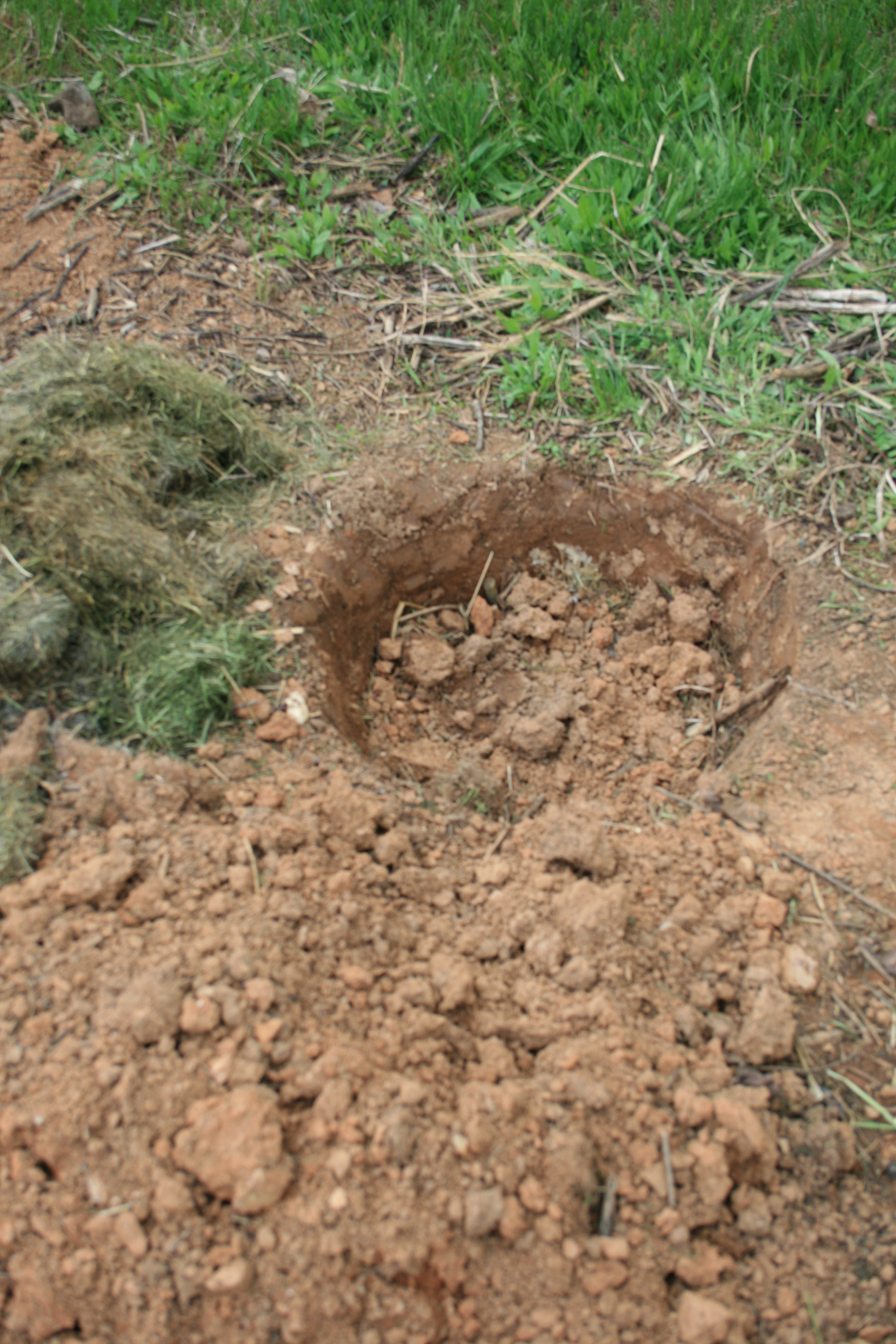
I dug holes for the elderberries, making them about 30 inches deep. Too deep for this bush which is shallow-rooted. But I knew my enemy — the soil.

Freshly dug, properly prepped holes for my bushes.

Freshly dug, properly prepped holes for my bushes.

It grows absolutely fabulous witch grass  and not much else. It would not be good for these berry bushes.

I broke up and added about 3 inches of twigs and branches – jumping on them once they were in the hole to break them even further.

Why branches?  In soil this hard, twigs help with drainage and keep these new bushes from drowning. They also break down slowly, adding nutrients to the soil that will feed the elderberries over time.

This hole is ready for its bush!

This hole is ready for its bush!

I topped the branches with  composted matter that included grass, straw, some well-composted manure and egg shells. On top of that, I put a 2 inch layer of soil. Now the holes are only about 8 inches deep.

The new baby bushes will be tucked in with some worm castings and some of the native dirt from the hole. They will also have ground cover and topped with grass clippings that will act as mulch and food.

Here’s hoping my new plan works and the meadow gives up a little real estate for these new baby elderberries and the Goji berries.

By the way, here’s the view of my garden and house from the meadow – what the bushes get to see when they look at home!

The view from the meadow.

Our house and garden from the meadow.


Growing Bradford Watermelons

I am super excited this year because I am going to try to grow watermelons this summer.  Not just any watermelons…Bradford watermelons.

So, what’s the big deal with Bradford Watermelons?

These are supposedly the sweetest watermelons available on the market today. Their Brix is over 12. Their sweetness is one reason this type of watermelon fell into disfavor with growers and disappeared from the marketplace for almost 100 years.

The watermelons were so sweet that they couldn’t be shipped very far before they began to rot. Hardier watermelons with thicker skins were developed just for distribution and the Bradford watermelon faded from public memory.

So, their sweetness attracted me but I think the reason these watermelons are so special is the back story about their revival.  I love the farm, and the way the great, great, great, great, great, great grandson (also named Nat) took up the mantle and brought this legacy watermelon back to life. (Or it could be the watermelon brandy that Bradford is now selling!)

In any case, I going to try growing a few but a couple of things make this new venture a bit tricky for me.

  1. Taste: I tried raising cantaloupe one year. I successfully grew beautiful plants were covered with large melons…that tasted like dirt! No joke, they were virtually inedible. So, I’m thinking perhaps my soil is not suited to raising melons.
  2. Real estate: watermelon like room to grow. They need real estate. I have room in the backyard but I also have a husband who is not all that thrilled by all the new holes I put in the ground every spring and summer.
  3. The seeds come with fairly long, very detailed planting instructions. I never read instructions. Perhaps I should…

I am going to direct sow these seeds – I got 10 for $10 and gave half away – in late May and will provide updates and pictures – good, bad or ugly – as my watermelon adventure gets off the ground!

Backyard Chicken Basics

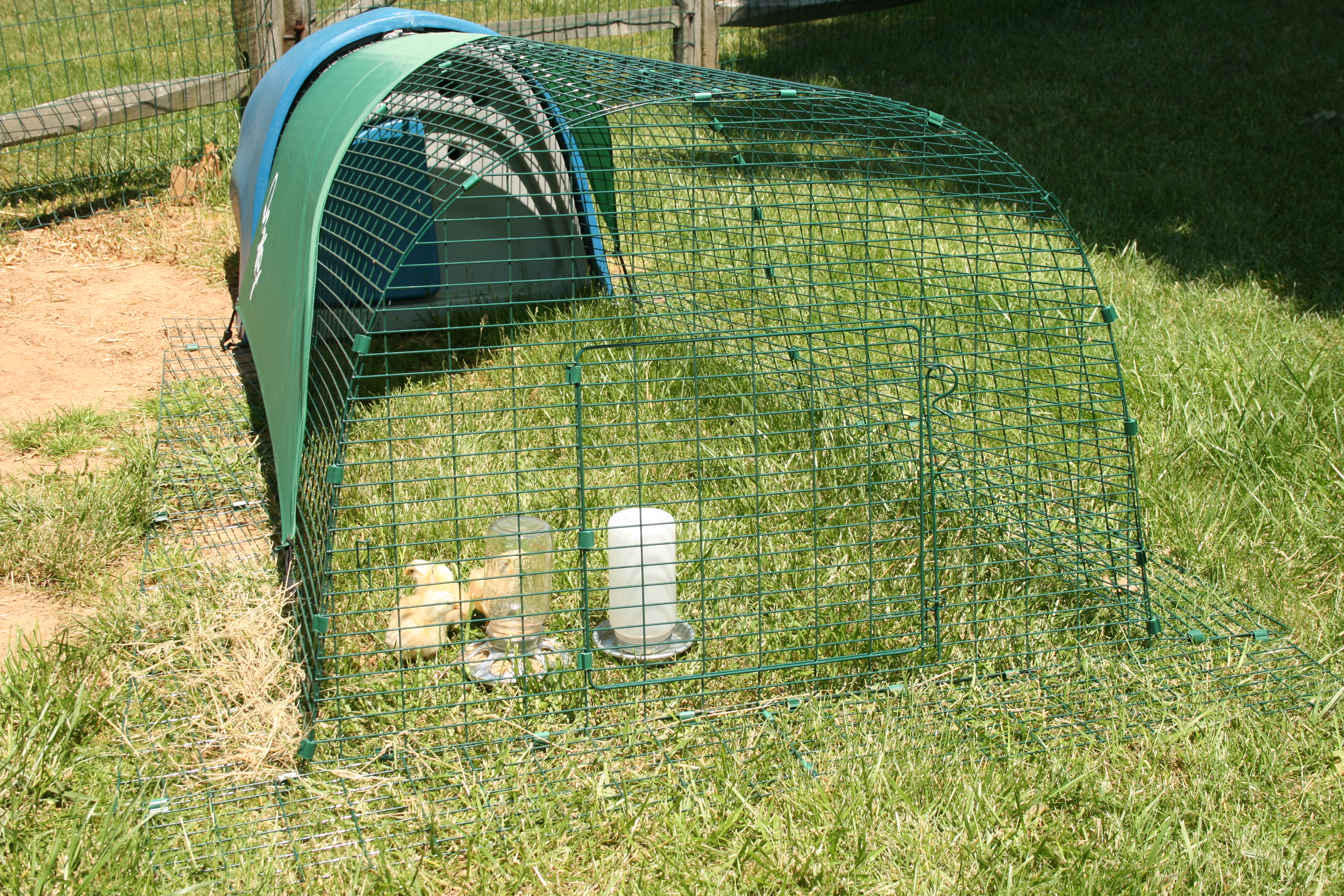
Eglu with baby chicks

The Eglu lets chicks roam, safely.

I always wanted chickens so one year, for my birthday, my husband bought me an Eglu which is a British invention that makes keeping chickens easy and keeps the chickens safe, too.

Once I got their home assembled, it was time to order the chicks!

Because it can get to -20 where I live, I wanted a hardy breed. Research told me that the New Hampshire Red would fit the climate and lay beautiful, brown eggs. So I ordered 4 baby chicks from McMurray.

NOTE:  in case you’re wondering, no chickens died in this story….well they did die but they were old ladies by that time.

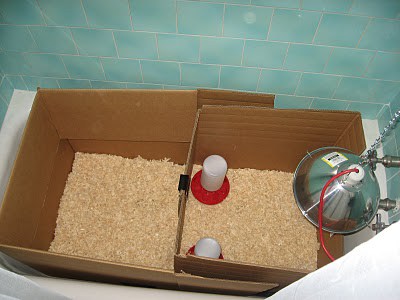
I did my homework on what baby chicks needed, took over the powder room on the lower level of my home and put together a brooder using a large cardboard

A homemade brooder from a box.

My brooder looked like this one from Seattle Seedling.

box, wood shavings (like the ones I use in my horse’s stall), a brooder heat lamp, a galvanized waterer and a little galvanized chick feeder.

When my one-day old chicks arrived in the mail, I was all set.

All 4 babies survived my ill-informed ministrations including cleaning their butts to prevent “pasting up.”

Within a week, they were outside and in their Eglu.

Eglu with baby chicks

The Eglu lets chicks roam, safely.

Baby chicks in their Eglu in my backyard.

The Eglu keeps the chicks safe as they explore the yard.

Here, you see them dining al fresco — enjoying the sun and fresh air without worrying about predators like the hawks and fox that are our neighbors.

So, I was all set for my backyard adventure with chickens, I thought.

However, even though I bought and read the top books on having hens in your backyard and even though I only got 4 baby chicks, I  wasn’t really prepared for getting, raising and caring for chickens.

In fact, once the chickens and I got down to business, I had more questions than answers!

For example, when could I expect my first eggs? Why do chickens but production in winter? How will the chickens do in blizzard conditions and sub-zero temperatures? What the hell is moulting? When does it happen? Is it really painful for the chicken? How do I know if my chicken has bumblefoot? (No joke — it’s called bumblefoot and it’s bad.)

I think if I had known all the things that could go wrong, I never would have gotten chickens. But I did and everyone survived. If I had it to do over, I would still read and research but I’d also get some hands on experience, too!

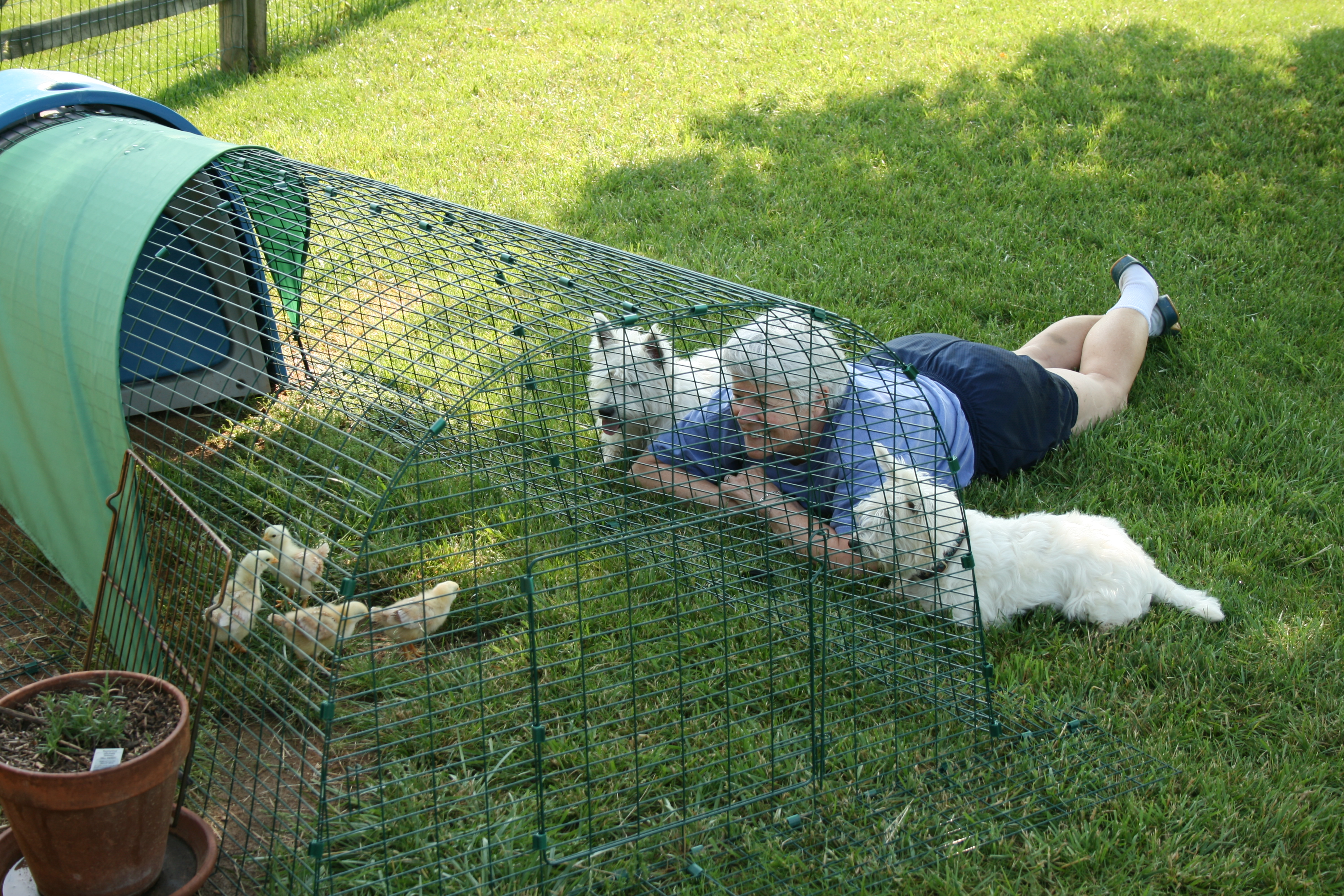
Watching my backyard chicks

Chicken watching with my Westies who seem really interested.

If you have a friend who already has chickens, visit, watch and learn. If not, universities, county extension offices and some hatcheries offer beginner classes.

Or, if your lucky enough to live anywhere near Hockessin, Delaware, you could sign up for the backyard chicken class being held at Mt. Cuba on Saturday, April 2nd!

If you do get into backyard chickens, there are also tons of forums where people just like us are happy to share what they know! And if you’re an organic gardener, chickens are some of the best organic pest control I can think of!

How To Grow Beets

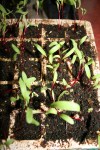
Baby beets grown indoors from seed.

Beets started indoors can be transplanted outdoors as soon as you can work the soil — if you protect them from frost.

Beets are known as cool season crops.  They really like cool temperatures and can be seeded as soon as you can work the soil.  And beets are one vegetable that should be organically grown.

My mom raised the absolute best beets I have ever eaten.  Every time I drove to her farm in the far end of Virginia, she would somehow know exactly when I was arriving.  There, on the table, steam rising, butter melting, would be a big bowl of sliced beets, just for me.

But I never planted beets in my own garden, not before she died, not after she died.  Then, one day, while browsing through GrowItalian.com, I saw Chioggia beets.

Beautiful, round and ruby-red on the outside but when you cut them open, there are concentric white bands all the way through each slice. I fell in love with beets, again.

Beets Are Easy Peasy
I’ve had beets in my garden now for the last 5 years and think they are among the easiest plants to grow.  But if you Google “growing beets,” you will literally get more than 1 million entries.

Don’t be scared!

There are only a couple of things you need to know to raise not just 1 but at least 2 crops of beets every year. (That’s how many I can grow in Zone 6b.)  WARNING: if you ignore what you are about to read, you will get red marbles…that will not cook or eat easy.  I know.  My first crop was used in a game of ringer.

The Dirt
This is almost one of the only requirements of beets and it’s one of the most important.  It’s also the bit of information I didn’t have when I raised my first crop of red marbles.  Beets really, really like loose, well-drained soil. They will put up with a wide range of conditions but won’t grow as big or as beautiful.

So do a bit of soil prep if you can. It may take a bit of time and effort but it’s worth it; I know.  And if you get the soil right, it’s smooth sailing to harvest time.

Remove stones since they will hinder growth.  If you’re growing in clay, add compost to loosen the soil and keep the soil from crusting after watering or rainfall.  And make sure your soil is acidic – beets like a pH range of 6.2 to 6.8.

When To Plant
Don’t plant in the middle of your summer season.  Beets won’t like it.  They are a perfect cool weather crop.  Although they can live through the heat (like the rest of us), they prefer a temperatures of 60 to 65 F and bright sunny days but they can also survive cold weather as long as they don’t get caught in a freeze.  So, beets are a great, “long-season” crop.

How To Plant
You can (and I do) start beets indoors but beet seeds are outdoor babies from the get go.  As soon as your soil can be worked in the spring, you can plant them.  The seeds aren’t really just one seed – each of these little jewels contains a couple of beet seeds.  Sow the seeds 1/2-inch deep and I drop each seed about 3 inches away from the other seeds.  I also plant in rows about 12 inches apart.

Beets seeds are pretty slow to germinate so make sure you keep the bed moist until you see their little heads peeking out of the soil.  I usually water a bit, every day.  Once they start to pop up through the soil, I keep watering but usually every other day.

Once they are established, just make sure that you don’t let them dry out.  But don’t over water either.  Too dry or too wet and your beets will not be happy.

Transplanting
TIP:  I don’t thin; I transplant.
Most advice online and in books says you have to thin beets rather than transplant.  Wrong!

Despite what people will tell you, you can transplant beet seedlings and almost double your crop. And it’s easy to do.

I wait until the leaves on the plants are about 2 inches long before I try transplanting.  The night before the big move, I water the bed thoroughly.  Then, early in the morning, armed with a #2 pencil, I head to the raised bed where my beets live.

I look for beet plants that are too close together. Because I’m not be most patient person when dropping seeds in soil, I can usually find 3 or 4 beet babies clumped together.

DON’T PULL THEM OUT ONE BY ONE!
Once I’ve found the baby beet clump I want to move, using a tablespoon or serving spoon, I gently dig around the whole clump and bring up a spoon full of soil with the beet roots intact.  Then I push my pencil into the ground, making holes spaced about 3 inches apart, for each of the babies.

Teasing the roots apart, gently, (a trick I learned from my Amish neighbors) I drop each beet baby into its own hole, pack dirt gently around it and move on to the next clump.

I have not lost one beet baby using this method and I practically double my yield.  Oh, and beets are a twofer in my garden – I also eat beet greens in salads.  Wait until the leaves are 3 to 4 inches high, then cut a couple off each beet plant.  The beets will keep growing and you’ll have some truly delicious greens for lunch or dinner.

Care & Feeding
Like I said, beets are easy peasy.

I have never fertilized my beets and they grow like champions.  It could be because I enrich my raised beds with a bit of compost every spring.  I do put a bit of mulch – straw – down around the plants once I divide and transplant them.  It helps hold moisture during the hotter, summer days.

Keep The Beets Coming
I plant in March, April, May then hold off until early August when I start putting in seeds, again.  I do that to avoid asking the beet seeds to germinate when the daytime temperature is above 80 degrees.  They don’t like it.  Plant in early August and within 55 to 70 days, you should have your next crop.

Nowadays there are so many varieties of beet to choose from — Early Wonder, Detroit Dark Red, and Red Ace.  You can even add some color to your beet dishes with the lovely striped Chioggia (which started me on my life of beet crime) or Burpee Golden and Albino White

No matter how you slice them…beets are a great addition to any garden.

By the way, one of my favorite resources when I am trying to get solid, basic growing information is colleges like Cornell, which posted a nice guide to growing beets.

Buy butter from grass-fed, organic cows and dig in to one of my favorite dishes.

If you want fast access to all my gardening tips and tricks, you will find them in my Kindle book, Grow So Easy; Organic Gardening for the Rest of Us.

How To Grow Potatoes

Most of you know that I have had my ups and downs trying to grow potatoes.
The outcome was not very good.  I couldn’t get a straight answer on where or how to plant. Once the potato eyes were in the ground, Wireworms and Colorado Potato Beetles joined together to make for tiny tubers and a potato growing nightmare.

So,when I read High Mowing Seeds post on growing potatoes 101 I knew I had to share.

I also think that Margaret Roach of A Way To Garden fame has a good tutorial fro growing your own spuds, too.

If you dream of growing your own spuds or want to be able to walk into your back yard and dig a few potatoes for the dinner table, High Mowing Seeds and Margaret Roach can help you get it done.

Remember, potatoes love being planted when it’s cool out so early spring is a great time to give this American favorite a try.

If you are successful, try dicing a few into this fabulous fish chowder – buttery rich and tasty. I married an Italian but my maiden name was Duffy.  If I know anything, I know some great recipes for cooking potatoes!

Fish Chowder

INGREDIENTS:
2 boneless fish fillets
2 thick cut bacon slices
2 T butter
1 leek, minced
1 stalk celery, minced
½ tsp dry mustard
1 lb potatoes, peeled & cubed
4 sprigs thyme
¼ c heavy cream
1 T minced chives

DIRECTIONS:
Place fish fillets and bacon slices in large pot and cover with 4 cups cold water.

Bring to simmer over medium high heat then reduce heat to medium and simmer for 5 minutes or until fish is cooked.

Transfer fish to plate and let it cool then remove skin and flake into large pieces.

Continue to simmer bacon in broth until stock is reduced by half (2 cups).

Strain, discard bacon, add 2 to 3 cups of water and reserve poaching liquid.

Melt butter in large pot, add leeks and celery and cook 15 minutes until translucent.