Tag Archives: organic gardening

My Tips for Sustainable Living

I am loving Nathan Crane’s series on sustainable living.

I am learning a lot from the people in this series and gaining new insights and new ideas. I am also realizing that almost every change I have made in my life over the last 20+ years, including my focus on organic gardening, has brought

Community gardens are gifts.

Gardening is good for body and soul.

me one step closer to living more sustainably. That was not why I made the changes.

Being sustainable never entered into my choices. Watching, listening, seeing and, at some deep level, awakening, knowing and choosing to make changes in my life and my home that are ethically in tune with me began with a diagnosis of cancer.

Once started, the changes didn’t stop. Here are some simple things I did, you can do, to just start down the path of being kinder to yourself, your loved ones and your world.

Buy organic meat and poultry. My husband was diagnosed with cancer in 2001. Everything changed.  And this was one of the first changes I made.  I found neighbors who were farmers who were organic and we bought our first pasteur-raised, free-ranged food.  I am a vegetarian now but we still buy organic meats from our friends.

No paper towels.  Sounds silly, small, but it was the first choice I made.  I weaned the household (and my husband) off of them in a year.  We have not had paper towels in our home for 7 years.  I buy fabric napkins at thrift shops and use them and wash them and use them again.

Drying clothes on a line.  I live in a relatively affluent neighborhood where

Breezecatcher 4 arm dryer

My Breezecatcher dryer saves me $100’s every year.

there are no clothes lines.  My solution? Buy a “solar dryer” that I can put out in the morning and take down in the afternoon.  I save about $80 a month on electricity just by drying towels, sheets and heavy cloths outdoors, year round.

Lettuce is an easy crop to grow and so tasty.

Lattuga in any language is a great addition to your garden.

Growing My Own – organic gardening has moved from an idea to a full-blown love of mine and it all started with lettuce!  Twenty plus years later, I have never looked back.  I am cheap, pragmatic and able to raise almost every veggie or fruit we eat using nothing but time, sunshine, water and love.

Making my own laundry detergent.  I decided to do this because I live in well country – and there are a lot of families downstream from my septic system and tile field.  Commercial laundry detergents are pretty harsh so I found a recipe (on the internet) using washing soda, laundry soap – Fels Naptha – and water. I add a few drops of Thieves oil for scent and make 3 gallons at a time for pennies on the dollar.  And I get the peace of mind of knowing that I am not poisoning my neighbors’ wells.

Making kombucha and sauerkraut.  This is my newest venture and I LOVE it. Fermented foods are so easy to make and so inexpensive to prepare.  You can pay $6.50 for a pint of sauerkraut or make a gallon – 8 pints – for $2.00.  Same with Kombucha — fermented black tea.  Pay $5.00 a bottle or about 15 cents a bottle.  It’s easy to make, delicious to drink and again, so very good for you.  Save money, feed your family and save resources.

Don’t listen to me.  Listen to yourself.  Take a step that works for you. Grow something. Save something. Make something. Don’t wait for someone else; make the change you want to see.

Let’s go back to Edward Abbey’s America.

“If America could be, once again, a nation of self-reliant farmers, craftsmen, hunters, ranchers and artists, then the rich would have little power to dominate others.”                                                                                           Edward Abbey

Taking Summer Stock – What Worked? What Didn’t?

I love and hate the end of the summer.

I hate that it has ended.  I love that I can spend quiet hours cleaning up, organizing and getting ready for the next garden.

And I love some of my online gardening friends for their insights, their humor and their ideas.

Check out this post from Chrystal.  Gardener extraordinaire, keeper of bee hives

Bees making honey in Chrystal's garden.

Bee hives enjoying Kale Grower’s garden

and sharer of good advice, good recipes and good humor, she gardens a bit north of me (British Columbia) and catalogs the good and the bad from her 2015 garden!

And shares some wonderful pictures in the process.

Read up and learn how Chrystal copes aphids (suggested she get some lacewings which devour lots of irritating bugs).

Find out how her tomatoes grew (like mine, they didn’t) and check out what she made with her lovely red raspberries.

Reading about her adventures helped me with my end of gardening season blues.  Isn’t it nice to know we have company in our back yards?

Happy planning for 2016!

Japanese Beetles Decimating My Plants

It must be July.

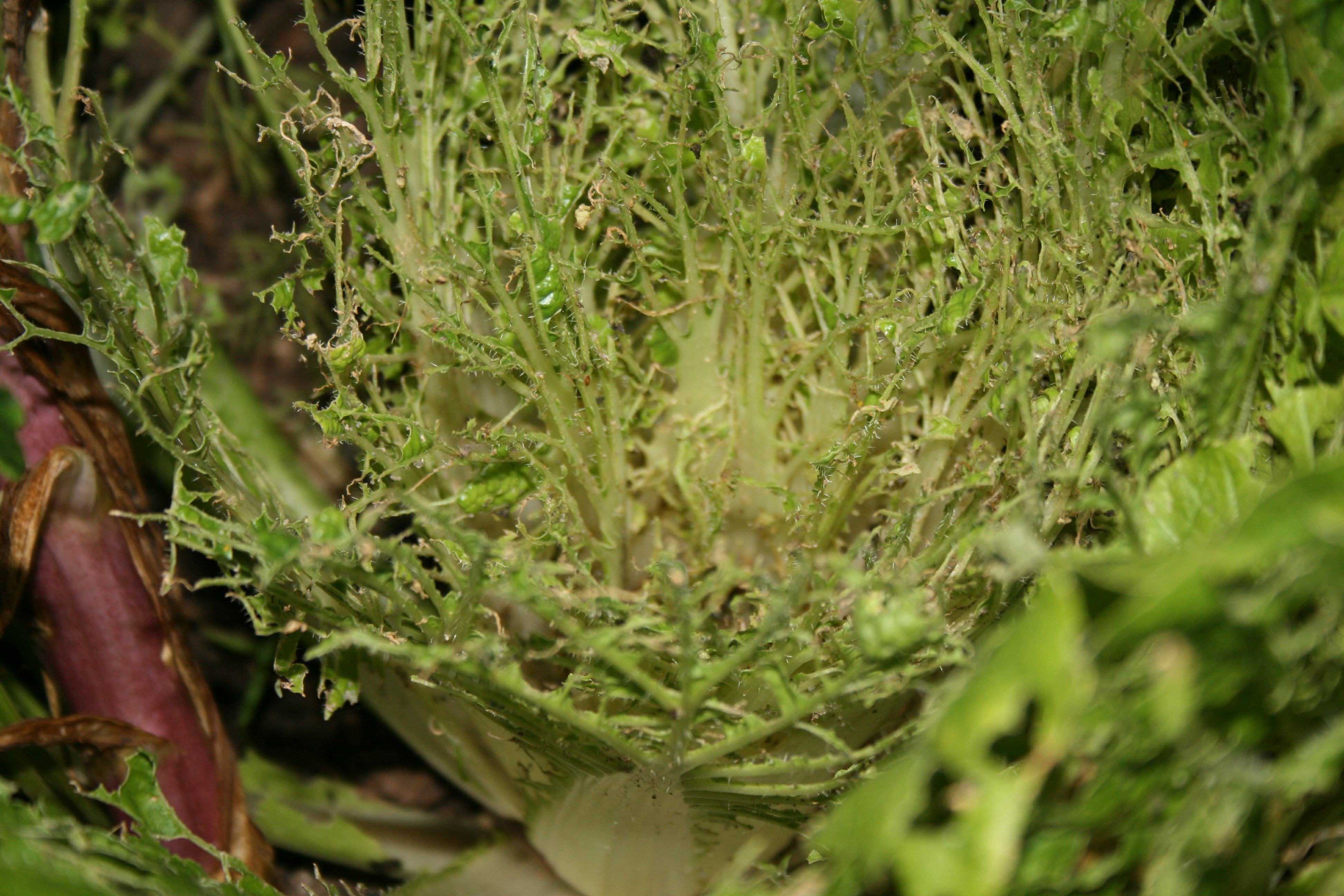
This is the month when the Japanese Beetles swarm in, over and under all of my plants and make veritable skeletons where once there was beautiful green.

Japanese Beetles destroy Chinese Cabbage

Japanese beetles make lace with Chinese Cabbage.

My Chinese cabbage fell to the Japanese beetles but I am determined NOT to lose the battle over my green beans and my blackberry bushes.

Unfortunately, because the beetles are so bad this year, I have resorted to using my apple tree as a distraction.

Japanese Beetles eat my apple tree.

Every leaf on this apple tree is eaten.


And the Japanese beetles are attacking with a vengeance.  The leaves are being eaten on every branch.  I hate using the tree to attract the beetles but, as an organic gardener, I have to or I wouldn’t have a prayer of holding the line in my garden.

So, how do I kill the ones that make it into the garden and chew through leaves of just about any plant?  Well, it isn’t pretty but my method works and it is organic.

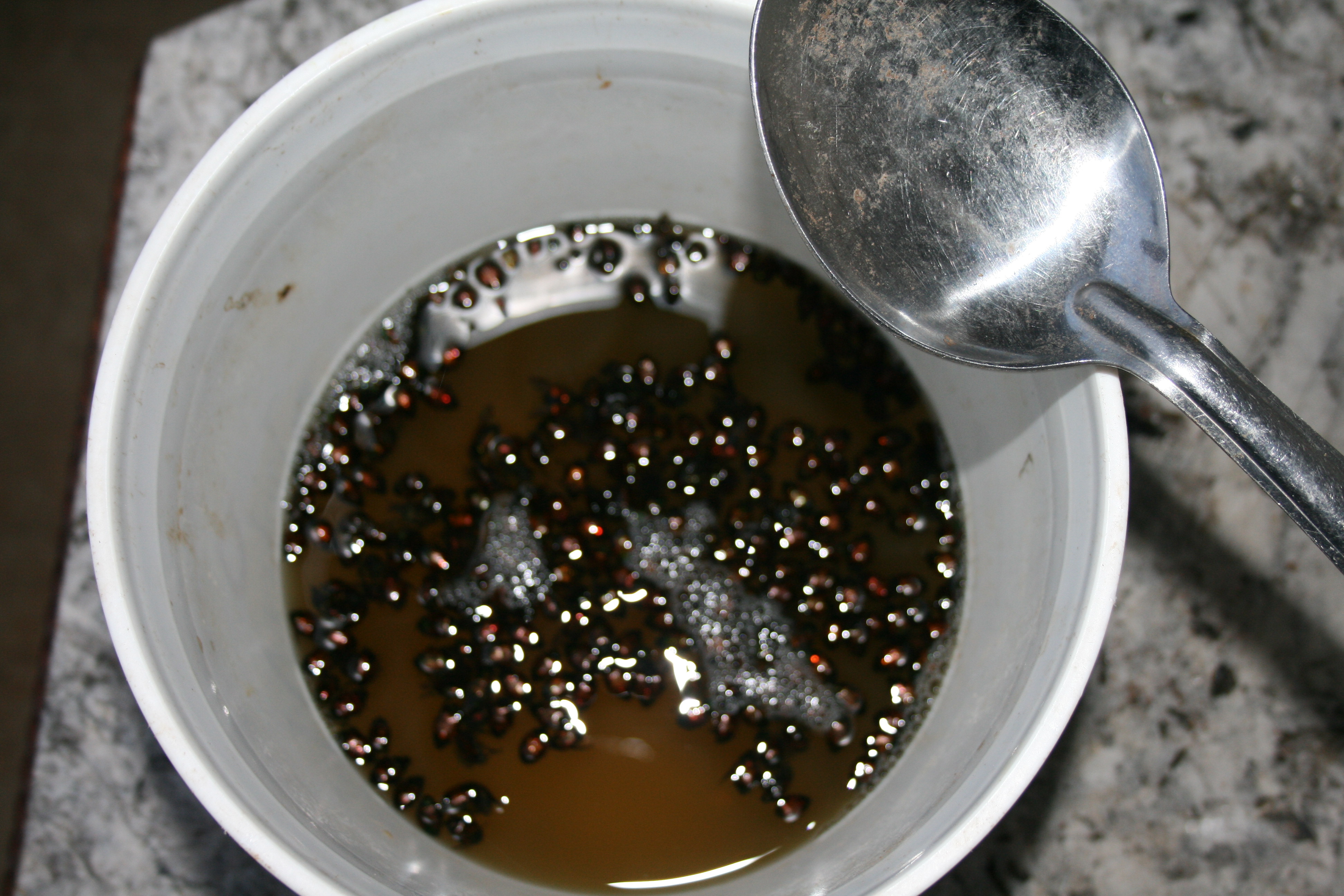
Every morning and every evening, I fill a small container with dishwater, grab my big spoon and head out to the garden.  I spend about 25 minutes smacking beetles into the bucket.

Drowning Japanese Beetles

Japanese Beetles to drown in dishwater.

When I’m done, I usually have between 100 and 150 beetles floating in the water.

Okay is sounds gross and the resulting “bucket of beetles” looks gross but it works.  And there is a perverse satisfaction in slapping them into the water, knowing their destructive activities are over.

So, the battle continues and I have good and bad days relative to control but I don’t spray; I don’t give up and I do, eventually beat them back.

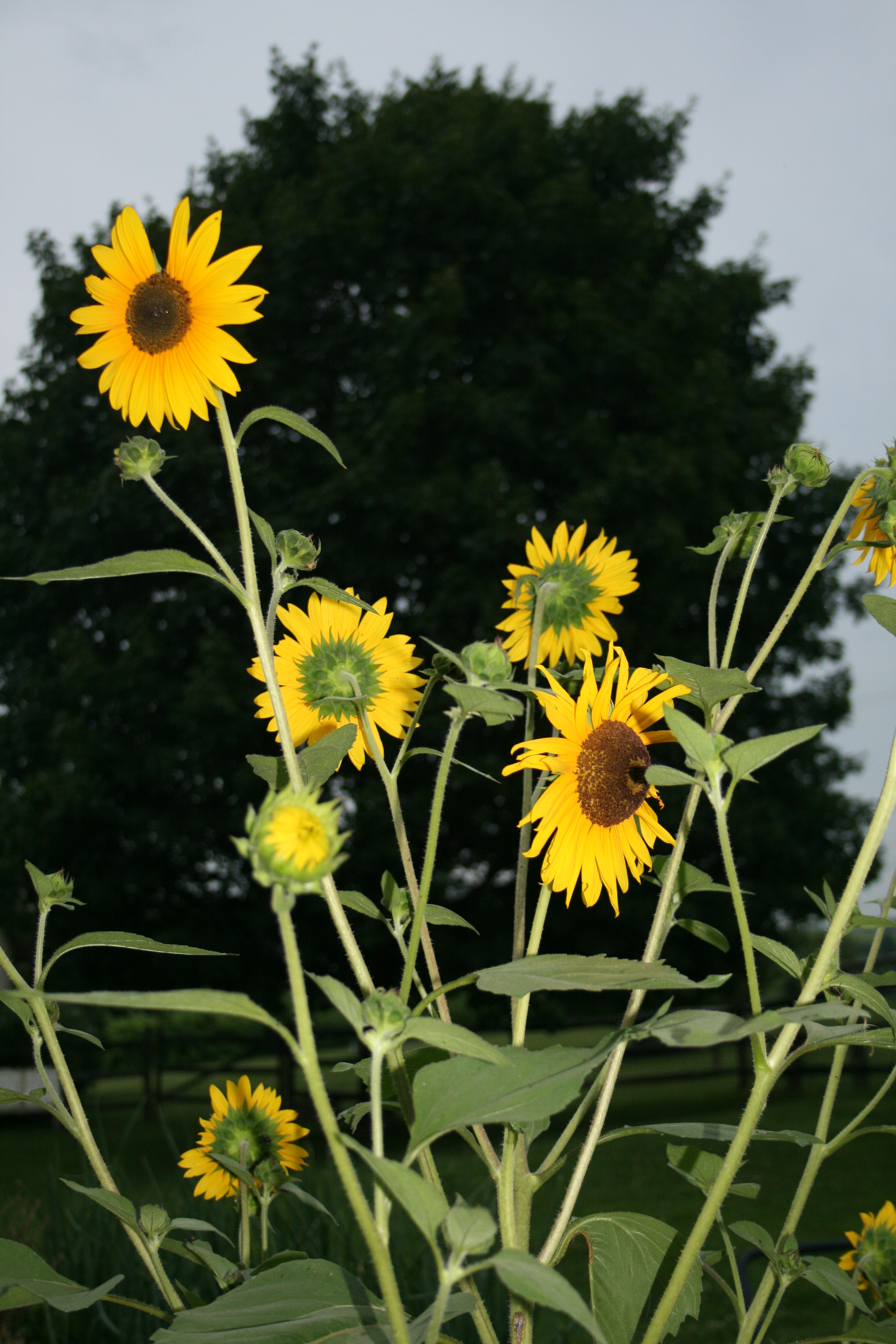
Volunteer sunflowers

Sunflowers make me smile.

And when I am feeling outnumbered or a bit down, I just look out my office door at  one of the hundred or more volunteer sunflowers that are in my garden and yard and smile.

And to make you smile, I am sharing a picture of my sister Meg, now known as Commander Colander Head, and I heading out to the blueberry patch to do battle with the vicious and varied invaders we call hornets.

This year I’ve got Bald-faced and European hornets and even hornets that look like bumblebees. And of course, there are honey bees, yellow jackets and genuine bumblebees.

So, when we go out to pick, we “suit up” – Tyvex suits are tucked into socks.  Muck shoes are worn and, if it’s really warm, nitrile gloves.

Blueberry picking around hornets

Meg and I do battle with hornets for blueberries.

The protective gear really does make it safer to pick.  And starting just as the sun cracks over the horizon also helps.

I’ve gotten about 85 quarts of blueberries this year and not one bite or one “fatality”, either human or bee!

climate zones: what can I grow in my yard?

Knowing what you can grow in your neck of the woods is one of the most

Organic gardening depends on dirt.

Healthy soil tells you what it can and cannot support and grow.

important bits of information you want to have when it comes to backyard gardening.

There are two basic topics that have significant influence on just what will live and grow happily in your yard.

In the end, it all comes down to getting a grip on your dirt and knowing your zones.

Dirt
We’ve all got dirt – a growing medium, a place to stick our plants.  But it’s what kind of dirt you have that will influence what you can grow.

There are all kinds of definitions out there for dirt or soil but, bottom line for gardeners, soil is NOT the stuff you buy in bags at your local big box store.  It is the stuff we walk on, the stuff plants, bushes and trees sit in.    Soil is the stuff we start our seeds in, transplant our baby plants into and set our ready-to-grow plants into in our gardens.

And the dirt in your backyard will tell you, loud and clear, whether it is happy and healthy and whether it can support what you are putting into it or not.  For me, the magic of my garden is in the dirt.

Zones
If you’ve been considering doing some backyard gardening, I’m sure you’ve heard of “zones.”  When I first started, I found the concept of zones a bit overwhelming.  And the fact that global warming has made my zone wander a bit on the USDA map just added to my confusion.

It took me a bit to figure out this “zone” thing and the fact that zones affect what you can and cannot grow.   I have to say that I think Dr. Thomas Osborne really nailed what anyone needs to know about zones so I am sharing his post.

FYI – Dr. Osborne is a Harvard trained Radiologist and Neuro-radiologist, not a botanist or a so-called pointy-headed intellectual.  And he just loves to share his insight about medicine and gardening.

So, without further ado, Dr. Osborne on getting your zone on!

climate zones: what can I grow in my yard?TastyLandscape.

via climate zones: what can I grow in my yard?TastyLandscape.

Organic Garden in June in PA

Today I just want to share some of the glorious pictures from my garden which has finally decided to grab on and grow!

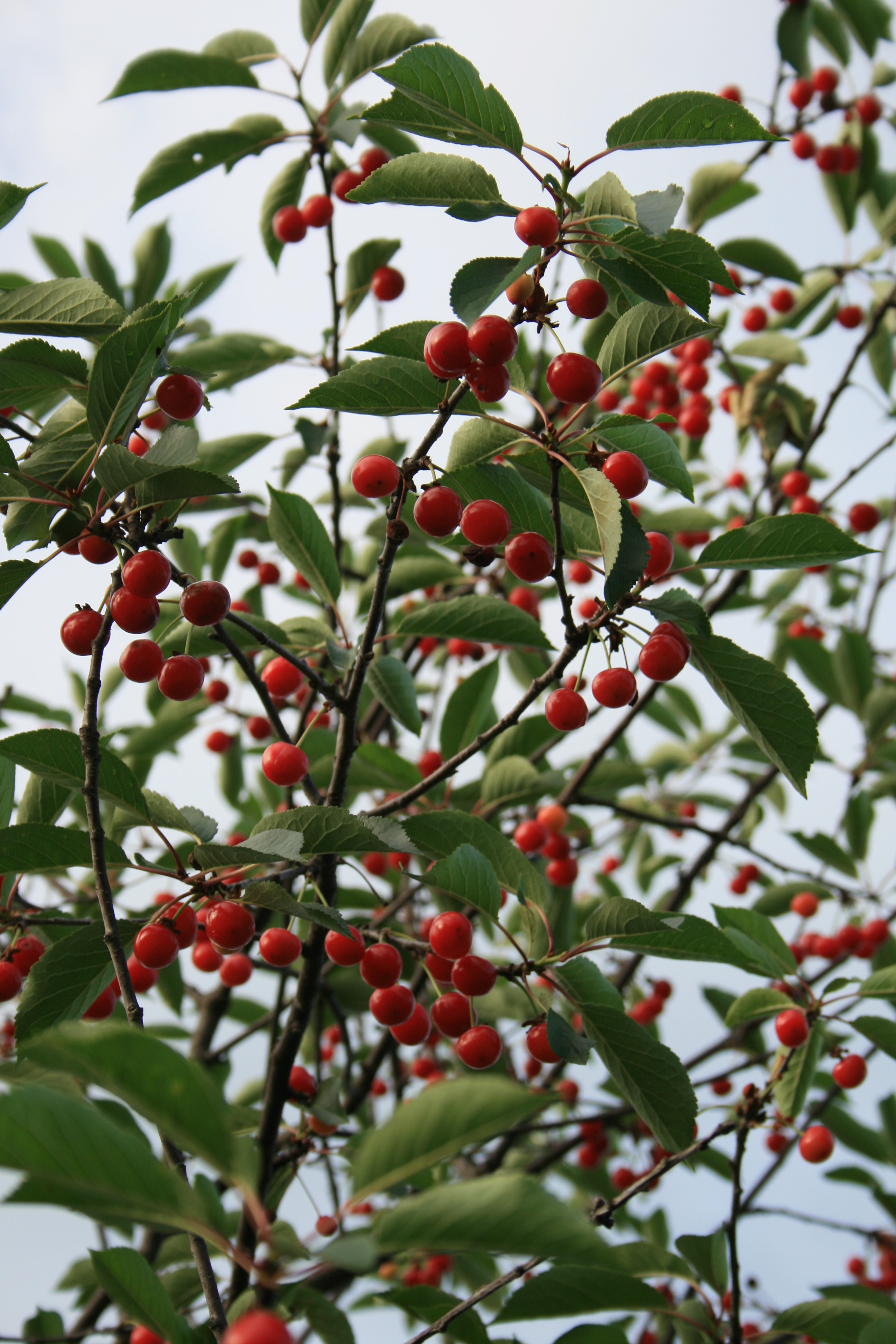
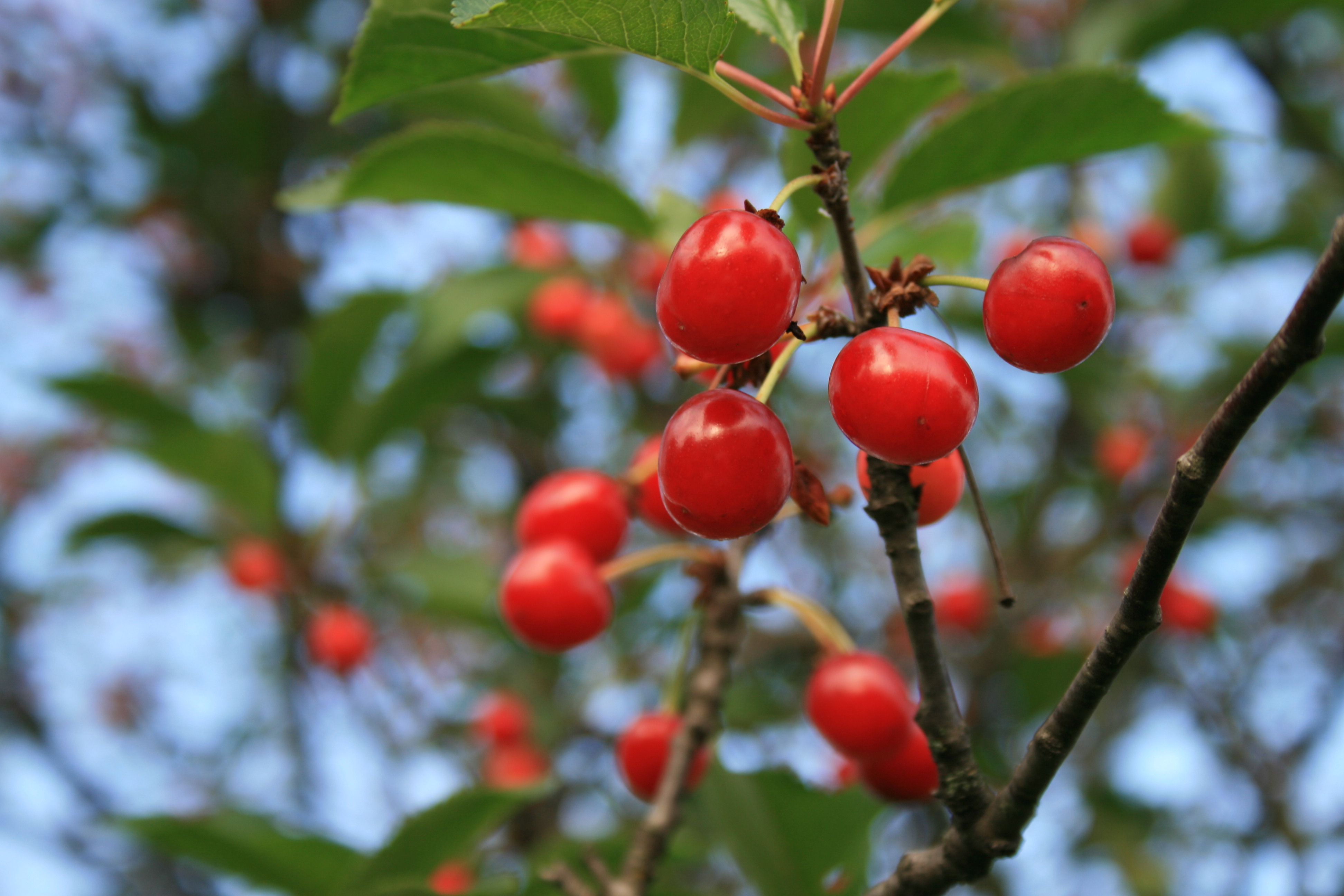
First the Montmorency cherries! I picked 12.5 quarts and my friend Julie got a little over 12 quarts too.

Sour cherries ripe and ready to be picked.

Sour cherries covering the branches of my trees.

Right now, just about the same amount of cherries still on the branches of my two trees.

Sour cherries on my fruit trees.

The sour cherry trees are full of cherries this year, probably 40 to 45 quarts.

I have 2 gallons of cherry brandy “cooking” in the closet.  Love making brandy because you don’t have to pit the cherries – just dump them into the pot and boil them up with vodka and brandy.

I also have half a gallon of dried cherries in my refrigerator.  I used my Excalibur  one of the best food dehydrators on the market — to dry 7 trays of them — pitted of course – and will use them in scones (great with organic chocolate chunks) and in my Quinoa Butternut and Dried Cherry Salad with Goat Cheese!

And I still have enough cherries to make 2 batches of Sour Cherry jam – absolutely fabulous on biscuits or cornbread.

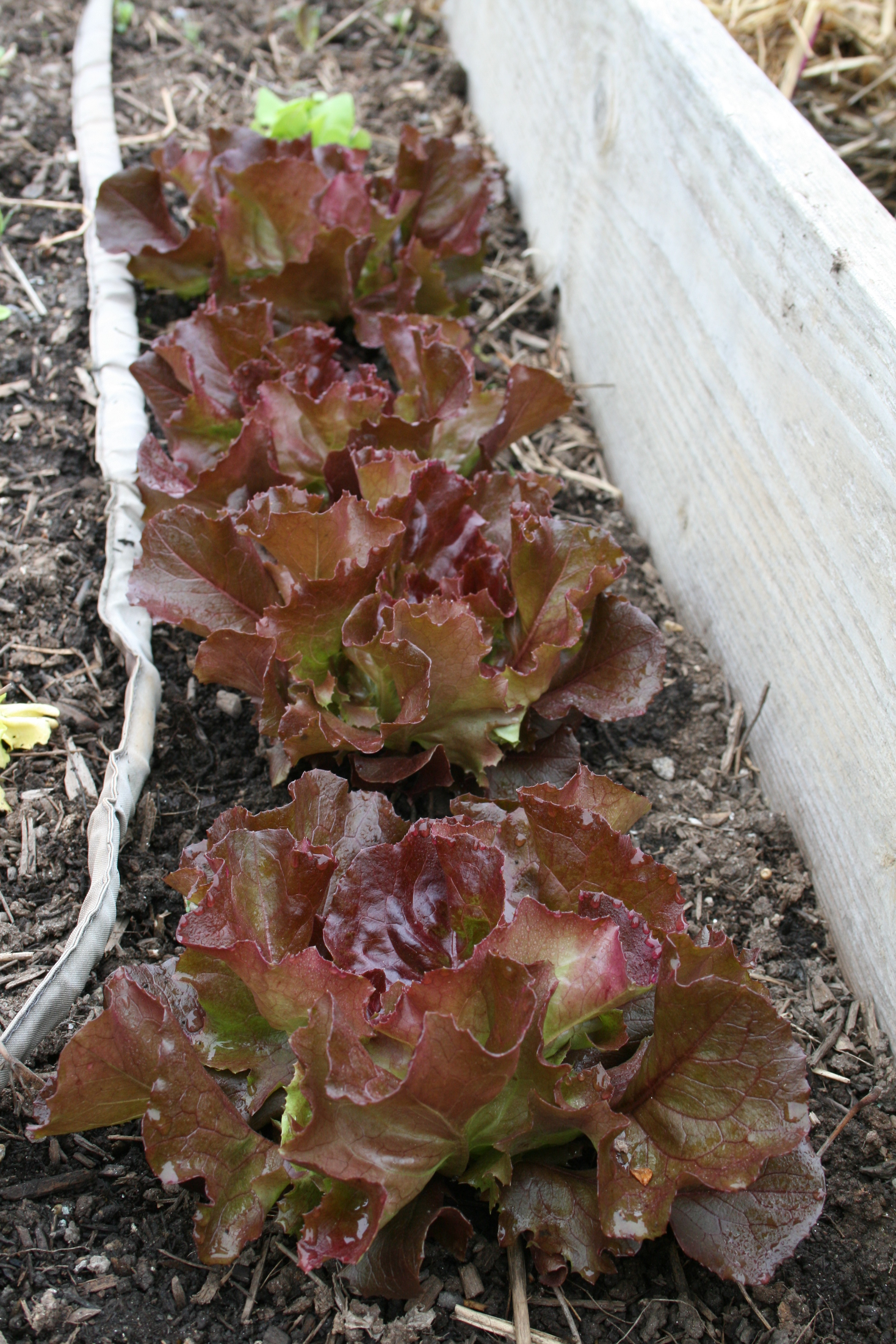
My lettuce is about done but I still have some of my favorite – red butterhead.

Red Butterhead lettuce ready for harvest.

Red Butterhead lettuce makes a soft, beautiful head that’s perfect for salads.

This head is just right for the picking.  The head it forms is loose but can be harvested whole so you can core it, plate it and serve it just like it looks in this picture.

Or you can cut it in half and serve it like a wedge or just cut it up and serve it in a mixed green salad.  My favorite and worth growing because it is no work at all.

If you have planted lettuce and it bolts, as mine is

Lettuce bolting.

Lettuce bolts quickly when temperatures rise.

doing, you might want to leave a few heads in the ground to set seeds.  Some people don’t like the way bolted lettuce looks but I think it’s pretty.

I let 2 or 3 plants of every variety bolt then collect the seeds and use them for fall plantings and next year’s garden.

Each plants gives you hundreds of seeds and they are so easy to save that I almost never have to buy lettuce seeds

I could go on and on about all of my plants like the yellow squash plants you see here.

Healthy yellow squash plant.

This yellow squash doesn’t have a stem; it has a trunk!

Yellow squash growing.

The first yellow squash on this impressive plant.

Or the pole beans that are climbing up the  fence.

And the Bumble Beans just setting their beautiful deep lavender flowers.

So, instead, I will leave you with pictures that speak a 1000 words….about this year’s beautiful garden.

Thornless blackberries

Thornless blackberries

Blackberries setting on the bush.

Blackberries setting on the bush.

Sour cherries

Sour cherries

Doyle Thornless blackberries are healthy and strong and setting an enormous number of blossoms which will lead to an enormous amount of  fruit for brandy and jam.

Blueberries ripening

Blueberries ripening

Eggplant

Eggplant taking hold

Bumble bean flowers on the vine.

Bumble bean flowers


Lee Reich’s Annual Plant Sale is ON!

Lee Reich is having a plant sale!

If you’ve read my book – Grow So Easy; Organic Gardening for the Rest of Us or enjoy my blog, you know who Lee Reich is.  He lives on his “farmden” (farm/garden) in New Paltz, New York, teaches everything from drip irrigation to pruning to organic gardening and is one of my favorite gardening resources.

Reich’s books – Grow Fruit Naturally and The Pruning Book – occupy pride of place on my gardening bookshelves.  And now, you have a chance to meet Reich and even buy some of his homegrown, organic plants!

Reich is holding his annual Plant & Garden Sale on May 30th and is offering organically grown plants including:

  1. Hardy passionfruit
  2. Dwarf banana
  3. Hardy kiwi fruits
  4. Seedless grapes
  5. Two crop figs
  6. White alpine strawberries
  7. Nanking cherries

…and a whole lot more.!  Reich will also have to some tools and books and other garden stuff!  Here are the details.

SALE: Saturday, May 30th, from 10am-2pm (please, no earlybirds)
387 Springtown Rd., New Paltz, NY

For information or updated plant list: 845-255-0417

And, coming up, on June 20th, Drip Irrigation workshop.  Drip irrigation for: greater yields, saving water, less plant disease, easy automation.  Cost: $57
For registration and more information –  http://www.leereich.com/workshops

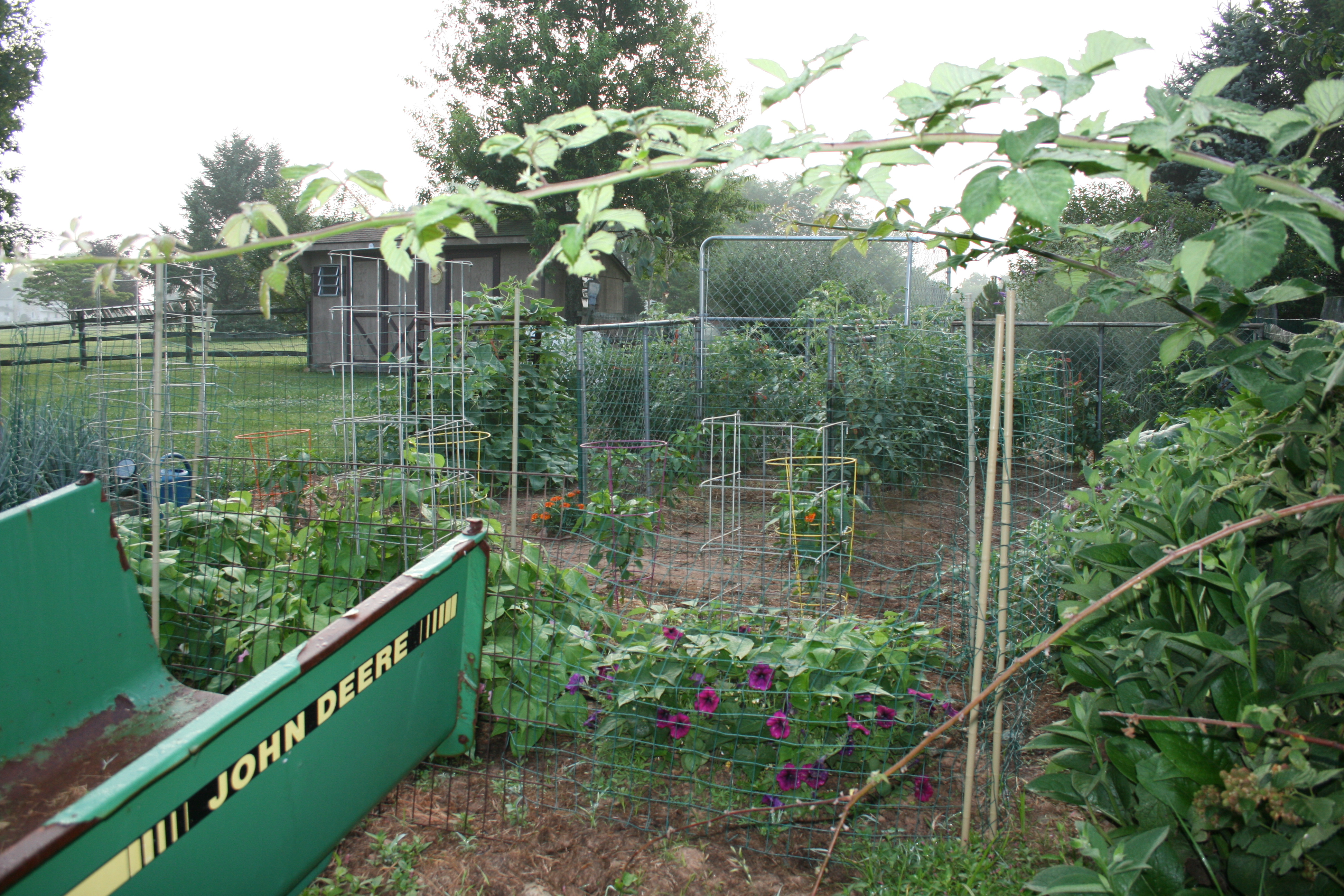
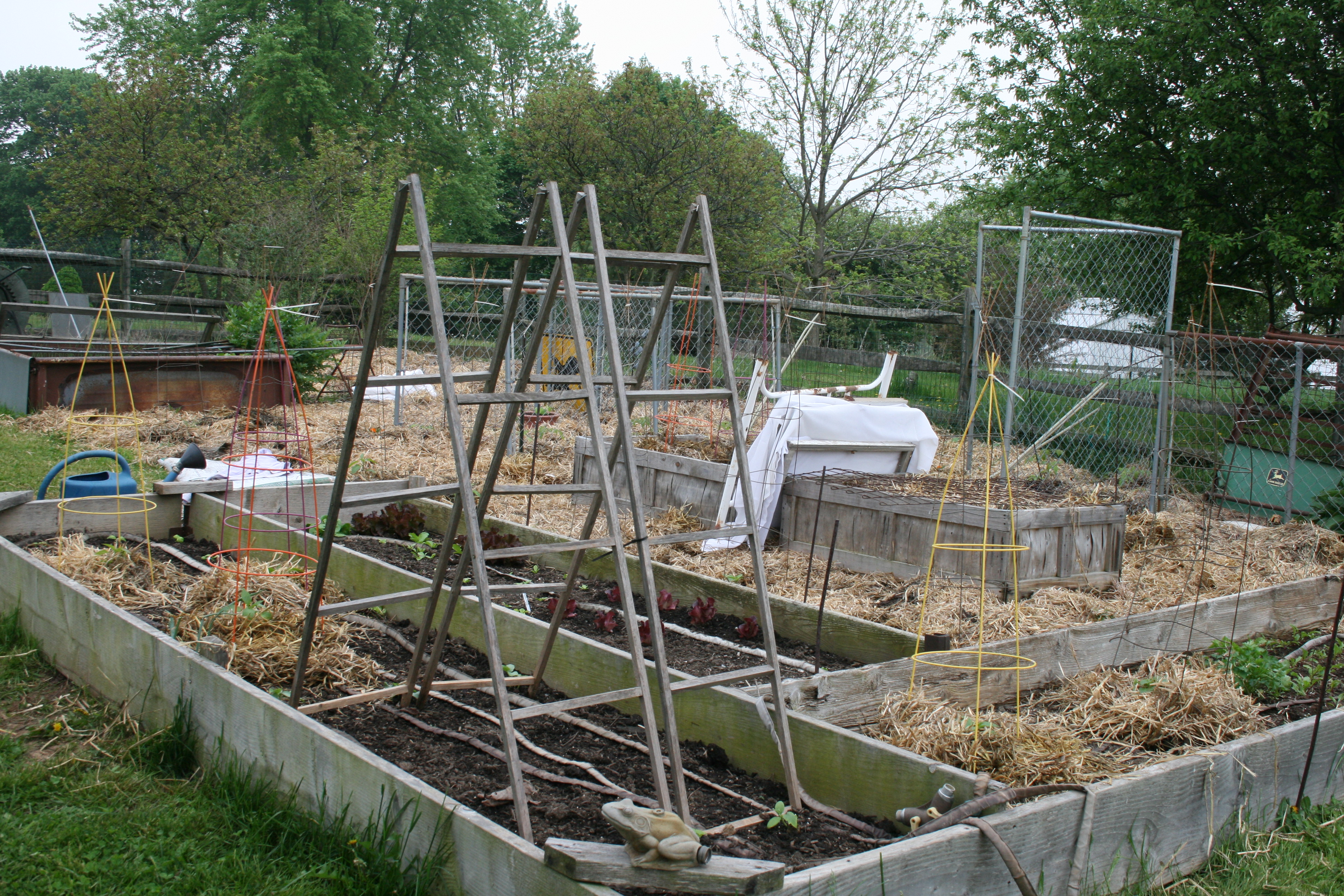
2015 Organic Garden in the Ground!

I got all of my plants in the ground – wrapping up planting today.  All organic seed, all raised by me in my basement and all hand-planted.

Granted, the garden doesn’t look like much right now but give it a few weeks and the size and shape of every plant will change as they fill in their spaces!

My garden is all planted.

All my plants are in the garden and ready to grow.

Here’s the inventory!  And, instead of talking about them, here are pictures of the newly transplanted, beautiful babies.

Eggplant baby.

Eggplant transplant just in the ground.

I put in 4 different types of tomatoes – 12 plants – Golden Slicer, Fir, Fox Cherry & San Marzano

Sweet Italian Peppers – 14 plants

Organic Italian sweet peppers

Inverted tomato cages help support my Italian sweet pepper plants.

Eggplants – 5 plants – Dusky and Melanzana Prosperosa

Zukes – 3 plants – saved seeds from last year’s Italian Zuchetta

Cukes – Saber F1 from Seeds of Change and Cetriolo from Grow Italian.

Kale – 10 plants – Curly, Russian, Dino & some unknowns from Adaptiv Seeds

Beets – lots and lots of plants – Cylindra and Early Wonder

Lettuce – Butterhead, Red Oak & a mix of saved seeds from last year and

Organic red leaf lettuce

Organic red leaf lettuce grows quickly and tastes sweet by itself or in salads.

Onions – 100 plants which I did not raise. I got these from an Amish friend.

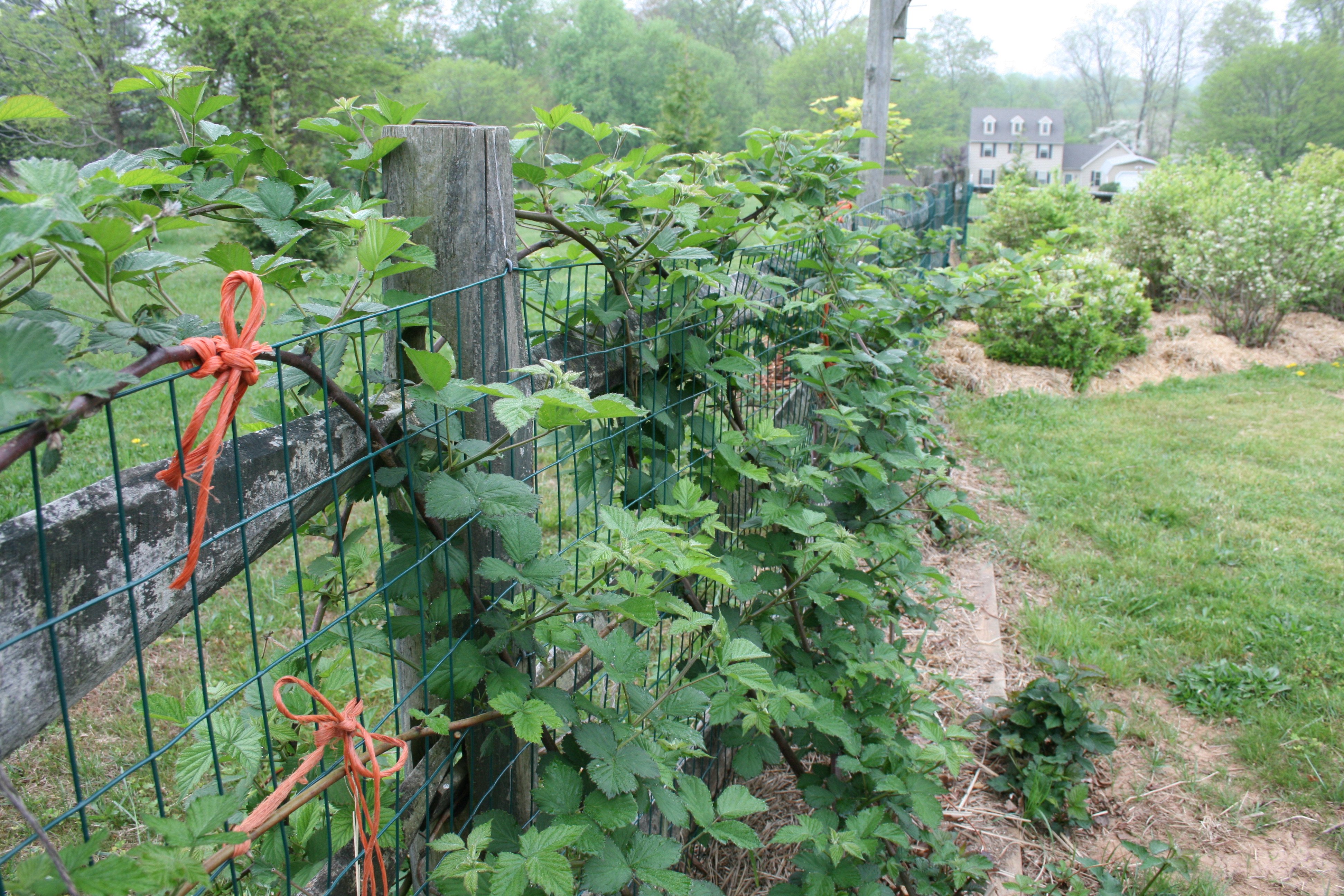
Oh, and my thornless blackberries are growing and greening up!  And right below them, my gorgeous blueberries are covered with flowers.  Planted once, harvest every year for 20 years+ – organic gardening really is easy!

Thornless blackberries

My Doyle thornless blackberry bushes getting ready for summer.

Blueberry bushes laden with flowers.

Every flower on every blueberry bush becomes a blueberry — 60 quarts every summer.

A School Garden & The Green Bronx Machine

Schools should be places where kids just don’t learn to repeat back answers for standardized tests.  They should be places where kids grow, are exposed to new and different things and actually want to be in the classroom and involved.

As a long time, organic gardener, I know, anecdotally, that showing kids how to grow their own food, sharing time and knowledge with them, and letting them get their hands dirty, literally, make them excited about learning.

Now a school, a teacher and a group of students are proving that my theory is correct.

The school is in South Bronx; the teacher is Stephen Ritz.  And his students  at PS 55 have grown more than 30,000 pounds of produce in vertical aeroponic growing systems called Tower Garden.

All gardeners know that there is so much you can learn just by digging in dirt.  Now hundreds of students are learning and growing in the heart of one of the biggest cities in the country.  It’s a beautiful story and one I had to share.

A School Garden Born in a Food Desert May Change the Way Kids Eat—and Learn | TakePart.


Margaret Roach Holds Open House

If you live anywhere near Margaret Roach’s New York home, you should sign up for her open house in May.

Roach, who has written three books including ” A Way to Garden, I Shall Have Some Peace There and Backyard Parables, was also the leading garden writer for 25 years at Martha Stewart Living.

She hosts  a public-radio show and, on rare occasions, opens her 2.3 acre spread in the Hudson Valley to experts and visitors for a day of delightful learning and sharing of all things gardening.

But what’s really wonderful about this accomplished woman is how very human she is, how real and how willing she is to share mistakes, secrets and her special gardening friends.

Her open houses fill up fast so visit her site and sign up if you can go.  Then share what you see, learn and love about visiting with this extraordinary author, gardener and fellow human being.

What is landscaping? – ArtyPlantz

I love this essay; I love the underlying thought and philosophy it is base on.  What is landscaping? – ArtyPlantz.

Looking out my kitchen window at my back yard, I have never thought of what’s

ArtyPlantz changed landscaping for me.

Back yards are more than landscaping; they are healing places.

growing out there as anything more than either a means to an end or “mine.”

Blueberries, blackberries, apple, pear and cherry trees live side by side with vegetable and herb beds.  Flowers grow around all of them.


This morning and every morning, hereafter, because of this essay, what I see will be forever changed.

With the rising sun, I will begin to look at my back yard as a bit of heaven on earth, a place where the wonders of nature – sun, rain, seeds, wind, all conspire to create a healing place full of plants, full of wonder.

I believe I will begin to understand that I am just the caretaker of this bit of heaven…not the creator of it.  And I know I will feel the richness, the peace and the joy that sprouts in this bit of land even more deeply now, thanks to ArtyPlantz.

ArtyPlantz is a group of people working hard to “grow” love for plants and trees in their homeland.  As described on their website, this group is located, “In the heart of The Garden City of Bangalore, we are located in R T Nagar, just a few minutes away from Mekhri Circle, Palace Grounds.”

Perhaps, someday, I will visit their little bit of heaven but even without traveling half way around the world, I feel as though I have touched and been touched by this amazing group.

NOTE:  ArtyPlantz is a member of the LinkedIn group – Grow Girls Grow Organic.  For more posts like this one or to share your ideas, tips and thoughts, please join our organic gardening group and help us change the world!