Category Archives: Gardening Tips

How To Grow Onion From Seed

Growing onions is easy.

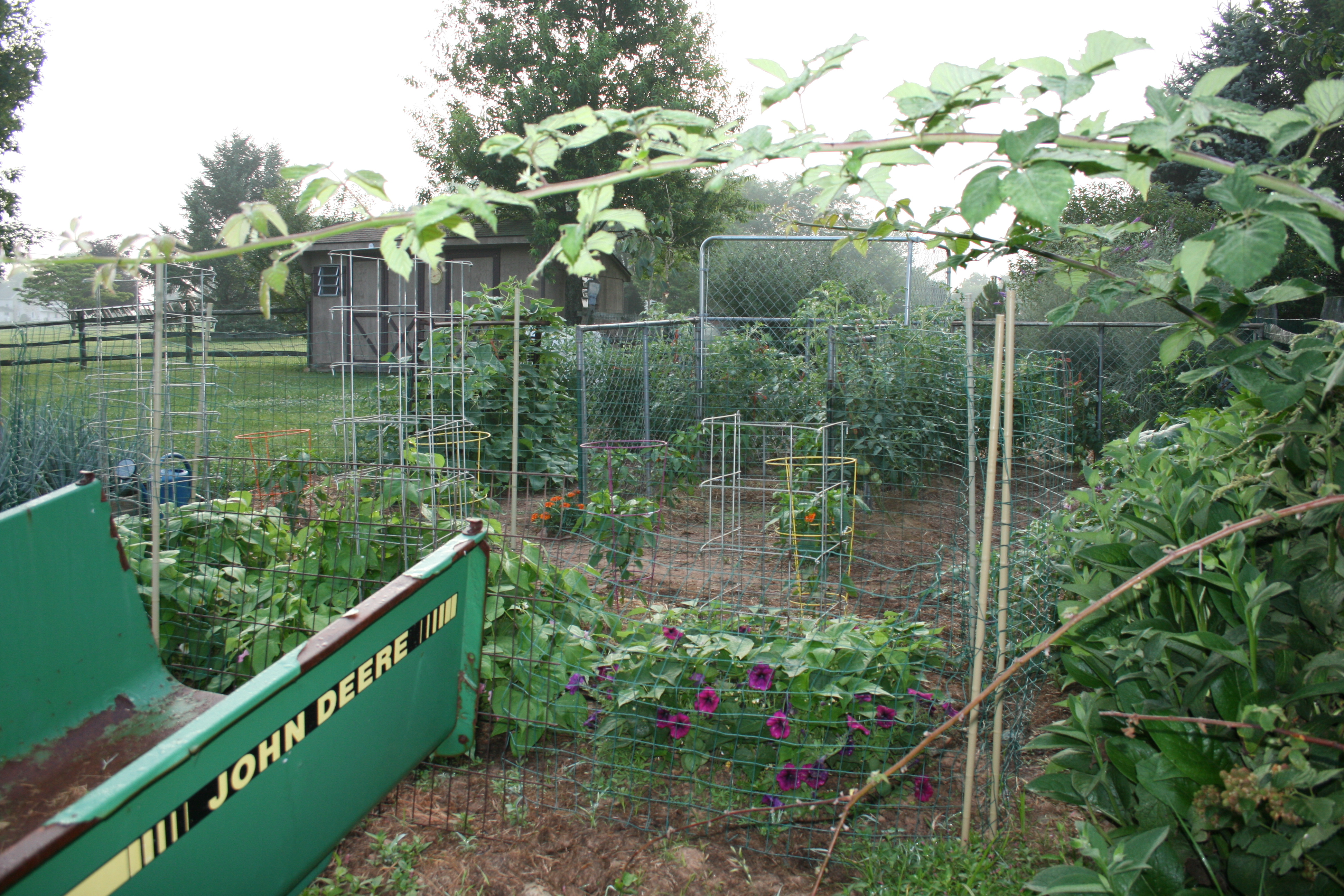
My onions enjoy raised bed living.

I love growing onions. I have only grown them from seed, once and I sowed them outdoors. That is another story!

This year, I am starting onions from seed, indoors, and I wanted to share two of the resources I am using to help me in this new adventure.

Barbara Pleasant’s Top Ten Tips for Growing Onions from Seed is a spectacular resource. Pleasant is a well-known author who contributes to publications like Mother Earth News and The Herb Companion.  

She is also the US-based contributor to a site and company called GrowVeg, which provides innovative garden planning apps for Mac, PC, iPad & iPhone.

This woman knows her beans…or her onions.  Anyway she is a top-notch gardener and her “how to” article on starting onions from seed is one of the best I have read. IMG_2464

Sprouting onions from seed

Onion seed sprouted quickly.

My second source should be familiar to a lot of you – it’s High Mowing Organic Seeds.

They are sharing their tips and tools for starting onions indoors. Part 1 covers location, light, temperature, soil and containers then shares the best way to get the seeds into the soil and get them started.

If you want to start onions from seed this year, I cannot recommend any better places to start than GrowVeg’s Barbara Pleasant and High Mowing Seeds Seed Hopper Blog!

Spring is coming! And the game is afoot!!

Lee Reich Shares Seed Starting Tips & More

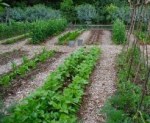
Lee Reich's farmden is organized and weed free.

Lee Reich’s spring garden

I love Lee Reich!

Dr. Reich (botanist, retired professor and incredible home gardener) lives on a “farmden” in New York state and is my go to guy for fruit growing, pruning and feeding blueberries, blackberries, apples and more.

In this lovely interview with Lee Reich, another of my favorite gardeners, Margaret Roach, formerly Martha Stewart’s garden guru and author of several beautiful books including the book that launched her blog A Way To Garden.

Get Lee Reich’s simple but very effective recipe for seed starting mix. Take a look at his planting tools – practical, some homemade and all well-used and well-loved.  And watch the two wonderful clips of Reich in his gardens.

Its snowing again here, today, but I am going to my basement, turning on my grow lights and playing in the dirt as I dream of April, May and June.

Happy Gardening, Gang.


Metal Garden Beds! Woo Hoo!!

I know we are in a blizzard. I know only die-hard gardeners are thinking about how they are going to lay out their gardens this spring, what seeds they are going to start, what new crops they might take a chance at growing.

And now, I know what I want for my birthday! I asked for two metal garden beds from CorrBarr incorporated.

They are made from recyclable materials. They don’t rust. They help heat the soil but don’t burn  the roots of your plants!

Okay so the wind is howling, the snow is falling but I can look out my back window and just see the gleam of beautiful, metal garden beds…poking out from the drifts.

Happy Gardening!

Farmer Goes Organic: Shares His Thoughts

This isn’t a small scale farm.  This isn’t a new farmer.  He is 3rd generation and he owns and works 1400 acres of farmland. His name is Klaas Martens. His story is courtesy of EcoWatch.

Why would anyone want to change the only way they had ever known to farm, the way their fathers and grandfathers before them farmed?

Organic family farms

This is the organic family farm across from my house.

After spending an entire day spraying chemicals on his fields and despite his protective suit and mask, Martens lost the use of his right arm and had muscle spasms on his right side.

Eventually, he recovered the use of his arm and body but he just couldn’t bring himself to go back to growing with chemicals. “Going organic was the only decision we could morally make,” he said. “…it just would have been wrong to hire others to do work that I couldn’t do because it made me sick.

After chucking everything he knew about managing the land, Martens had to learn to farm all over again.  Without chemicals and herbicides, he didn’t really know how to grow and protect his crops.

So, how did he learn new methods to handle threats to his crops? The old-fashioned way; he did research.  One day, he read a quote by a German agricultural researcher that changed his way of thinking:

“Cultural practices form the basis of all weed control. Various other means should be regarded as auxiliary only,” wrote Bernard Rademacher, an early researcher in weed management.

Instead of trying to control the weeds, Martens realized he should be looking at why the weeds were there – what practice was he using that made his farm a good habitat for weeds?

Martens’ answer? Don’t fight the weeds; understand them. Completely and fully, within the context of everything else around them.

Converting his farm wasn’t easy for Martens but he and his wife learned a lot in the process and shared a lot in a two part article for Rodale Institute.  Part 2 of the Farms R Us article has a nice list of resources for anyone who would like to take a deeper dive into converting to organic farming.

It was risky and a bit scary to make the switch but the couple has enjoyed growing organically, finding markets for their crops and knowing that they no longer add poisons to the earth or the water.

If a man farming 1400 acres can go organic, every backyard gardener should be able to do the same.  If you are an organic gardener, you already know that weeds can tell you volumes about the health of your soil and your gardening practices.

Take a note from Martens, listen to your weeds. Once you get a handle on why they are happy to grow in your garden, you have two choices:

  1. Find out what organic methods you can use to get your soil back on track and move the weeds to your neighbors’ gardens.
  2. Grow and eat them! Dandelions, purslane and chickweed are free greens and I enjoy them as much as I do my kale, spinach and leaf lettuce!

Going organic isn’t hard; it;s just different.  And the conversion takes a bit of research and a bit of thought.  What better month than January to do both?

International Ag Conference Offers Fertile Topics

I was cruising the Biodynamics Association web site, contemplating attending Pennsylvania’s Sustainable Farming conference the week of January 18th when my imagination was fired by a testimonial and obituary for someone named Devon Strong.

Relationship between humans and animals.

Amazing articles on our relationship to and with animals.

Being curious, I clicked through the link and found an amazing publication by an equally amazing group. Entitled Accompanying Animals with Dignity Into the Future, this was the published report of Agriculture Conference at the Goetheanum (which it describes as the center of a global network of spiritually dedicated people focusing on both art and science).

The conference was held in November of 2015.

I am still trying to wrap my head around who or what was behind the conference — most likely the International Biodynamic Association  but the articles coming out of the conference are astonishing in their insight into our relationship to animals, our interactions with them, what we think we know about animals and what we really should know — what animals can teach us.

Curiously accessible for such an august group, the information validates some of my fundamental beliefs in the lives and souls of the animals we share this planet with.  It also shakes up some of my ideas about raising and killing animals for food.  And it confirms the concept that we share this planet Earth with some fascinating and wise spirits.

While the November conference focused on our relationship to animals, the upcoming conference in February (also at the Goetheanum)  focuses on seeing the Earth as a global garden and asks such questions as:

  1. How can we establish a new relationship to nature?
  2. How can farmers, gardeners, foresters, landscape gardeners and horticulturalists transform their “gardening” of the Earth in search a way did physical and spiritual nourishment can be provided for all?
  3. How can farm enterprises and gardens be opened up for the integration of people looking for Therapeutic Support for a meaningful activity or simply places to go, to see ?

I stumbled into this remarkable site but stayed because the information, the articles and the people ring true for me, because these are people who love our planet and respect all life.

Open Apology to Modern Farmer Magazine

Did you ever make a decision, feel pretty righteous about it then realize you were wrong?  Totally wrong??  Could not be more wrong???

Modern Farmer Magazine

Modern Farmer is an amazing magazine!

That’s just what I did when I cancelled my newly acquired subscription to Modern Farmer.

I was feeling churlish; I subscribed weeks earlier but hadn’t received a copy yet.  And it’s just quarterly so, in hindsight, I thought it wasn’t worth the cost.  Wrong, dead wrong, could not be more completely wrong.

I got my first issue – #10 – Winter 2015-2016 and knew just how big a dolt I had been.

This magazine is worth every penny and then some.  I read it from cover to cover in a day and a half, tabbed up some things I wanted to research more and am rereading it right now (well not while I’m typing but rereading, yes).

I am not a farmer but I am an avid organic gardener. I raise all my own fruit (blueberries, blackberries, figs, cherries and the stray pear, apple and pluot). I grow my own vegetables and herbs and am building my own meadow in the back of our 2.3 acres.

So I loved reading the article on Seed Matters – some of the most amazing organic seed breeders and growers — and getting some recipes from their benefit dinner.

And I own a horse – have always loved horses – so I immediately read the cover article on harnessing the power of draft horses.

I enjoyed the article on growing hops and loved meeting “The Modern Farmers” through their profiles of small operations that are making a big difference in their neighborhoods.

So, with huge apologies to Modern Farmer, I went back to its site today and subscribed for 2 years.  (A formal, written letter of apology will be mailed to the Editor, tomorrow.)

I will be sharing this beautifully produced, beautifully written and heartfelt magazine with stunning photography, too, with my niece who has just bought 14 acres in upstate Pennsylvania with her guy. They plan on growing their food, raising animals for meat and sale, raising fish and living on their farm.

This magazine will just be one more tool they can use and enjoy.

BTW-my subscription also gives me access to the web site and all the articles, online.  A bargain….a beautiful bargain.

AVOID GMOs – Dr. Perlmutter Adds His Voice

Merry Christmas….and here’s my gift to you.
DON’T BUY GMO foods or use RoundUp

Okay, this may not seem like an appropriate post during the holidays but what greater gift can you give yourself, your family than good health?

Growing organic veggies is easy.

Grow your own food; you’ll know where’s it’s been.

If you want to eat healthier and don’t want to grow it yourself, if you want to support local farmers and growers and walk a bit softly on the earth we call home, perhaps 2016 is the year you get started.

One of the easiest ways to begin your quest for health is to READ and decide to buy or not buy based on what the product is, what it contains and who made it.

It’s common knowledge that one of the easiest things to do is cut out GMO products – cut them out, get rid of processed foods, start buying and eating organic.

Now Dr. David Perlmutter, author of Brain Maker and Brain Game, adds his voice to those warning about GMOs but his information is a bit more frightening than any I have read before (and I have read an awful lot about this topic).

Dr. Perlmutter shares the most recent and perhaps most damning research that shows that GMOs are the tip of a very unhealthy iceberg called glyphosate.  You all know glyphosate more commonly as RoundUp.

Here’s the quote that makes me want to rant, and rave and cry…don’t buy RoundUp or any of its derivatives.  Don’t eat GMO food. “Roundup was among the most toxic herbicides and insecticides tested. Most importantly, 8 formulations out of 9 were up to one thousand times more toxic than their active principles.”

Don’t believe Dr. Perlmutter?  Read the research yourself.

Try making this your New Year’s resolution: leave the weeds alone!  Or eat them. Or pull them. Or burn them. Or pour pretzel salt and white vinegar on them.  But for your sake, your family’s sake, the planet’s sake, don’t spray them with RoundUp or any of it’s relatives.

What you spray ends up in the water table, your food, your neighbor’s kids, you.  Please, stop.  Please.

A Must Read Before Ordering Your Seeds!

It is the time of year I love and hate – December.
December means not much of anything is growing in my garden. I hate that.
December means seed catalogs arriving in my mail box daily. I LOVE that.

My garden is resting up for 2016.

All the plants are gone & the soil is waiting for 2016.

But before buying any seeds from catalogs or companies I have not used in the past, I like to check their provenance i.e. are they selling organic seed?

This year, courtesy of a blogger named Wolf and posted to a site named 12160 (the shortwave radio frequency for alternative broadcasters, apparently) I found a comprehensive list of seed companies owned by or selling Monsanto products.

If you read my “stuff” or know me, Monsanto is a big No-No for me.  I will not support a company that feels poisoning the earth, water and air and genetically modifying seed and food products is okay.  I will do without rather than give them on thin dime.

So, don’t be fooled.  Before you buy any seeds this year, consult 12160’s list of the bad and the good. Vote with your wallet.  Vote for clean air, clean water and healthy, organic food.

Buy organic seeds.


My Tips for Sustainable Living

I am loving Nathan Crane’s series on sustainable living.

I am learning a lot from the people in this series and gaining new insights and new ideas. I am also realizing that almost every change I have made in my life over the last 20+ years, including my focus on organic gardening, has brought

Community gardens are gifts.

Gardening is good for body and soul.

me one step closer to living more sustainably. That was not why I made the changes.

Being sustainable never entered into my choices. Watching, listening, seeing and, at some deep level, awakening, knowing and choosing to make changes in my life and my home that are ethically in tune with me began with a diagnosis of cancer.

Once started, the changes didn’t stop. Here are some simple things I did, you can do, to just start down the path of being kinder to yourself, your loved ones and your world.

Buy organic meat and poultry. My husband was diagnosed with cancer in 2001. Everything changed.  And this was one of the first changes I made.  I found neighbors who were farmers who were organic and we bought our first pasteur-raised, free-ranged food.  I am a vegetarian now but we still buy organic meats from our friends.

No paper towels.  Sounds silly, small, but it was the first choice I made.  I weaned the household (and my husband) off of them in a year.  We have not had paper towels in our home for 7 years.  I buy fabric napkins at thrift shops and use them and wash them and use them again.

Drying clothes on a line.  I live in a relatively affluent neighborhood where

Breezecatcher 4 arm dryer

My Breezecatcher dryer saves me $100’s every year.

there are no clothes lines.  My solution? Buy a “solar dryer” that I can put out in the morning and take down in the afternoon.  I save about $80 a month on electricity just by drying towels, sheets and heavy cloths outdoors, year round.

Lettuce is an easy crop to grow and so tasty.

Lattuga in any language is a great addition to your garden.

Growing My Own – organic gardening has moved from an idea to a full-blown love of mine and it all started with lettuce!  Twenty plus years later, I have never looked back.  I am cheap, pragmatic and able to raise almost every veggie or fruit we eat using nothing but time, sunshine, water and love.

Making my own laundry detergent.  I decided to do this because I live in well country – and there are a lot of families downstream from my septic system and tile field.  Commercial laundry detergents are pretty harsh so I found a recipe (on the internet) using washing soda, laundry soap – Fels Naptha – and water. I add a few drops of Thieves oil for scent and make 3 gallons at a time for pennies on the dollar.  And I get the peace of mind of knowing that I am not poisoning my neighbors’ wells.

Making kombucha and sauerkraut.  This is my newest venture and I LOVE it. Fermented foods are so easy to make and so inexpensive to prepare.  You can pay $6.50 for a pint of sauerkraut or make a gallon – 8 pints – for $2.00.  Same with Kombucha — fermented black tea.  Pay $5.00 a bottle or about 15 cents a bottle.  It’s easy to make, delicious to drink and again, so very good for you.  Save money, feed your family and save resources.

Don’t listen to me.  Listen to yourself.  Take a step that works for you. Grow something. Save something. Make something. Don’t wait for someone else; make the change you want to see.

Let’s go back to Edward Abbey’s America.

“If America could be, once again, a nation of self-reliant farmers, craftsmen, hunters, ranchers and artists, then the rich would have little power to dominate others.”                                                                                           Edward Abbey
Gleanings from Sustainabilty Series w/Nathan Crane

Day 3 of this fabulous series and I am just learning so much and being validated in a whole lot of ways as I enjoy the Search for Sustainability.

Episode 3 is about health, your health and how you can get it back.  and do so without medicines, doctors, surgery.  The easiest change? Get rid of processed foods.  Just get rid of them and grow your own!

Organic gardening depends on dirt.

Growing your own organic veggies is easy.

You will save money.  You will save yourself.  And you will feel better.  Those messages come through loud and clear and I am living proof that they are true. I’ve lost 60 pounds I didn’t know I had to lose.

My husband has lost 45 pounds and is still losing.  His blood sugar is normalizing — after 20 years of Type 2 diabetes.  It’s good news and it is easy to do just by making that the choice to grow or buy organic produce.

Organic gardening for everyone who thinks it's hard.

Tips & tricks to make gardening easy & fun.

Growing organic veggies and fruits is easy, it’s fun and it’s a way to share what you learned from your mom or dad, your aunts and your friends like I did in my book.

There are other choices that are also coming through loud and clear in this series.

Do it!

The motto of a very famous shoe company should also be your motto.  Just do it.  Once you start, you will find it just gets easier and easier because you start feeling better.

Live it!

Live this life of health and renewal and joy.  Step back into the real world with other people who are choosing health and growing or buying organic foods.

Teach it.

There is nothing more rewarding than being able to share what you have learned on your journey through life.  This is where Nathan Crane is.  This is where many of the people in this series are – teaching it.  This is what I do in my book.

Even if you don’t feel you are ready, just watch. Maybe just take one small step because that’s what sustainability is all about.  Make one small change, today.