Category Archives: Seeds & Seed Starting

How To Grow The Sweetest Peppers

The only pepper I saw in my mother’s garden was the green, bell pepper.  And I never liked them.  The taste was too strong, bitter, almost biting.  So I never planted peppers until I found red and yellow bells.

Assorted bell pepper fruits from Mexico

Discovering peppers of color led to what is now my favorite pepper of all time, the Italian sweet pepper.

Italian sweet peppers are at the heart of any great sausage and pepper sandwich you’ve ever had.  And Italian sweet peppers add flavor to any recipe including my scallopini (recipes below the “bugs that bug” peppers).

Italian Sweet peppers have a rich green color that gradually turns brilliant red.  The flesh of the pepper is medium thick. The fruit is slightly curved, tapering to a pointed end.

Italian sweet peppers

Italian sweet peppers are a staple in my garden.

Today, Italian sweet peppers are the only peppers I grow.

Starting From Seed
Peppers are a warm weather plant so, like tomatoes and eggplant, I always start them from seed.  And I always start peppers 2 to 3 weeks earlier than the date specified on the seed packets.  Why?

In my zone, peppers that are started 8 weeks before my last frost (around May 15th) just aren’t big enough or strong enough to set fruit before the middle to end of July.  As a result, if I started them when the seed packet said to, I’d only get a few peppers from each one. If I start the plants indoors and early, my plants are larger and more vigorous and I get a glorious crop from every one!

I use 24-cell APS starter kits from Gardener’s Supply and I highly recommend them.  Funny thing is, I’ve been using cells for seed starting for years and now, recent research revealed that growing peppers in larger tray cell sizes or containers will produce larger transplants.

The kits ensure that your seeds and seedlings get just the right amount of water while sprouting and growing.  Not too much – not too little. The capillary mats in the cell system take advantage of osmosis.  Because of the system design, I never have to contend with damping off.

I fill the cells with Gardener’s Supply germinating mix, place 4 seeds in each cell…two in opposite corners.  Then I cover each cell with a bit of sphagnum moss, put on the plastic top and set the tray on two ceramic tile that sit directly on the heat mats. I fill the tray with water and then check 4 or 5 days to see if the seeds have sprouted.

NOTE:  You have to check your seed trays every day to make sure there is enough water in them.  Because I sit them almost directly on the heat mat, the water evaporates pretty fast.  If the seeds dry out at any time during the sprouting or early growing stages, the plants will either die, outright, or just malinger – no grow very much at all.

As soon as the seeds sprout, I lift off the clear cover and drop the light to within 1 inch of the cells.  As the plants grow, I keep the trays watered and I keep the light as close to the seedlings as I can without touching them.  If the light touches them, even a fluorescent light, it will burn the baby’s leaves and slow the plant’s growth.

When the seedlings have two full sets of leaves, I give the plants a very mild fertilizer called Plant Health Care for Seedlings, also from Gardener’s Supply,

Once the plants are 3 to 4 weeks old, I transplant them into 2 inch peat pots.  NOTE:  If all the seeds sprout, either separate the seedlings and put one in each peat pot or clip the smaller of the seedlings off with nail scissors so the remaining seedling has more room to grow.

Transplanting Peppers To The Garden
Before you put your pepper plants in the ground, make sure you are NOT planting them in the same area where you had tomatoes, eggplant or potatoes last year.

Peppers are in the Solanaceae plant family and are botanically related to these popular garden vegetables.  Because they are related, peppers can share the same spectrum of pest problems and should not be rotated into soil recently lived in by their kissing cousins.

Also, whether you’re growing from seed or using transplants (unless they were outside when you bought them), you have to “harden off” your plants before you stick them in the garden.

Hardening off does NOT involve tools or torture.  It just means that you have to introduce your transplants to the outdoors, gradually.

Five or six days before you want to put them in the garden, start setting them outside for a couple of hours the first 2 days and keep an eye on them.  Make sure they have water and are not staked out in high sun or high wind.  Then leave them out all day for 2 days then overnight for one night.

NOTE:  also, when hardening off, stop fertilizing.  If the plants have small flowers or fruit on them, pinch both off.  You want to help the transplant direct all of its energy to rooting in the soil before it tries to set flowers or fruit.

Remember, peppers like warm earth and warm air – even warmer than tomatoes.  So the optimal temperature for them to go into the ground is 75 to 85 degrees. Peppers are typically transplanted about two weeks later than tomatoes, for me that’s early June.

Peppers can be planted in single rows or twin (double) rows on a raised bed. Space the pepper plants 12 to 24 inches apart and space rows about 4 feet apart. If you decide to use a double row, make the rows about 18 inches apart on the bed and put the plants in the ground in a zigzag pattern.

By the way, peppers and tomatoes don’t work and play well together so don’t plant tomatoes on one side of your trellis or fence and peppers on the other.  The pepper plants will grow but will be stunted and the peppers themselves will be small and prone to rotting.

Feeding The Peppers
If you don’t want to use fertilizer on your transplants, here’s a little trick I learned from a farmer friend.  Crush up eggshells and put about ½ of a cup of them in the bottom of the hole. Toss a bit of soil on top of the crushed shells before you put the pepper plant in so the baby roots (cilia) are not cut.

Crushed egg shells are slow to break down but will feed the plants.  And they are free so I love using them as my fertilizer.  By the way, you can also use crushed egg shells to stop slugs…just by sprinkling them around the base of your plants.

Peppers have shallow roots so water them when they need it and don’t hoe too close.  Also, stake peppers so that when fruit loads are heavy, the plants don’t topple from weight or high winds.  I use old, inverted tomato cages as you can see below.
Staking sweet peppers with tomato cages

Sweet peppers need staking.

That sounds odd but the cages work better than anything else I have tried.

I put the tomato cage over the plant with the wide ring on the ground and fasten the ring down with ground staples.  Then I gather up the tips of the cage and secure them with a wire tie.  The pepper plant stays inside the cage, grows up straight and is supported even in the heaviest wind or thunderstorm.  And I don’t have to tie the pepper plants up.

How to Grow Peppers is excerpted from my Kindle organic gardening book Grow So Easy; Organic Gardening for the Rest of Us and is available on Amazon.

How To Grow Potatoes

Most of you know that I have had my ups and downs trying to grow potatoes.
The outcome was not very good.  I couldn’t get a straight answer on where or how to plant. Once the potato eyes were in the ground, Wireworms and Colorado Potato Beetles joined together to make for tiny tubers and a potato growing nightmare.

So,when I read High Mowing Seeds post on growing potatoes 101 I knew I had to share.

I also think that Margaret Roach of A Way To Garden fame has a good tutorial fro growing your own spuds, too.

If you dream of growing your own spuds or want to be able to walk into your back yard and dig a few potatoes for the dinner table, High Mowing Seeds and Margaret Roach can help you get it done.

Remember, potatoes love being planted when it’s cool out so early spring is a great time to give this American favorite a try.

If you are successful, try dicing a few into this fabulous fish chowder – buttery rich and tasty. I married an Italian but my maiden name was Duffy.  If I know anything, I know some great recipes for cooking potatoes!

Fish Chowder

INGREDIENTS:
2 boneless fish fillets
2 thick cut bacon slices
2 T butter
1 leek, minced
1 stalk celery, minced
½ tsp dry mustard
1 lb potatoes, peeled & cubed
4 sprigs thyme
¼ c heavy cream
1 T minced chives

DIRECTIONS:
Place fish fillets and bacon slices in large pot and cover with 4 cups cold water.

Bring to simmer over medium high heat then reduce heat to medium and simmer for 5 minutes or until fish is cooked.

Transfer fish to plate and let it cool then remove skin and flake into large pieces.

Continue to simmer bacon in broth until stock is reduced by half (2 cups).

Strain, discard bacon, add 2 to 3 cups of water and reserve poaching liquid.

Melt butter in large pot, add leeks and celery and cook 15 minutes until translucent.


How To Grow Onion From Seed

Growing onions is easy.

My onions enjoy raised bed living.

I love growing onions. I have only grown them from seed, once and I sowed them outdoors. That is another story!

This year, I am starting onions from seed, indoors, and I wanted to share two of the resources I am using to help me in this new adventure.

Barbara Pleasant’s Top Ten Tips for Growing Onions from Seed is a spectacular resource. Pleasant is a well-known author who contributes to publications like Mother Earth News and The Herb Companion.  

She is also the US-based contributor to a site and company called GrowVeg, which provides innovative garden planning apps for Mac, PC, iPad & iPhone.

This woman knows her beans…or her onions.  Anyway she is a top-notch gardener and her “how to” article on starting onions from seed is one of the best I have read. IMG_2464

Sprouting onions from seed

Onion seed sprouted quickly.

My second source should be familiar to a lot of you – it’s High Mowing Organic Seeds.

They are sharing their tips and tools for starting onions indoors. Part 1 covers location, light, temperature, soil and containers then shares the best way to get the seeds into the soil and get them started.

If you want to start onions from seed this year, I cannot recommend any better places to start than GrowVeg’s Barbara Pleasant and High Mowing Seeds Seed Hopper Blog!

Spring is coming! And the game is afoot!!

Lee Reich Shares Seed Starting Tips & More

Lee Reich's farmden is organized and weed free.

Lee Reich’s spring garden

I love Lee Reich!

Dr. Reich (botanist, retired professor and incredible home gardener) lives on a “farmden” in New York state and is my go to guy for fruit growing, pruning and feeding blueberries, blackberries, apples and more.

In this lovely interview with Lee Reich, another of my favorite gardeners, Margaret Roach, formerly Martha Stewart’s garden guru and author of several beautiful books including the book that launched her blog A Way To Garden.

Get Lee Reich’s simple but very effective recipe for seed starting mix. Take a look at his planting tools – practical, some homemade and all well-used and well-loved.  And watch the two wonderful clips of Reich in his gardens.

Its snowing again here, today, but I am going to my basement, turning on my grow lights and playing in the dirt as I dream of April, May and June.

Happy Gardening, Gang.


Rancho Gordo Founder Spills the Beans

I love Steve Sando.

Actually, I love his beans.  Sando created, owns and runs Rancho Gordo, which is in my view, the premier vendor of heirloom beans.

Rancho Gordo bean recipes

Heirloom beans from Rancho Gordo

My first brush with Rancho Gordo came through Oprah Winfrey’s magazine, O.  It was a profile on the company, probably almost a decade ago that kicked off my love affair and I have bought Sando’s beans ever since!

In this podcast, Steve Sando shares his background, his path and how he let serendipity into his life and changed it forever.

This is a fabulous interview by Lisa Gansky, a self-acclaimed entrepreneur, social instigator, international speaker, and author, with a man who I admire and whose products I buy for myself, my daughter and my friends.

BTW – Steve Sando doesn’t just sell beans, he share his recipes, expertise and enthusiasm for growing, sourcing and eating heirloom beans!

Enjoy!

Open Apology to Modern Farmer Magazine

Did you ever make a decision, feel pretty righteous about it then realize you were wrong?  Totally wrong??  Could not be more wrong???

Modern Farmer Magazine

Modern Farmer is an amazing magazine!

That’s just what I did when I cancelled my newly acquired subscription to Modern Farmer.

I was feeling churlish; I subscribed weeks earlier but hadn’t received a copy yet.  And it’s just quarterly so, in hindsight, I thought it wasn’t worth the cost.  Wrong, dead wrong, could not be more completely wrong.

I got my first issue – #10 – Winter 2015-2016 and knew just how big a dolt I had been.

This magazine is worth every penny and then some.  I read it from cover to cover in a day and a half, tabbed up some things I wanted to research more and am rereading it right now (well not while I’m typing but rereading, yes).

I am not a farmer but I am an avid organic gardener. I raise all my own fruit (blueberries, blackberries, figs, cherries and the stray pear, apple and pluot). I grow my own vegetables and herbs and am building my own meadow in the back of our 2.3 acres.

So I loved reading the article on Seed Matters – some of the most amazing organic seed breeders and growers — and getting some recipes from their benefit dinner.

And I own a horse – have always loved horses – so I immediately read the cover article on harnessing the power of draft horses.

I enjoyed the article on growing hops and loved meeting “The Modern Farmers” through their profiles of small operations that are making a big difference in their neighborhoods.

So, with huge apologies to Modern Farmer, I went back to its site today and subscribed for 2 years.  (A formal, written letter of apology will be mailed to the Editor, tomorrow.)

I will be sharing this beautifully produced, beautifully written and heartfelt magazine with stunning photography, too, with my niece who has just bought 14 acres in upstate Pennsylvania with her guy. They plan on growing their food, raising animals for meat and sale, raising fish and living on their farm.

This magazine will just be one more tool they can use and enjoy.

BTW-my subscription also gives me access to the web site and all the articles, online.  A bargain….a beautiful bargain.

A Must Read Before Ordering Your Seeds!

It is the time of year I love and hate – December.
December means not much of anything is growing in my garden. I hate that.
December means seed catalogs arriving in my mail box daily. I LOVE that.

My garden is resting up for 2016.

All the plants are gone & the soil is waiting for 2016.

But before buying any seeds from catalogs or companies I have not used in the past, I like to check their provenance i.e. are they selling organic seed?

This year, courtesy of a blogger named Wolf and posted to a site named 12160 (the shortwave radio frequency for alternative broadcasters, apparently) I found a comprehensive list of seed companies owned by or selling Monsanto products.

If you read my “stuff” or know me, Monsanto is a big No-No for me.  I will not support a company that feels poisoning the earth, water and air and genetically modifying seed and food products is okay.  I will do without rather than give them on thin dime.

So, don’t be fooled.  Before you buy any seeds this year, consult 12160’s list of the bad and the good. Vote with your wallet.  Vote for clean air, clean water and healthy, organic food.

Buy organic seeds.


Organic Garden in June in PA

Today I just want to share some of the glorious pictures from my garden which has finally decided to grab on and grow!

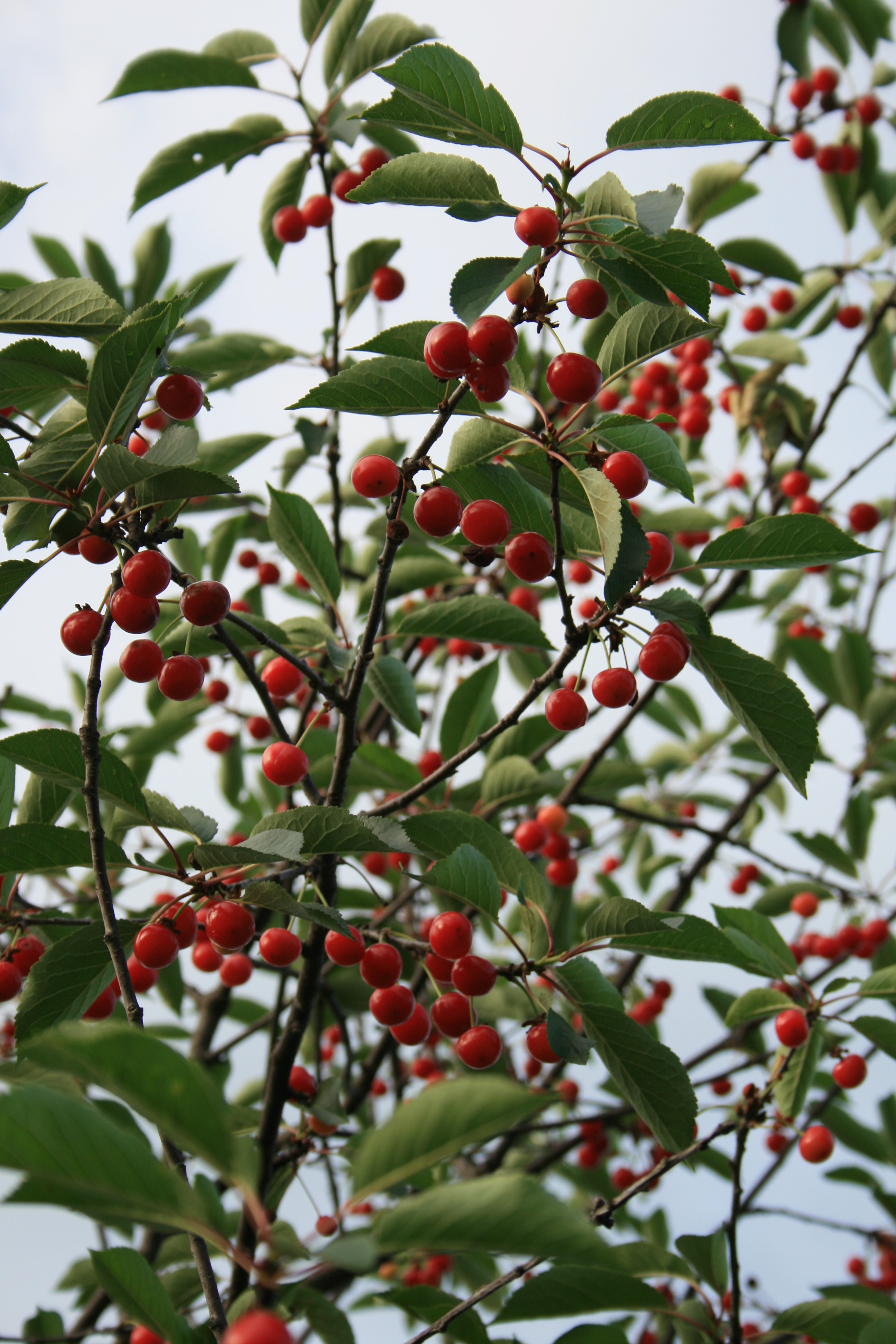
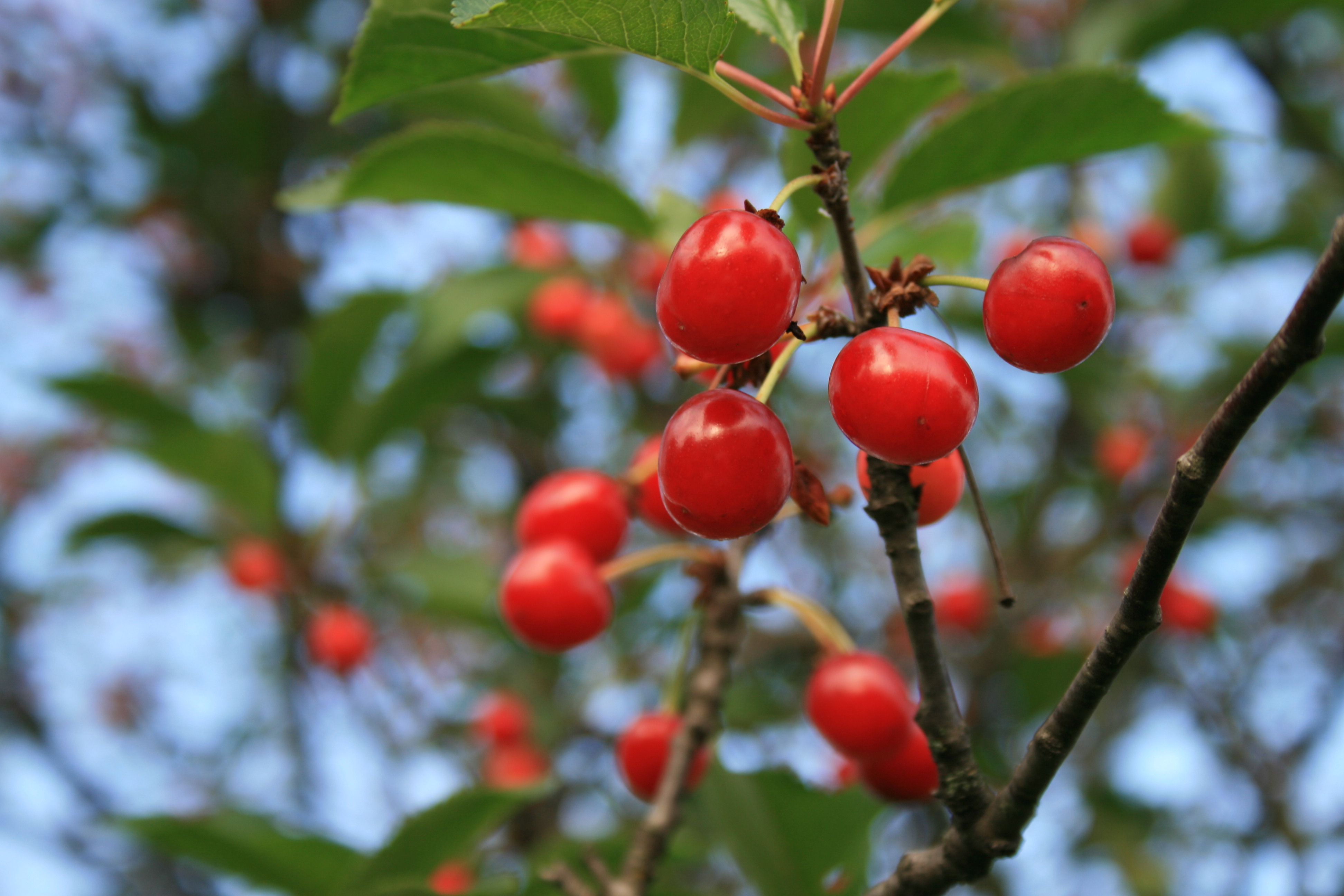
First the Montmorency cherries! I picked 12.5 quarts and my friend Julie got a little over 12 quarts too.

Sour cherries ripe and ready to be picked.

Sour cherries covering the branches of my trees.

Right now, just about the same amount of cherries still on the branches of my two trees.

Sour cherries on my fruit trees.

The sour cherry trees are full of cherries this year, probably 40 to 45 quarts.

I have 2 gallons of cherry brandy “cooking” in the closet.  Love making brandy because you don’t have to pit the cherries – just dump them into the pot and boil them up with vodka and brandy.

I also have half a gallon of dried cherries in my refrigerator.  I used my Excalibur  one of the best food dehydrators on the market — to dry 7 trays of them — pitted of course – and will use them in scones (great with organic chocolate chunks) and in my Quinoa Butternut and Dried Cherry Salad with Goat Cheese!

And I still have enough cherries to make 2 batches of Sour Cherry jam – absolutely fabulous on biscuits or cornbread.

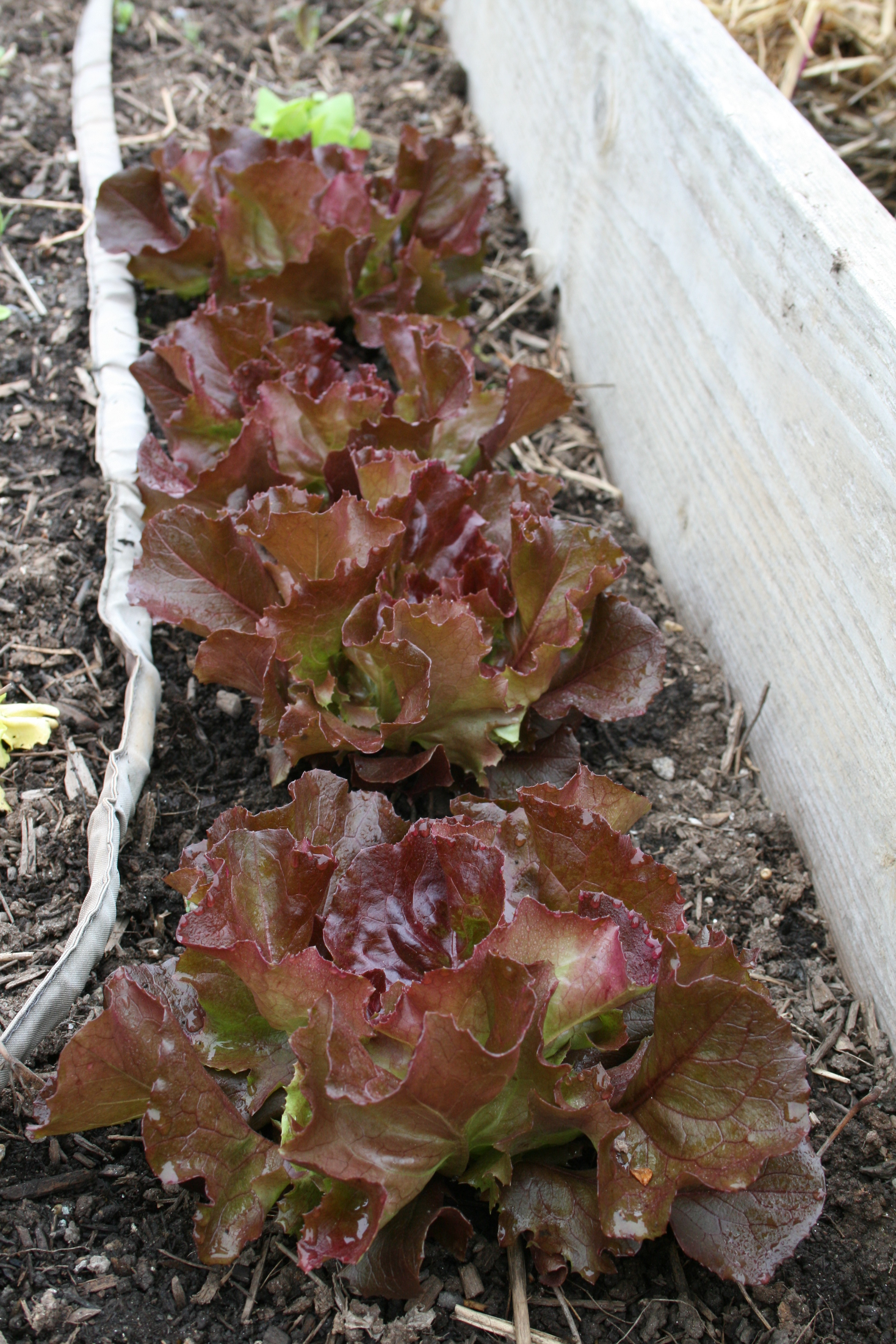
My lettuce is about done but I still have some of my favorite – red butterhead.

Red Butterhead lettuce ready for harvest.

Red Butterhead lettuce makes a soft, beautiful head that’s perfect for salads.

This head is just right for the picking.  The head it forms is loose but can be harvested whole so you can core it, plate it and serve it just like it looks in this picture.

Or you can cut it in half and serve it like a wedge or just cut it up and serve it in a mixed green salad.  My favorite and worth growing because it is no work at all.

If you have planted lettuce and it bolts, as mine is

Lettuce bolting.

Lettuce bolts quickly when temperatures rise.

doing, you might want to leave a few heads in the ground to set seeds.  Some people don’t like the way bolted lettuce looks but I think it’s pretty.

I let 2 or 3 plants of every variety bolt then collect the seeds and use them for fall plantings and next year’s garden.

Each plants gives you hundreds of seeds and they are so easy to save that I almost never have to buy lettuce seeds

I could go on and on about all of my plants like the yellow squash plants you see here.

Healthy yellow squash plant.

This yellow squash doesn’t have a stem; it has a trunk!

Yellow squash growing.

The first yellow squash on this impressive plant.

Or the pole beans that are climbing up the  fence.

And the Bumble Beans just setting their beautiful deep lavender flowers.

So, instead, I will leave you with pictures that speak a 1000 words….about this year’s beautiful garden.

Thornless blackberries

Thornless blackberries

Blackberries setting on the bush.

Blackberries setting on the bush.

Sour cherries

Sour cherries

Doyle Thornless blackberries are healthy and strong and setting an enormous number of blossoms which will lead to an enormous amount of  fruit for brandy and jam.

Blueberries ripening

Blueberries ripening

Eggplant

Eggplant taking hold

Bumble bean flowers on the vine.

Bumble bean flowers


Lee Reich’s Annual Plant Sale is ON!

Lee Reich is having a plant sale!

If you’ve read my book – Grow So Easy; Organic Gardening for the Rest of Us or enjoy my blog, you know who Lee Reich is.  He lives on his “farmden” (farm/garden) in New Paltz, New York, teaches everything from drip irrigation to pruning to organic gardening and is one of my favorite gardening resources.

Reich’s books – Grow Fruit Naturally and The Pruning Book – occupy pride of place on my gardening bookshelves.  And now, you have a chance to meet Reich and even buy some of his homegrown, organic plants!

Reich is holding his annual Plant & Garden Sale on May 30th and is offering organically grown plants including:

  1. Hardy passionfruit
  2. Dwarf banana
  3. Hardy kiwi fruits
  4. Seedless grapes
  5. Two crop figs
  6. White alpine strawberries
  7. Nanking cherries

…and a whole lot more.!  Reich will also have to some tools and books and other garden stuff!  Here are the details.

SALE: Saturday, May 30th, from 10am-2pm (please, no earlybirds)
387 Springtown Rd., New Paltz, NY

For information or updated plant list: 845-255-0417

And, coming up, on June 20th, Drip Irrigation workshop.  Drip irrigation for: greater yields, saving water, less plant disease, easy automation.  Cost: $57
For registration and more information –  http://www.leereich.com/workshops

2015 Organic Garden in the Ground!

I got all of my plants in the ground – wrapping up planting today.  All organic seed, all raised by me in my basement and all hand-planted.

Granted, the garden doesn’t look like much right now but give it a few weeks and the size and shape of every plant will change as they fill in their spaces!

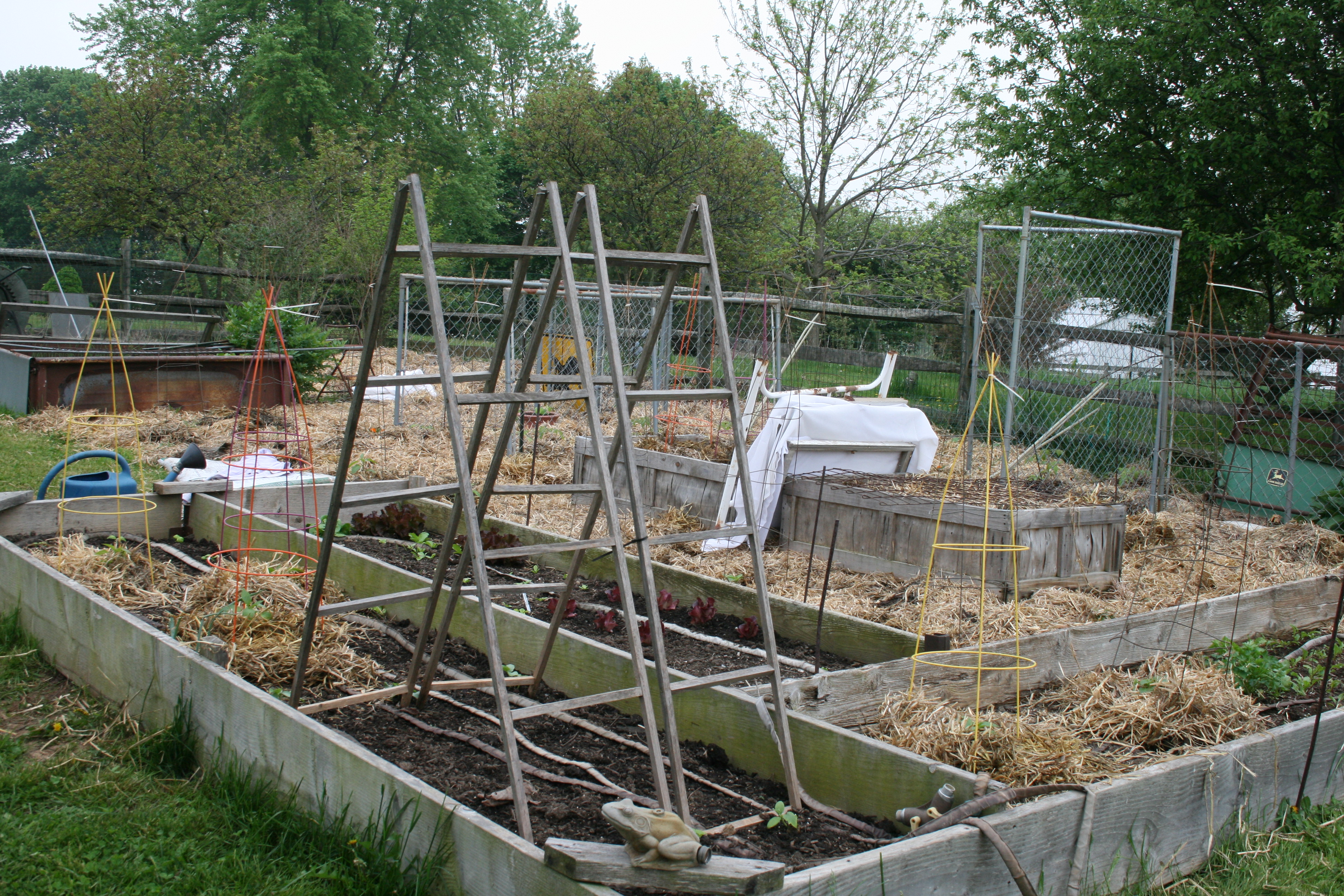
My garden is all planted.

All my plants are in the garden and ready to grow.

Here’s the inventory!  And, instead of talking about them, here are pictures of the newly transplanted, beautiful babies.

Eggplant baby.

Eggplant transplant just in the ground.

I put in 4 different types of tomatoes – 12 plants – Golden Slicer, Fir, Fox Cherry & San Marzano

Sweet Italian Peppers – 14 plants

Organic Italian sweet peppers

Inverted tomato cages help support my Italian sweet pepper plants.

Eggplants – 5 plants – Dusky and Melanzana Prosperosa

Zukes – 3 plants – saved seeds from last year’s Italian Zuchetta

Cukes – Saber F1 from Seeds of Change and Cetriolo from Grow Italian.

Kale – 10 plants – Curly, Russian, Dino & some unknowns from Adaptiv Seeds

Beets – lots and lots of plants – Cylindra and Early Wonder

Lettuce – Butterhead, Red Oak & a mix of saved seeds from last year and

Organic red leaf lettuce

Organic red leaf lettuce grows quickly and tastes sweet by itself or in salads.

Onions – 100 plants which I did not raise. I got these from an Amish friend.

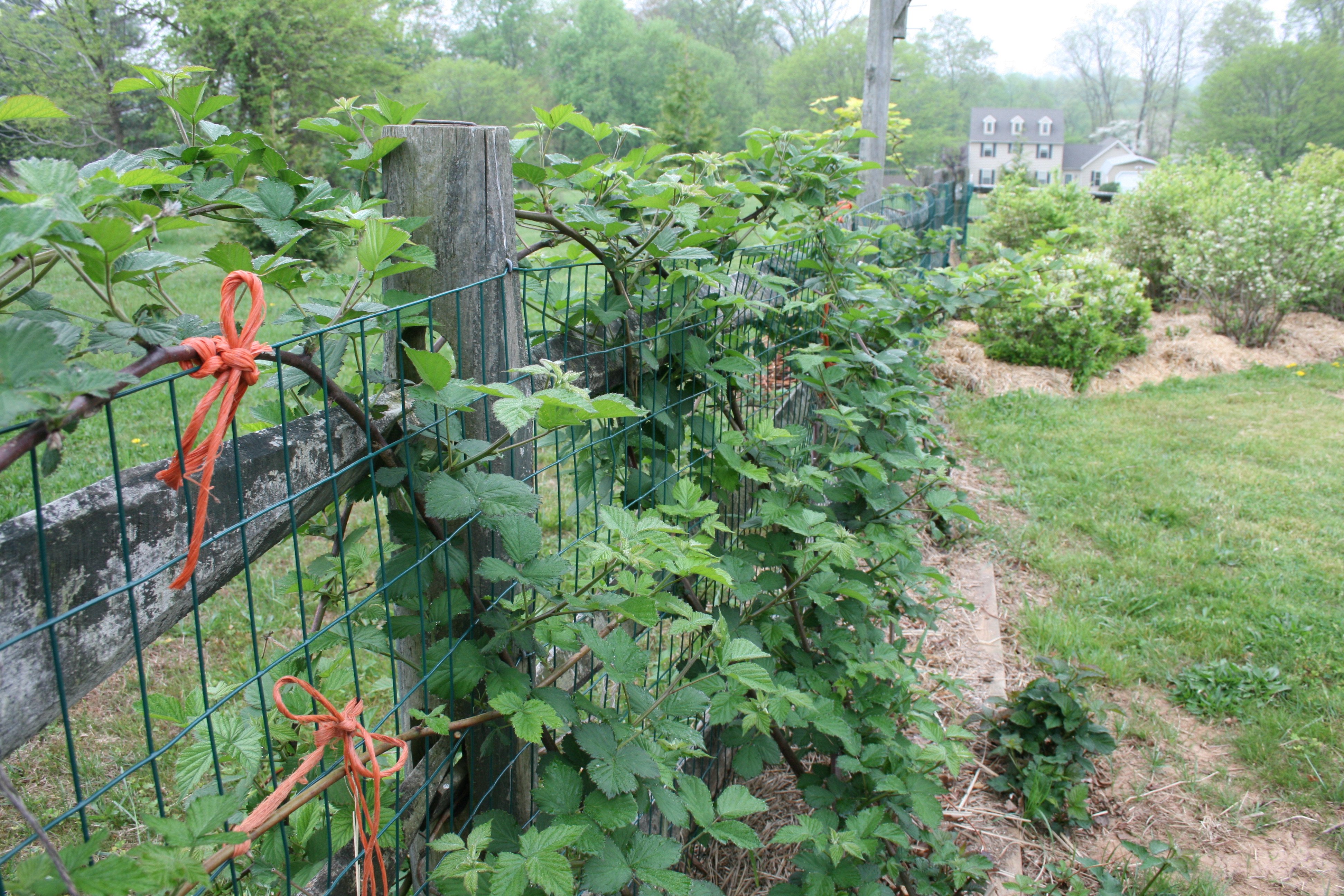
Oh, and my thornless blackberries are growing and greening up!  And right below them, my gorgeous blueberries are covered with flowers.  Planted once, harvest every year for 20 years+ – organic gardening really is easy!

Thornless blackberries

My Doyle thornless blackberry bushes getting ready for summer.

Blueberry bushes laden with flowers.

Every flower on every blueberry bush becomes a blueberry — 60 quarts every summer.