My Virtual Garden: Mosaiculture Exhibition

I had to share this amazing display of sculpture done with plants.

No, not topiary…but living, beautiful and artistic sculpture.  The Lady and the Cranes is a favorite….and the horses are beautiful.

Love this exhibition and can’t wait to see where the next one will be held.  I may just have to go!

My Virtual Garden: Mosaiculture Exhibition.

via My Virtual Garden: Mosaiculture Exhibition.

Organic Oasis in North Carolina – CNN.com

Robin Emmons is living the very life I wish I could lead!

This young, energetic and extraordinary woman is growing thousands of pounds of organic produce and fruit and making it available to people who live in cities and far from fresh, healthy food.

With the help of a slew of volunteers, Robin converted 9 acres, including her own back yard, into organic gardens and orchards.  Since 2008, she and her team have grown, shared or sold close to 30,000 pounds of fresh fruit and vegetables.

Now she is up for the CNN Hero of 2013.  I voted for her.  Read her story and see what you think.  She is one of the good guys who deserves the cash that would go along with winning this honor.

And she’s one of us – organic gardeners who are helping to save the planet one plant at a time.

Creating an oasis in a Southern food desert – CNN.com.


Monarch Butterfly Babies in My Garden

On her blog, this week, A Way to Garden, Margaret Roach asks where all the Monarch butterflies have gone.

I fear I must confess.  I think many of them came to my house for the dill buffet that is growing in one of my raised beds.

Monarch butterfly larvae love dill.

Dill with a side order of Monarch butterfly larvae.

I didn’t raise dill just for them.  In fact, I let my dill self seed.  This year, two big dill plants on the ends of my raised beds came and went and left a ton of seeds on their umbrels. I saved about 5o seeds so that next year, I could plant the dill where I wanted it to come up and never thought a thing about the other 500 seeds that the big plants had dropped to the ground.

Monarchs love to eat dill.

Monarch larvae side by side in my dill.

Then, about 6 weeks ago, I noticed a forest of tiny, soft dill fronds sprouting up in the ground where the old plants had been.  I thought about pulling them up but then I noticed butterflies landing on the plants and I wondered if they were laying eggs.  They were.

On this sunny, September afternoon, there are dozens and dozens of larvae, mowing down dill and contemplating when they want to pupate.   I expect to see a whole bunch of yellow-green chrysillises in the spring.

Monarch butterfly larva feasting in my dill bed.

Monarch butterfly larva in the dill.

So here, in eastern Pennsylvania, I am doing my bit to help Monarchs flourish.  I left the dill and I have planted a bed of milkweed, one of the butterfly’s favorites.  But I know that these butterflies are suffering.

So, here is Margaret Roach’s expert on Monarchs, their plight and what all of us can do to help.  precarious time for monarchs and their migration – A Way to Garden.

Slow Gardening & Slow Living

I’ve been thinking a lot about a post one of the members of my Linked In gardening group scooped a few weeks ago.

The article is entitled, “Slow Gardening

It’s a truly simple idea — slowing down, taking time, savoring every moment in the garden, enjoying every task you do.

That’s a pretty straightforward approach.  What fascinates me about it is I never thought of it.  My garden was like everything else in my life, factored into a schedule that included work, cleaning, laundry, shopping, and the 100 other tasks that simply chew every day up and spit it out.

Slow gardening – the concept alone – sat me back on my heels.  There are gardening tasks I hate…like cleaning up in the fall.  Maybe this concept stunned me because under the slow gardening banner, I don’t have to do it all, all in one day.  I could take my time, savor the hours in the sun, feeling the wind on my face, playing with my dogs while cleaning up the plants that provided us with food all summer long.

My whole approach to gardening, something I’ve been doing for nigh on to 30 years, has changed.  Peace, not tension, not the need to “get it done,” accompanies me out into my garden, now.

Slow living, slow gardening make garden clean up a joyous task.

Winterizing my garden just became a beautiful act of love.

I am rethinking every aspect of my life starting with why I found it necessary to sprint through each day.  Why did I have to “accomplish” everything on my list to feel like I was worth the space and fuel I use?  What was I running from? Or to?

My life is starting to change, slowly moving in the direction of relaxing and enjoying every moment of it including those tasks I used to hate, used to avoid.

For example, instead of processing 6 cases of cauliflower bought at the Amish auction in 12 back-to-back hours – I took my time.  Over 2 days, with breaks to make pear butter, read a book and sit on the deck in the sunshine, most of those 21 huge, glorious heads of delicious, versatile cauliflower were cleaned, cut into florets, blanched, packed and frozen.

Some were “riced” and cooked with peppers, onions, summer squash and tomatoes from my garden to make a beautiful and healthy dinner and the rest were riced and frozen.

Slow gardening gave me permission to enjoy slow living — no rush, no hurry.  Have to pick up horse blankets in Lancaster County, enjoy the ride.  Visit Stoltzfus to order bird seed?  Savor the beautiful country side on a crisp, clear fall day.  Go to the library and visit with a neighbor who just happened to be there.  Head to Maryland to take a lesson with Caitlin Adams or just groom and longe my horse, slow way down, brush his coat until it gleams.  Spend an hour just holding him, talking to him.

SLow gardening & slow living go hand in hand.

Our time together is calming and soothing for both of us and now, thanks to slow gardening – slow living, I enjoy every moment of it.

This glorious time with my horse is a gift, now.

Gardening has always given me many gifts, as well.  My love of earth, my joy at starting seeds and seeing life emerge from each tiny pot and my pride and joy at being able to use, save, can, freeze and enjoy all these gifts from my garden have truly filled my heart.

But now, all aspects of my life have been enhanced, warmed and slowed down by the “Slow Gardening” movement.

Ina country where speed is considered a blessing and volume of work thought to be the holy grail of employers, I hope that this movement will start to take root in the United States.

Slowing down, enjoying every detail of every task no matter how mundane or boring brings such depth to my life, such warmth to my soul.  I hope others can give themselves the same permission to stop running, slow down and live.

Cindy Meredith owns the Herb Cottage and publishes a newsletter of the same name.  Cindy is also one of the founding members of Grow Girls Grow Organic – a Linked In groups for organic gardeners (guys, too) from around the world.

Thanks Cindy for sharing this marvelous idea.
When Gardens Go Bad

I went on a family vacation.  My garden was still producing but not a whole lot.  So, I didn’t expect much.

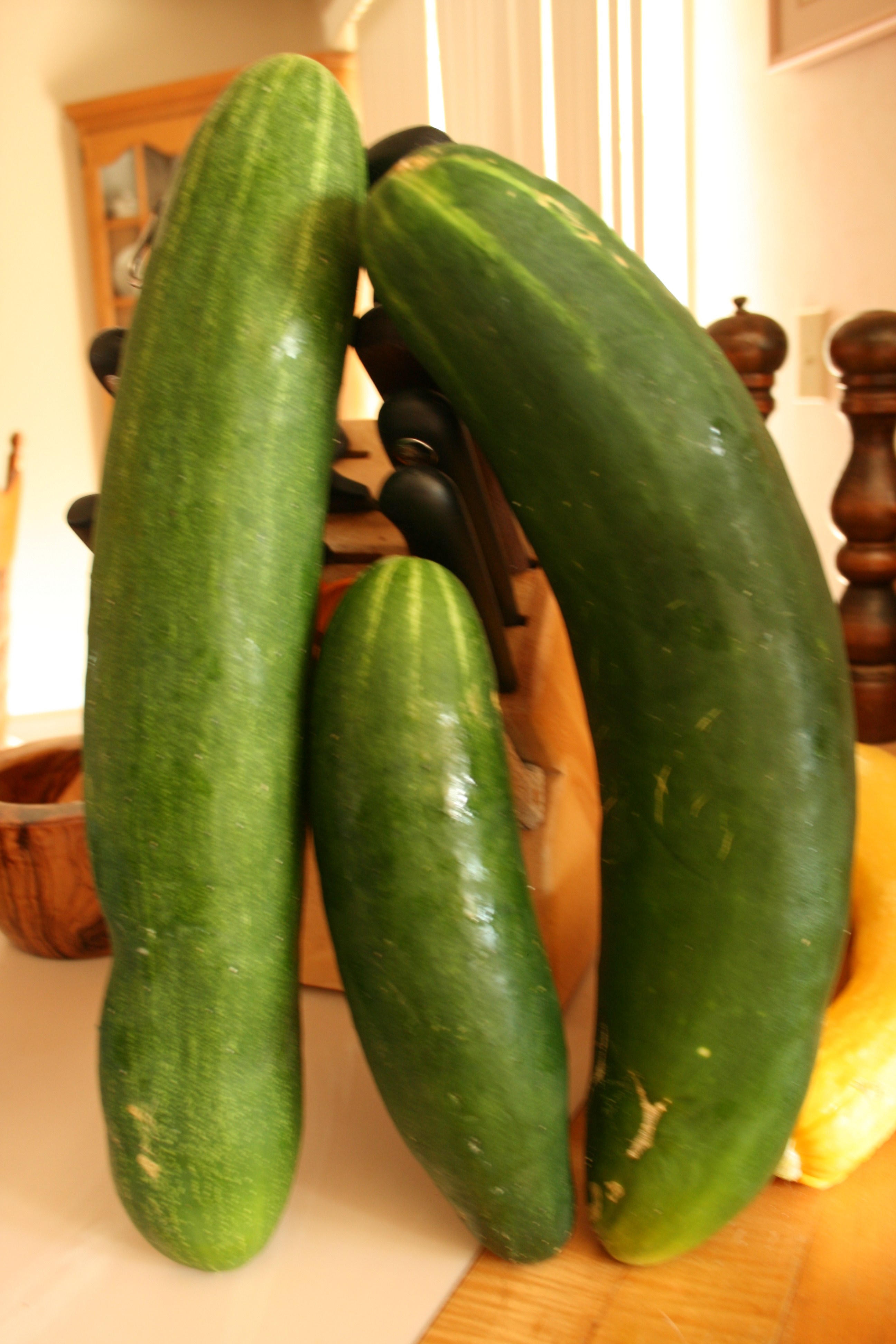
I was in for a surprise!  While I was away, my cucumbers decided to play!  There were 5 cukes that were 14 inches long and almost 3 inches in diameter.  Really, look at the size of them — dwarfing my 5 quart mixer and towering over my salt and pepper grinders!

Big, sweet cucumbers.

My cukes grew huge while I was on vaca.

When I cut into them, I expected dry centers and mealy flesh but these were oh so sweet!     I couldn’t believe it!  One cucumber was enough for dinner for two adults.

But the cukes weren’t the only veggies to go berserk!

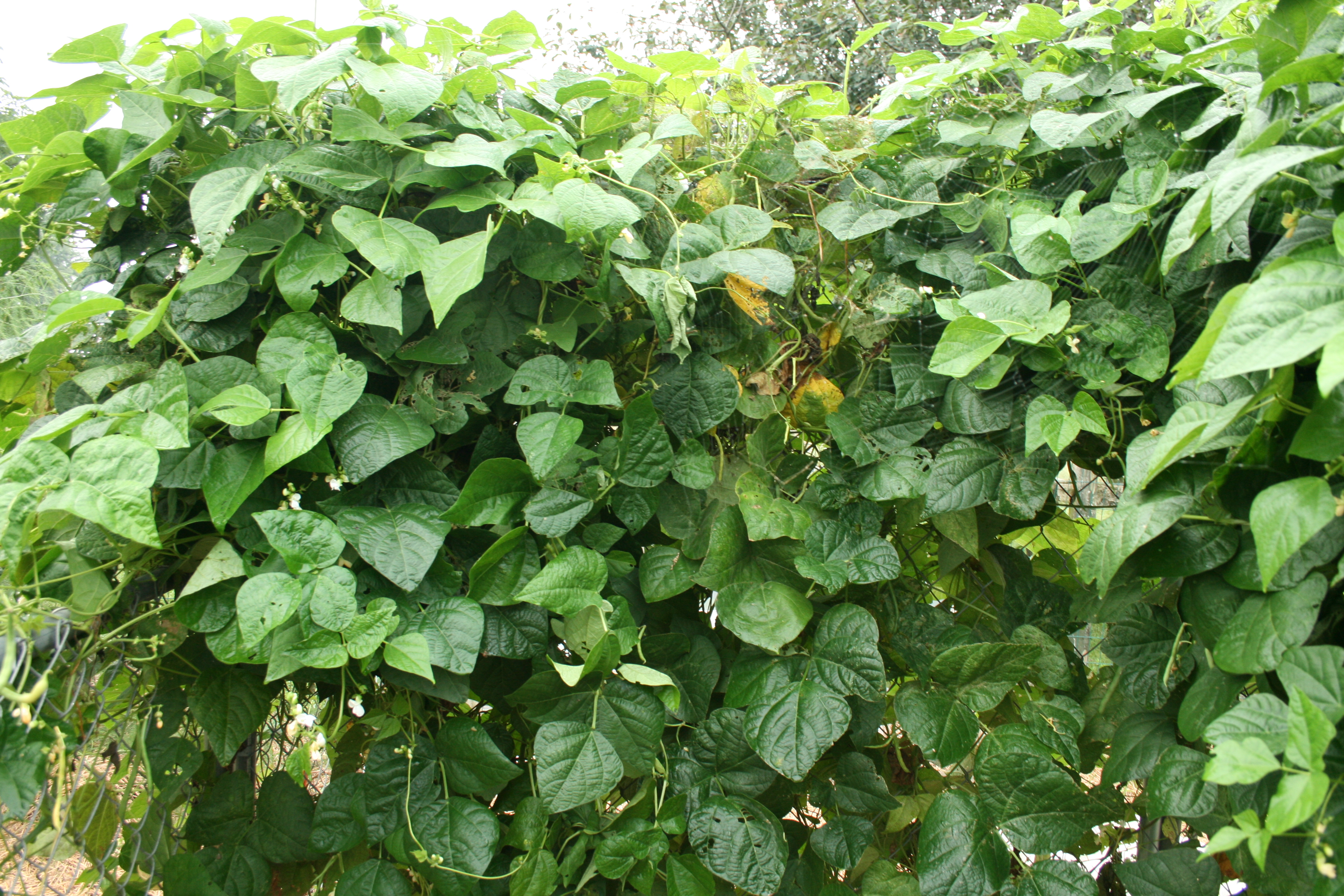
My pole beans grew up and over the 8 foot fence section I put in place for them.  And then they kept on growing.

I didn’t have pole beans; I had a green bean jungle!

Pole beans growing and growing.

The pole beans created a green bean jungle.

I could not believe how dense the growth was.  The vines twisted, turned and knotted themselves together to form a mat of green bean greenery that could not be penetrated!

It’s mid-September in Pennsylvania and I am madly picking green beans, roasting them,

Rampaging pole beans overrun my fence.

Pole beans gone wild.

making them into green bean slaw and eating them raw.

I love green beans but I already have 32 quarts canned and in the pantry.  And I think if another green bean hits my husband’s plate, he may just divorce me!

And I’m still picking cucumbers!  What a whacky gardening year this has been.

Anyone interested in learning more about organic gardening?  My book — Grow So Easy; Organic Gardening for the Rest of Us is available on Kindle!  I’ve gotten some good reviews and would love to know what you folks think!

The Unique Challenge of Colorado Potato Beetles | High Mowing Organic Seeds Blog

I just love it when one of my favorite sources of seed and gardening wisdom puts up a post like this one on my sworn enemy — the Colorado Potato Beetle.

This image was selected as a picture of the we...

The Colorado Potato Beetle looks pretty but is bad news in the garden. (Photo credit: Wikipedia)

Apparently, I am not alone in my extreme dislike, okay hatred, for this little striped tank of a beetle.  Colorado Potato Beetles can strip plants almost overnight, each female lays hundreds of eggs….and all of those little larvae eat like a hungry Olympic wrestler (think 6000 calories a day).

Check out High Mowing Organic Seeds post on what these babies are, where they came from and how to handle them if they show up in your garden one sunny morning!

Oh, and Grow So Easy Organic: Organic Gardening for the Rest of Us –the book — is in final transfer to the MOBI (Kindle) format, a bit later than expected but coming to you soon!

via The Unique Challenge of Colorado Potato Beetles | High Mowing Organic Seeds Blog – The Seed Hopper.

Awesome organic weed killer from TastyLandscape

I have been using the vinegar as weed killer trick for years now.  I started when I found poison ivy on our property.  I am highly allergic to the oil on this plant and can’t even touch something that touched poison ivy without getting it.

So I used vinegar.  Dr. Osborne recommends adding dish soap to vinegar to kill some plants that have waxy leaves.  I find that if I add a nice cup of kosher sale to a gallon of cider or white vinegar, stir until dissolved and pour it on the poison ivy, it doesn’t stand a chance.

Weeds don’t either.

The good doctor does note that vinegar doesn’t discriminate – it kills anything.  So be careful how your pour or spray.  Other plants will go down with the weeds.

And using this common household product ensures that you are not poisoning the water for you or for your neighbors (think wells, water table and where Round Up goes once it leaves the sprayer).

I love this post and am so glad that Dr. Osborne shared his secret.

Awesome organic weed killer | TastyLandscapeTastyLandscape.

via Awesome organic weed killer | TastyLandscapeTastyLandscape.

Don’t Forget About Fall! Seed Now for Autumn Abundance

High Mowing Organic Seed’s post this week is just in time for those of us who live in zones with mid-October frost dates!

And I love how clearly this group describes the fall crops you can plant – carrots, cauliflower, cabbage, beets – and how to get a handle on when you should sew seeds to reap these beautiful crops in the fall.

The cover of my new book  published on Kindle in June.

The cover of my new book published on Kindle in June.

Enjoy their wonderful, well-written advice while I finish up with BookNook — the company formatting my Kindle book – Grow So Easy; Organic Gardening for the Rest of Us.  Should be online within a week!

Don’t Forget About Fall! Seeding Now for Autumn Abundance | High Mowing Organic Seeds’ Blog – The Seed Hopper.


Organic Gardening from Plantastic! | TED Playlists | TED

Like organic gardening?  Love growing your own food?

Then you will LOVE this playlist of TED talks all about gardening and growing and changing our planet.

I didn’t think TED could get any better but they did.  They started putting together playlists of talks on one topic – in this case Plantastic! is all about planting and growing.

The opening talk is about a guy who took on Los Angeles and won the right to plant food, real food for himself and his neighbors on land that no one wanted, no one cared about.

There is a talk about storing seeds, one about growing your own clothing and one about how to be a weekday vegetarian.

Go and watch and enjoy my gardening friends.

Plantastic! | TED Playlists | TED.


Bee hive! | A Brave Experiment from kalegrower

I love this blogger’s courage, sense of humor and sense of adventure.  She is a real gardener…someone who gets dirt under her fingernails and sweat on her brow, working in her garden.

And she just took a leap I’ve thought about for years….but have not had the courage to do.  She got a bee hive for her backyard!

Check her out – Bee hive! | kalegrower.

…while I put the finishing touches on my book!

Cover – check.

Clean manuscript – check!

Bio page – check!

Grow So Easy Organic is heading to BookNook…today!

via Bee hive! | A Brave Experiment from kalegrower.